Products / Kuka / 64 Servo Drive
Kuka 64 Servo Drive

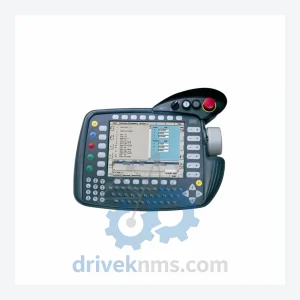
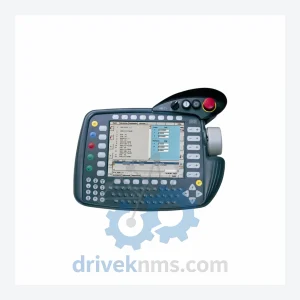
KUKA KSD1-64 Servo Drive – Obsolete KR C2 Spare Part

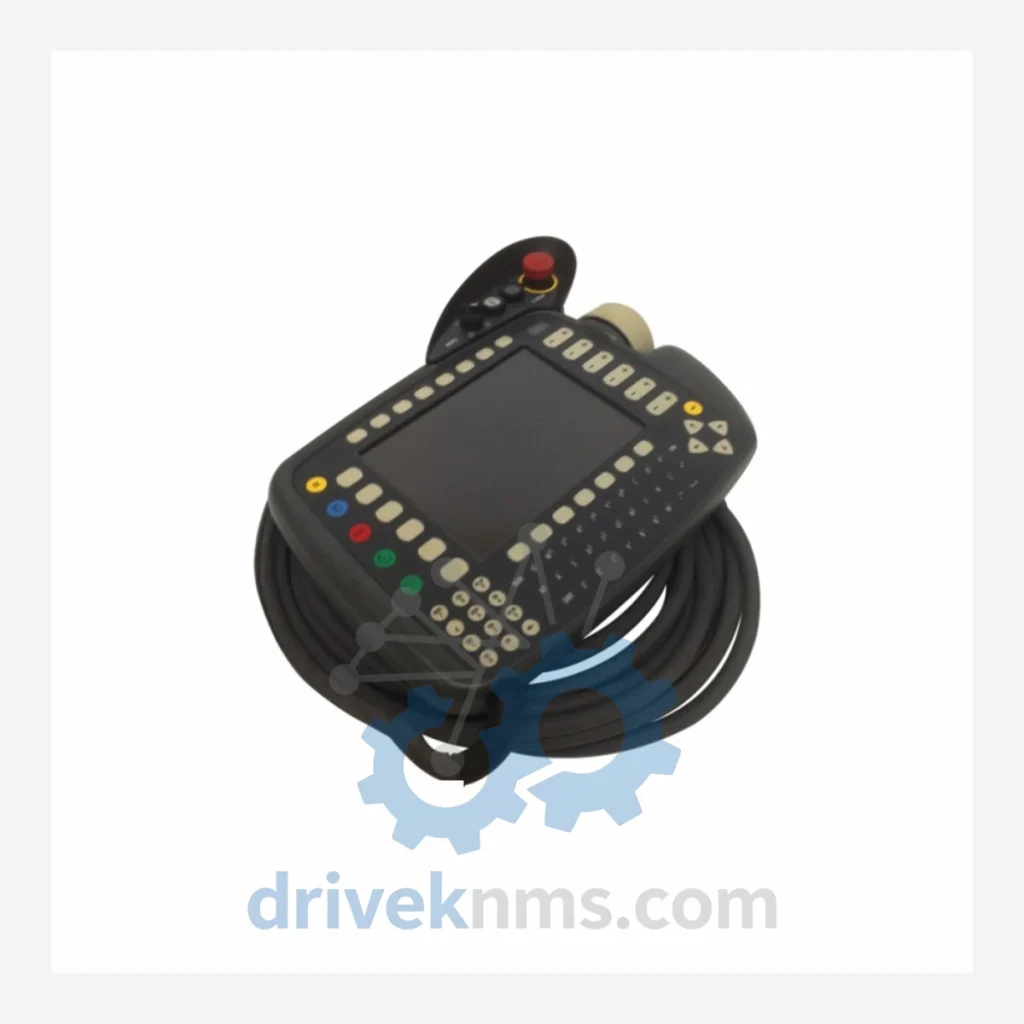
Model: KSD1-64 00-117-345 00-198-959 3080-AK 00-130-547 KCP2
Brand Kuka
Series 64 Servo Drive
Model KSD1-64 00-117-345 00-198-959 3080-AK 00-130-547 KCP2
RFQ-ready model route Obsolete and surplus sourcing Export follow-up by model list

Product Overview

Commercial availability is handled through direct RFQ, model verification and export-oriented follow-up rather than public cart checkout.

Datasheet Preview

Datasheet Preview

Use attached product manuals when available. If the manual is not public yet, request the full file directly through RFQ.

Request Full Manual

Commercial Path

Use This Page To Confirm The Model, Then Move To RFQ

Product pages on DRIVEKNMS are designed to verify model, brand and series first, then move the buyer into one clean quotation path.

Technical Dossier

Product Details And Specifications

KUKA KSD1-64 Servo Drive – Obsolete KR C2 Spare Part

When a KSD1-64 servo drive fails inside a KUKA KR C2 robot cell, the production line does not pause politely. It stops. The cost of a single unplanned shutdown — lost throughput, emergency labor, expedited freight — routinely exceeds the capital budget for an entire robot replacement. A full KR C2-to-KR C4 migration, including mechanical re-integration, PLC reprogramming, and operator retraining, carries a price tag that most plant managers do not want to present to their CFO. DriveKNMS holds verified physical stock of the KSD1-64 and its associated components (00-117-345 / 00-198-959 / 3080-AK / 00-130-547 / KCP2 Teach Pendant). For facilities committed to protecting their existing automation investment, this is the lowest-cost path back to full production.

Technical Specifications

Part Number KSD1-64
Associated Part Numbers 00-117-345 / 00-198-959 / 3080-AK / 00-130-547
Compatible Teach Pendant KUKA KCP2
Compatible Controller KUKA KR C2 (also referenced in KR C3 configurations)
Component Type Servo Drive Module
Manufacturer KUKA Roboter GmbH
Country of Origin Germany
OEM Status Discontinued / Obsolete – No longer manufactured by KUKA
Availability Limited stock – subject to prior sale

Note: Electrical parameters are not published here to prevent misapplication. Contact our technical team for full specification verification against your serial number and cabinet revision.

Solving the Discontinued Hardware Crisis

The KUKA KR C2 platform was the backbone of automotive and general-purpose robot cells deployed throughout the 1990s and 2000s. Tens of thousands of these controllers remain in active service globally — running weld lines, press-tending cells, palletizing stations, and assembly fixtures that were engineered around their specific motion profiles and I/O architecture.

The KSD1-64 servo drive is the axis-level power stage within that controller cabinet. It translates the KRC's motion commands into precise current delivery to the robot's joint motors. When this module degrades — typically presenting as axis-specific fault codes, erratic motion, or thermal shutdowns — the robot is effectively offline. There is no software workaround. There is no firmware patch. The hardware must be replaced.

KUKA ceased production of KR C2-generation components years ago. Authorized service channels no longer carry new-old-stock. The secondary market is the only viable source, and within that market, verified, tested units are scarce. Facilities that have not pre-positioned spare KSD1-64 modules are one fault event away from a multi-week production gap.

The strategic calculus is straightforward: the cost of holding one or two spare drives is a fraction of a single day of lost production on a modern manufacturing line. Plant managers who have navigated this situation before treat legacy servo drive inventory as a form of operational insurance — not a discretionary purchase.

How to extend the service life of a KR C2 robot cell by 5 to 10 years without a full controller migration:

  • Audit your critical single points of failure. The KSD1-64, the KPS power supply, and the DSE/DSE-IBS boards are the components most likely to cause unrecoverable downtime. Identify which axes carry the highest duty cycle and prioritize spares accordingly.
  • Establish a cold-spare rotation. A tested, shelf-ready KSD1-64 can be swapped in under two hours by a qualified technician. A six-week lead time sourcing from the open market cannot. The difference between these two scenarios is the difference between a maintenance event and a production crisis.
  • Document your cabinet revision and firmware version now. KR C2 cabinets shipped across multiple hardware revisions. Compatibility between drive modules and controller boards is revision-dependent. This documentation is essential before any spare is purchased — and it is far easier to compile while the system is running than after a failure.
  • Negotiate a multi-unit purchase. If your facility operates more than one KR C2 robot, the per-unit cost of spare drives drops significantly when purchased as a lot. DriveKNMS can structure multi-unit agreements for facilities managing legacy fleets.
  • Schedule proactive drive testing. A servo drive showing early signs of capacitor degradation will often pass basic motion tests while failing under load. Annual load testing of installed drives — and bench testing of spares — catches failures before they become emergencies.

Condition & Reliability Assurance

Sourcing obsolete industrial hardware from the secondary market carries legitimate risk. DriveKNMS applies a five-stage evaluation protocol to every KSD1-64 unit before it is offered for sale.

  • Stage 1 – Visual and mechanical inspection: Full external examination for physical damage, connector pin condition, corrosion on PCB traces, and evidence of prior repair or modification. Units with undisclosed rework history are rejected at this stage.
  • Stage 2 – Electrolytic capacitor assessment: Capacitor aging is the primary failure mode in servo drives of this generation. Each unit undergoes ESR (Equivalent Series Resistance) measurement on the main bus capacitors and the logic supply filter capacitors. Units outside acceptable ESR thresholds are either recapped with OEM-specification components or rejected.
  • Stage 3 – Firmware and hardware revision verification: The drive's internal revision markings are documented and cross-referenced against known KR C2 compatibility matrices. This step prevents the most common secondary-market error: shipping a drive that is electrically functional but revision-incompatible with the customer's cabinet.
  • Stage 4 – Pin and connector integrity check: All edge connectors and ribbon cable interfaces are inspected under magnification for oxidation, bent pins, and micro-fractures in solder joints — failure modes that are invisible under normal lighting but cause intermittent faults in service.
  • Stage 5 – Functional power-on test: Where test fixtures are available, units are powered and exercised through basic operational sequences. Results are logged and provided to the customer on request.

Key Features for System Maintenance

  • Drop-in replacement: The KSD1-64 is a direct physical and electrical replacement for the original installed unit. No mechanical modification to the cabinet is required.
  • No reprogramming required: Robot programs, tool data, and system parameters stored in the KRC are unaffected by a drive module swap. The controller retains all configuration data independently of the drive hardware.
  • No engineering re-integration cost: Unlike a controller migration project — which requires mechanical re-cabling, PLC interface updates, safety circuit recertification, and production validation — a drive replacement is a maintenance task, not a capital project.
  • Immediate dispatch: In-stock units ship within 24 hours of order confirmation. Export documentation for international shipments is prepared concurrently.
  • Traceability: Each unit shipped by DriveKNMS is accompanied by a condition report and inspection record. This documentation supports your internal maintenance records and any third-party audit requirements.

FAQ

What warranty applies to a discontinued part like the KSD1-64?
DriveKNMS provides a 90-day operational warranty on all tested units. This covers failure under normal operating conditions and excludes damage resulting from installation error, overvoltage events, or incompatible cabinet configurations. Extended warranty arrangements are available for multi-unit purchases — contact us to discuss terms.

How do I know the unit is genuine and not a counterfeit or undisclosed repair?
Every unit we ship has passed the five-stage inspection protocol described above. Revision markings, PCB date codes, and component markings are verified against known-good reference units. We do not sell units with undisclosed prior repair. If our inspection identifies rework, that is disclosed in the condition report and priced accordingly.

Should I buy more than one unit?
For any facility operating KR C2 robots in a production-critical role, holding at least one cold spare per robot model in your fleet is the minimum prudent position. The KSD1-64 is no longer manufactured. Each unit that leaves the secondary market is one fewer available to the industry. Facilities that have experienced a sourcing delay on this part in the past should treat that experience as a calibration point for their spare parts strategy going forward.

Can you source other KR C2 components?
Yes. DriveKNMS specializes in legacy KUKA, ABB, Fanuc, Siemens, and Honeywell industrial components. If you have a broader KR C2 spare parts requirement, contact us with your full BOM and we will advise on availability.

© 2026 DriveKNMS. Status: DRAFT

WhatsApp Prefilled Inquiry Email [email protected] Phone +86 18359293191 Top Back To Top