
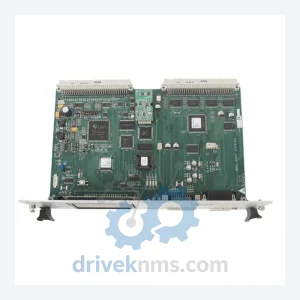
Lam Research Node Robot Interface Board 810-068158-014
Lam Research 810-068158-014 is listed for Monitoring Systems RFQ review. Confirm quantity, condition and destination before quotation.
RFQ-ready industrial model
Model: EP200MMC 0270-90229 0195-07994
Product Overview
Commercial availability is handled through direct RFQ, model verification and export-oriented follow-up rather than public cart checkout.
Datasheet Preview
Use attached product manuals when available. If the manual is not public yet, request the full file directly through RFQ.
Commercial Path
Product pages on DRIVEKNMS are designed to verify model, brand and series first, then move the buyer into one clean quotation path.
Technical Dossier
The LAM RESEARCH EP200MMC series is a family of optical metrology and process control modules deployed within Lam Research's etch and deposition platforms, including the Rainbow, Transformer Coupled Product (TCP), and Exelan systems. These modules are installed across high-volume semiconductor fabs globally, including facilities operated by TSMC, Samsung, Intel, SK Hynix, and Micron. The EP200MMC platform provides in-situ optical emission spectroscopy (OES) and endpoint detection capabilities critical to plasma etch process control in logic, DRAM, and NAND flash manufacturing. Given the capital intensity of semiconductor fab infrastructure, EP200MMC modules remain in active service well beyond their original production lifecycle, making reliable spare parts sourcing a persistent operational requirement for fab engineers and procurement teams.
The EP200MMC platform was developed as part of Lam Research's broader effort to integrate real-time optical diagnostics into plasma process chambers. Early iterations of the endpoint detection architecture relied on discrete photodiode arrays with limited spectral resolution. The EP200MMC generation introduced a monochromator-based optical path, enabling wavelength-selective emission monitoring across the UV-VIS-NIR spectrum (typically 200–900 nm), which is essential for detecting etch endpoint transitions in silicon, silicon dioxide, silicon nitride, and metal layer processes.
The architecture centers on a diffraction grating monochromator coupled to a photomultiplier tube (PMT) or solid-state detector array. The optical fiber interface collects plasma emission from the chamber viewport and routes it to the monochromator input slit. Wavelength selection is achieved via stepper-motor-driven grating rotation, controlled by the EP200MMC embedded controller board. Signal conditioning, analog-to-digital conversion, and endpoint algorithm execution are handled by dedicated DSP or FPGA logic on the main processing PCB.
Compatibility considerations are significant for maintenance engineers: EP200MMC modules are interfaced to host systems via proprietary serial or GPIB communication buses. Integration with newer Lam platforms (e.g., Flex series) requires protocol adapters or software middleware. Firmware versions must be matched to the host system's process recipe software to ensure endpoint detection algorithm compatibility. Mixing hardware revisions without firmware alignment is a documented source of false endpoint triggers in production environments.
The following SKUs represent verified components within the LAM RESEARCH EP200MMC optical metrology and endpoint detection platform. Each entry reflects a distinct hardware function within the system architecture.
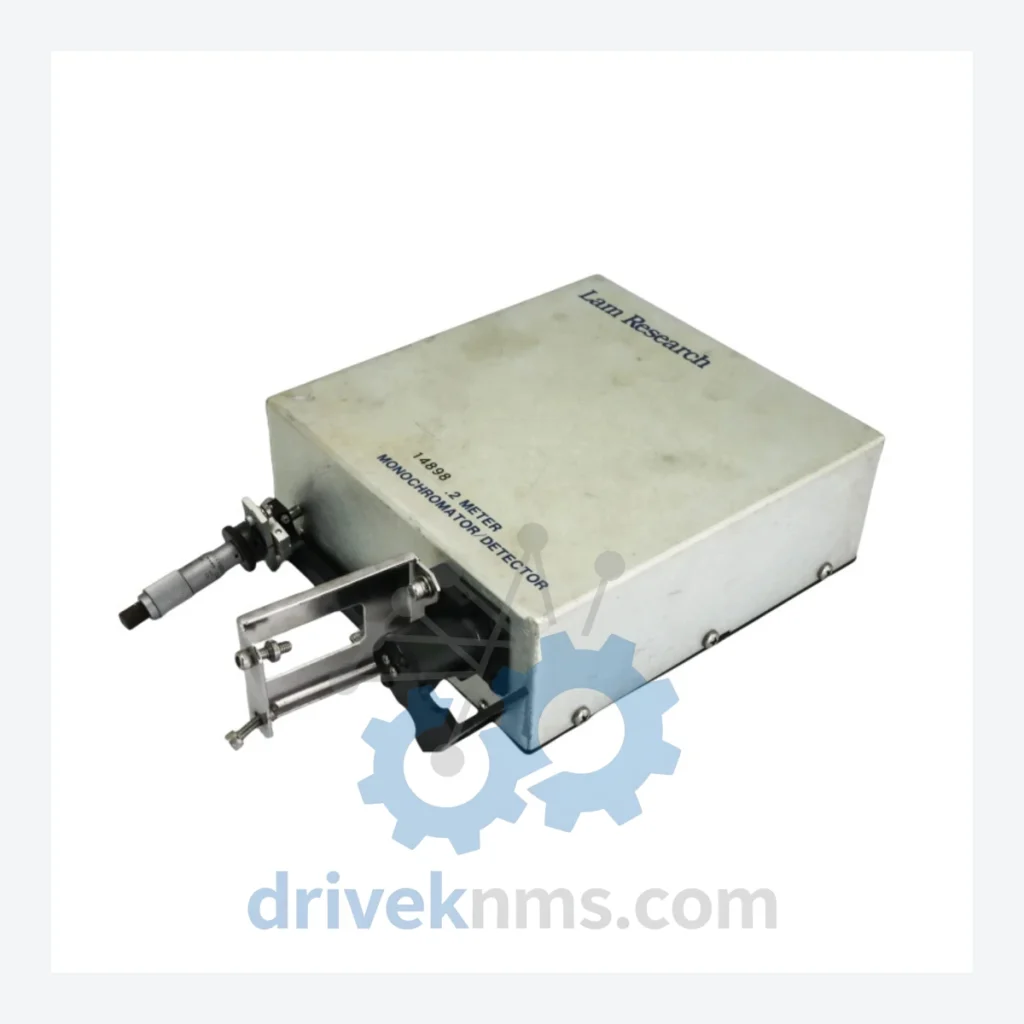
EP200MMC 0270-90229 0195-07994: Meter monochromator/detector assembly; primary optical signal acquisition module for plasma OES endpoint detection.
EP200MMC 0270-90229: Monochromator sub-assembly; diffraction grating and stepper drive unit for wavelength selection.
EP200MMC 0195-07994: Detector PCB assembly; PMT signal conditioning and ADC conversion board.
EP200MMC 0270-76543: Optical fiber bundle assembly; chamber viewport-to-monochromator input coupling harness.
EP200MMC 0195-08112: DSP controller board; endpoint algorithm execution and host communication interface.
EP200MMC 0270-88001: Grating drive motor assembly; stepper motor and encoder unit for monochromator wavelength scan.
EP200MMC 0195-06731: Power supply board; regulated DC supply for PMT bias voltage and logic circuits.
EP200MMC 0270-91045: Input slit assembly; precision aperture module for monochromator optical path definition.
EP200MMC 0195-09203: GPIB interface card; IEEE-488 bus communication adapter for host system integration.
EP200MMC 0270-85567: Detector cooling assembly; thermoelectric cooler (TEC) module for PMT dark current reduction.
EP200MMC 0195-07001: Analog output board; 0–10V signal conditioning for legacy endpoint controller interfaces.
EP200MMC 0270-93312: Calibration lamp assembly; internal tungsten-halogen reference source for wavelength calibration.
EP200MMC 0195-08450: Serial communication board; RS-232/RS-485 interface for process recipe software integration.
EP200MMC 0270-87234: Chassis backplane assembly; passive bus interconnect for EP200MMC module stack.
EP200MMC 0195-09876: Firmware EPROM set; embedded software for endpoint detection algorithm and motor control.
EP200MMC 0270-94401: Front panel display board; local status indicator and diagnostic LED array assembly.
The EP200MMC series has entered the mature-to-end-of-life phase of its product lifecycle. Lam Research no longer lists EP200MMC assemblies as orderable line items through standard OEM channels. Fabs operating legacy Rainbow, TCP, or early Exelan platforms that rely on EP200MMC endpoint detection systems must source replacement modules through the secondary market or specialized industrial spare parts distributors.
Long-term maintenance support for EP200MMC installations includes: component-level PCB repair for detector and controller boards, firmware archive and re-flash services for EPROM-based control modules, optical alignment and calibration services for monochromator assemblies, and documented traceability records for quality-critical semiconductor manufacturing environments.
EP200MMC modules present specific test challenges due to the integration of precision optical, electromechanical, and high-speed analog signal processing subsystems. DriveKNMS applies a structured verification protocol to all EP200MMC units prior to shipment.
Optical path verification: Each monochromator assembly is tested for wavelength accuracy using a calibrated mercury-argon reference lamp. Grating positioning repeatability is verified across the full scan range (200–900 nm) using a calibrated spectrometer as the reference instrument. Slit width and alignment are confirmed against OEM mechanical tolerances.
Detector and signal chain testing: PMT bias voltage, dark current, and signal-to-noise ratio are measured under controlled illumination conditions. ADC linearity and dynamic range are verified using a precision signal generator. Analog output accuracy is confirmed against the specified 0–10V full-scale range.
Controller and communication testing: Firmware integrity is verified by checksum comparison against archived OEM firmware images. GPIB and serial communication interfaces are exercised using automated test scripts that replicate host system command sequences. Endpoint detection algorithm response is validated using a synthetic OES signal source that simulates etch endpoint transitions.
All test results are documented and accompany each shipped unit. Units that do not meet specification thresholds are quarantined for component-level repair or returned to the sourcing pool.
Continue The Model Path
Move from this exact model into the matching system hub, brand archive, model-family archive or lifecycle sourcing route before sending a final RFQ list.
Related Paths
Lam Research 810-068158-014 is listed for Monitoring Systems RFQ review. Confirm quantity, condition and destination before quotation.
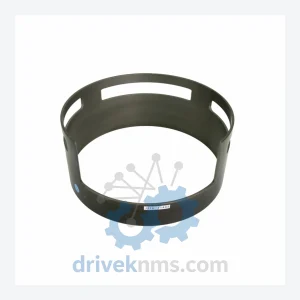
Lam Research 9600PTX 715-330825-007 CABLES 550111 & EMGA-60-P-G5-SAS-55 EMMS-AS-55-M-LS-TM IC693PWR3215 is listed for Monitoring Systems RFQ review. Confirm quantity, condition and destination before quotation.

Lam Research 853-131420-026 0190-49999 S33-1830A-R is listed for 853 Series RFQ review. Confirm quantity, condition and destination before quotation.