
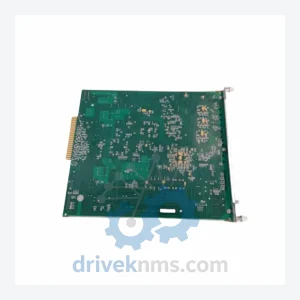
Metso PDP Series Modules - PDP406
Metso PDP406 is listed for PDP Series RFQ review. Confirm quantity, condition and destination before quotation.
RFQ-ready industrial model
Model: PDP403

Product Overview
Commercial availability is handled through direct RFQ, model verification and export-oriented follow-up rather than public cart checkout.
Datasheet Preview
Use attached product manuals when available. If the manual is not public yet, request the full file directly through RFQ.
Commercial Path
Product pages on DRIVEKNMS are designed to verify model, brand and series first, then move the buyer into one clean quotation path.
Technical Dossier
DriveKNMS reviews sourcing options for this model through RFQ handling before quotation.
RFQ support for obsolete parts: Send the model number, required quantity and destination so DriveKNMS can confirm sourcing options before quotation.
Note: Electrical parameters not confirmed from verified datasheet. Contact us for full technical documentation prior to ordering.
The Metso PDP403 was a standard specification component in process plants across the refining, petrochemical, pulp and paper, and power generation sectors. Its integration into valve assemblies was not superficial — the positioner communicates directly with the DCS via HART, stores calibration data internally, and in many installations, provides the sole feedback path for valve position to the control system.
When this component reaches end-of-life through failure or wear, plant operators face a binary choice: source an original replacement, or commit to a system-wide upgrade. The upgrade path is rarely straightforward. Valve actuators must be re-fitted, DCS I/O cards may require reconfiguration, and the engineering change management process alone can consume months of internal resources. For plants operating under continuous production schedules, this is not a viable option during an unplanned outage.
Sourcing an original PDP403 eliminates this decision entirely. The existing valve assembly remains intact. The DCS configuration is unchanged. Calibration can be restored from backup or re-performed in-situ. The plant returns to normal operation on the same shift.
This is the core value proposition of maintaining a strategic spare parts inventory for discontinued instrumentation: it converts a potential capital event into a routine maintenance task.
The following framework applies directly to facilities running legacy valve positioners such as the PDP403:
1. Criticality mapping: Identify every PDP403 installation by loop tag. Prioritize loops on critical process lines — feed, product, safety-instrumented systems — where a positioner failure would trigger a process shutdown or safety interlock.
4. Firmware version control: Ensure spare units carry the same firmware version as installed units. Firmware mismatches between a replacement positioner and the DCS configuration can cause calibration errors or communication faults that delay return to service.
5. Vendor qualification: Source replacement units only from suppliers who can provide traceability documentation and perform pre-shipment functional verification. Unverified surplus parts carry a meaningful risk of latent defects that manifest under process conditions.
Implemented consistently, this approach extends the operational life of a legacy valve control system by 5–10 years with a total spare parts investment that represents less than 1% of the avoided migration cost.
Every PDP403 unit shipped by DriveKNMS passes a structured 5-step quality verification process before dispatch:
Step 1 – Visual and mechanical inspection: Full external inspection for physical damage, corrosion, and connector integrity. Terminal pins are examined under magnification for oxidation and mechanical deformation.
Step 2 – Electrolytic capacitor assessment: The internal electronics board is inspected for capacitor bulging, electrolyte leakage, and ESR (equivalent series resistance) deviation — the primary failure mode in positioner electronics of this vintage.
Step 3 – Firmware version verification: The firmware version is read and documented. Units are matched to customer requirements where version-specific compatibility is a factor.
Step 4 – Pneumatic relay function test: Where test equipment permits, the pneumatic relay assembly is bench-tested for correct response to input signal changes and absence of internal leakage.
Step 5 – Final documentation: Each unit is shipped with a condition report, firmware version record, and inspection checklist. Traceability documentation is available on request.
Drop-in replacement: The PDP403 mounts directly to the existing valve actuator bracket using the original hardware. No mechanical modification to the valve assembly is required.
No DCS reprogramming: The replacement unit communicates via the same HART protocol as the original. DCS tag configuration, scaling, and alarm setpoints remain unchanged.
Calibration restoration: Positioner calibration can be restored using the original HART communicator procedure. Plants with documented calibration records can return the loop to its original performance baseline without additional engineering support.
Avoids engineering change management: Because the replacement is functionally identical to the original, no formal engineering change order is required in most plant management systems. This eliminates weeks of internal approval process that a platform migration would trigger.
Q: How do I confirm the unit is new or professionally refurbished — not untested surplus?
A: Every unit is accompanied by a DriveKNMS inspection report detailing the condition assessment steps completed. We do not ship untested units. Customers may request pre-shipment video verification for high-value orders.
Q: Can export requirements be reviewed?
A: Destination, documentation and routing requirements are confirmed during RFQ review.
Continue The Model Path
Move from this exact model into the matching system hub, brand archive, model-family archive or lifecycle sourcing route before sending a final RFQ list.
Related Paths
Metso PDP406 is listed for PDP Series RFQ review. Confirm quantity, condition and destination before quotation.

Metso IOP320 181545 is listed for DNA Series RFQ review. Confirm quantity, condition and destination before quotation.
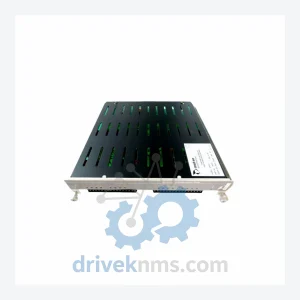
Metso IOP303 is listed for DNA Series RFQ review. Confirm quantity, condition and destination before quotation.