
ABB DP820 Module Termination Unit – Obsolete S800 I/O Spare Part
ABB DP820 is listed for S800 I/O RFQ review. Confirm quantity, condition and destination before quotation.
RFQ-ready industrial model
Model: CM300HA-24H
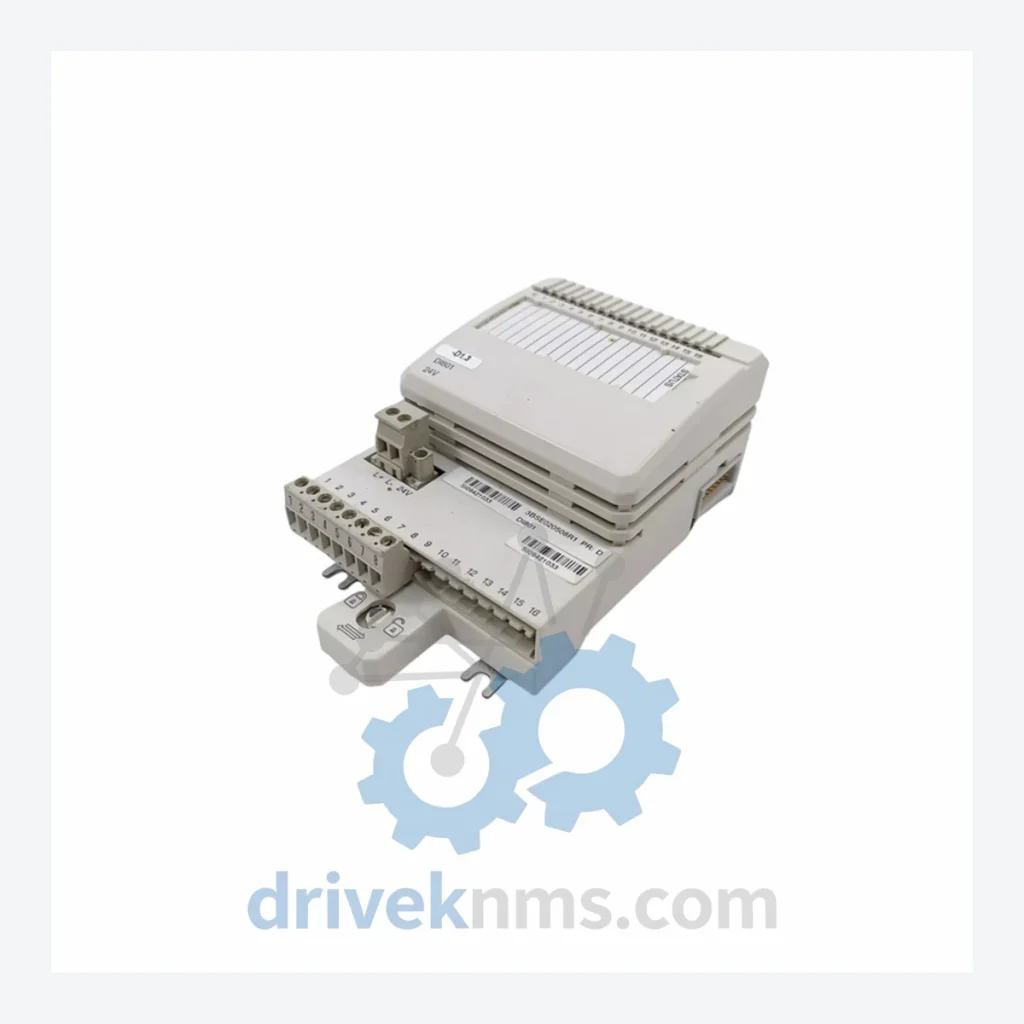
Product Overview
Commercial availability is handled through direct RFQ, model verification and export-oriented follow-up rather than public cart checkout.
Datasheet Preview
Use attached product manuals when available. If the manual is not public yet, request the full file directly through RFQ.
Commercial Path
Product pages on DRIVEKNMS are designed to verify model, brand and series first, then move the buyer into one clean quotation path.
Technical Dossier
The ABB S800 I/O system is a distributed I/O platform engineered for integration with the ABB Advant Controller 800M (AC800M) and the earlier AC800 / Advant OCS family. Deployed across continuous-process industries — petroleum refining, chemical manufacturing, pulp and paper, nuclear power auxiliary systems, and offshore platforms — the S800 I/O series represents one of the most widely installed distributed control system (DCS) I/O architectures in global heavy industry. Its modular backplane design, redundant fieldbus communication via PROFIBUS-DP and the proprietary AF100 optical bus, and hot-swap capability made it the reference architecture for process automation projects from the mid-1990s through the 2010s. Installed base counts in the tens of thousands of nodes worldwide, meaning lifecycle support for this series remains a critical operational requirement for plant maintenance teams.
The S800 I/O platform was introduced by ABB in the mid-1990s as the field I/O complement to the Advant Controller 400 and later the AC800M. The original architecture used the AF100 fiber-optic fieldbus for communication between the controller and remote I/O stations. As PROFIBUS-DP became the dominant open fieldbus standard in European process industries, ABB introduced the CI854 and CI854A PROFIBUS DP-V1 communication interface modules, enabling S800 I/O clusters to operate as standard PROFIBUS slaves under third-party DCS hosts.
The hardware generations can be broadly segmented as follows. The first generation (circa 1995–2002) used the TB820 and TB840 Termination Units with direct module insertion and relied on the AF100 bus. The second generation (2002–2012) introduced the ModuleBus optical interface, the TB825 and TB845 termination boards, and expanded the analog I/O density. The third generation (2012–present) added HART pass-through on analog modules, increased channel counts, and introduced the S800+ designation for select modules with enhanced diagnostics. Compatibility between generations is maintained at the termination unit level, but firmware versions on the CI8xx communication interfaces must be matched to the AC800M controller firmware to avoid ModuleBus communication faults. Plants running AC800M firmware below version 5.1 must validate module compatibility before substituting second-generation modules with S800+ variants.
Digital Input Modules
Digital Output Modules
Analog Input Modules
Analog Output Modules
Communication Interface Modules
Power Supply Modules
ABB has formally transitioned several first- and second-generation S800 I/O modules to the End-of-Life (EOL) or RFQ availability review status. Modules including the DI810-1 (3BSE008509R1), AI810 (3BSE008516R1), and AO810 (3BSE008522R1) are no longer manufactured in volume and are not available through standard ABB distribution channels. For plants operating on extended maintenance contracts or running AC800M systems under a long-term service agreement, the inability to source replacement I/O modules represents a direct operational risk.
S800 I/O modules communicate with the AC800M controller via the ModuleBus protocol over optical fiber or copper backplane. Functional verification of a replacement module requires more than a visual inspection — it requires active ModuleBus communication testing. DriveKNMS applies the following test protocol to all S800 I/O modules prior to dispatch.
Continue The Model Path
Move from this exact model into the matching system hub, brand archive, model-family archive or lifecycle sourcing route before sending a final RFQ list.
Related Paths
ABB DP820 is listed for S800 I/O RFQ review. Confirm quantity, condition and destination before quotation.
ABB AI830A is listed for S800 I/O RFQ review. Confirm quantity, condition and destination before quotation.
ABB TU818 is listed for S800 I/O RFQ review. Confirm quantity, condition and destination before quotation.