Technical Dossier
Product Details And Specifications
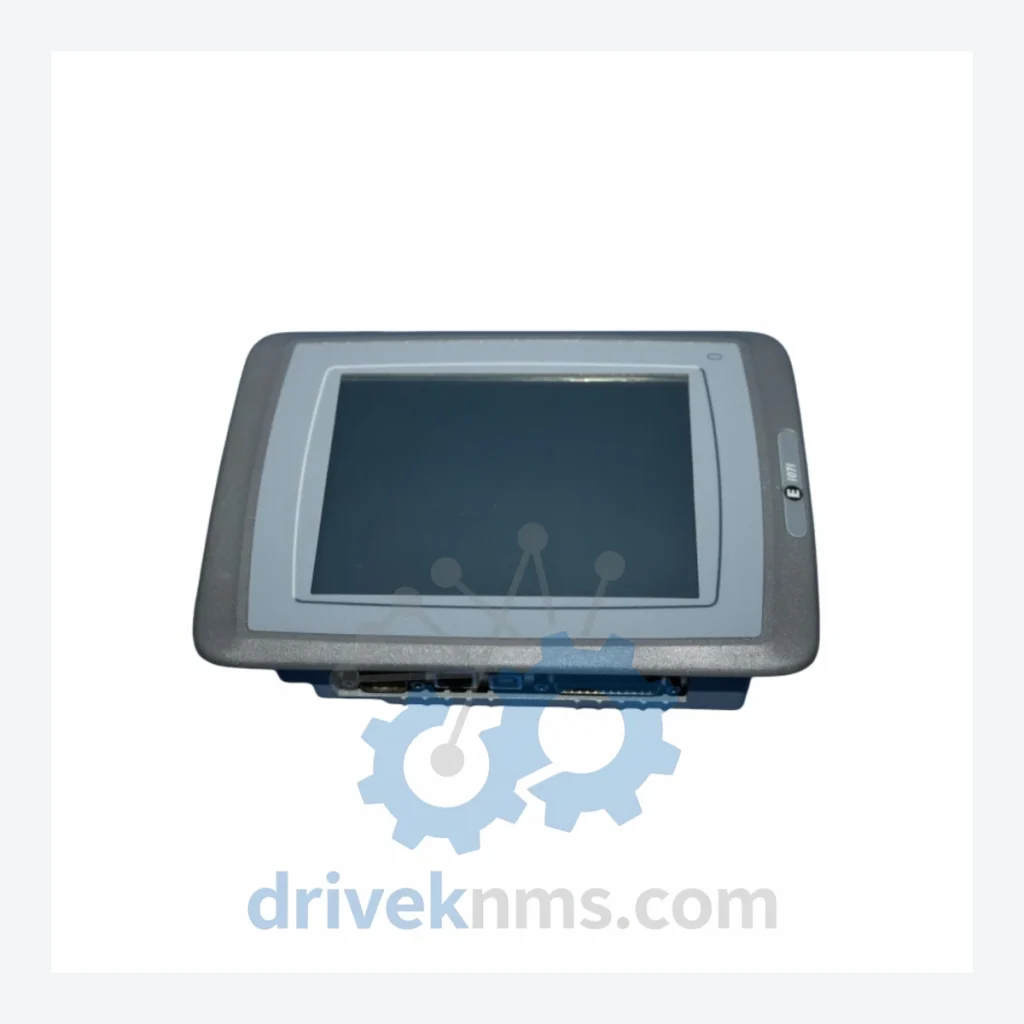
Mitsubishi E1071 06015B HMI Touch Panel – Obsolete GOT900 Spare Part
RFQ support for obsolete parts: Send the model number, required quantity and destination so DriveKNMS can confirm sourcing options before quotation.
Technical Specifications
Note: Electrical parameters such as supply voltage, display resolution, and communication port specifications are confirmed against physical unit documentation at time of sale. We do not publish unverified parameters.
Solving the Discontinued Hardware Crisis
The GOT900 series was deeply embedded in Japanese and Asian manufacturing infrastructure throughout the 1990s and 2000s. Automotive body shops, food processing lines, pharmaceutical batch systems, and textile machinery all ran — and many still run — on GOT900-based HMI architectures. The E1071 06015B served as the operator's primary interface to the underlying MELSEC PLC logic.
Mitsubishi's end-of-life announcement for this series left plant engineers with a hard choice: source replacement units through the secondary market, or commit to a full system migration. For facilities running stable, validated processes, migration is not a neutral engineering exercise. It is a business risk event. Re-validation of automated processes in regulated industries (food, pharma, automotive) can take months and requires documented change control. The E1071 06015B is not simply a display unit — it is the validated human-machine interface for a process that has been running without incident for years.
Condition & Reliability Assurance
Discontinued hardware sourced from the secondary market carries inherent risk. Our 5-step QA protocol is designed to surface and eliminate the failure modes most common in aged industrial electronics before the unit ships.
Step 1 – Electrolytic Capacitor Inspection: Aged capacitors are the primary failure point in HMI panels stored beyond their design life. Each unit undergoes visual and electrical inspection of all electrolytic capacitors. Units showing bulging, leakage, or ESR deviation are either recapped or rejected.
Step 2 – Firmware Version Verification: The installed firmware version is confirmed and documented. Compatibility with the target PLC communication protocol is verified prior to dispatch.
Step 3 – Pin and Connector Corrosion Check: All I/O connectors, communication ports, and backplane contacts are inspected under magnification for oxidation, corrosion, and mechanical damage. Affected contacts are cleaned or the unit is rejected.
Step 4 – Power-On Functional Test: Each unit is powered and tested for display integrity, touch response, and communication port function. Units that do not pass functional test are not sold as operational spares.
Step 5 – Documentation and Traceability: Test results, firmware version, and physical condition are recorded and accompany each shipment. This documentation supports your internal maintenance records and any regulatory change-control requirements.
Key Features for System Maintenance
The E1071 06015B is a direct hardware replacement for the original unit. It does not require PLC re-programming, screen layout redesign, or communication parameter reconfiguration when installed into an existing GOT900 installation. This drop-in compatibility is the core operational value of sourcing an identical replacement rather than pursuing a cross-generation upgrade.
For facilities managing multiple identical lines, a single verified spare covers all nodes running the same panel model. This is the most cost-efficient form of critical-spare inventory management available for discontinued hardware.
How do I know the unit is genuine and not counterfeit?
All units are sourced from documented industrial decommissions or verified distributor overstock. Physical markings, PCB revision codes, and firmware identifiers are cross-referenced against known-good references. Counterfeit Mitsubishi HMI panels are rare in this product class, but our inspection process would identify anomalies in board construction or labeling.
Should I buy more than one unit?
For any production-critical node running a discontinued HMI, holding a minimum of two spares is the standard recommendation in industrial asset management practice. The first covers an immediate failure. The second covers the period between failure and the next sourcing cycle — which, for obsolete parts, may be measured in months or years rather than days.
Can you source additional units if I need more?
Contact us with your quantity requirement. We maintain sourcing networks for discontinued Mitsubishi components and can advise on current market availability.