
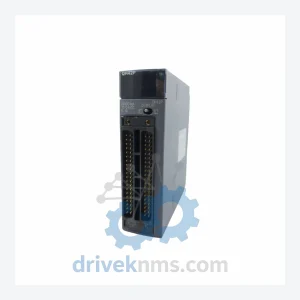
Mitsubishi QX48Y57 BD627B662G51 Combination Unit – PLC Module
Mitsubishi QX48Y57 BD627B662G51 PLC Combination Unit: Supply Continuity Strategy for Mission-Critical Operations The Mitsubishi QX48Y57 BD627B662G51 is a combination I/O…
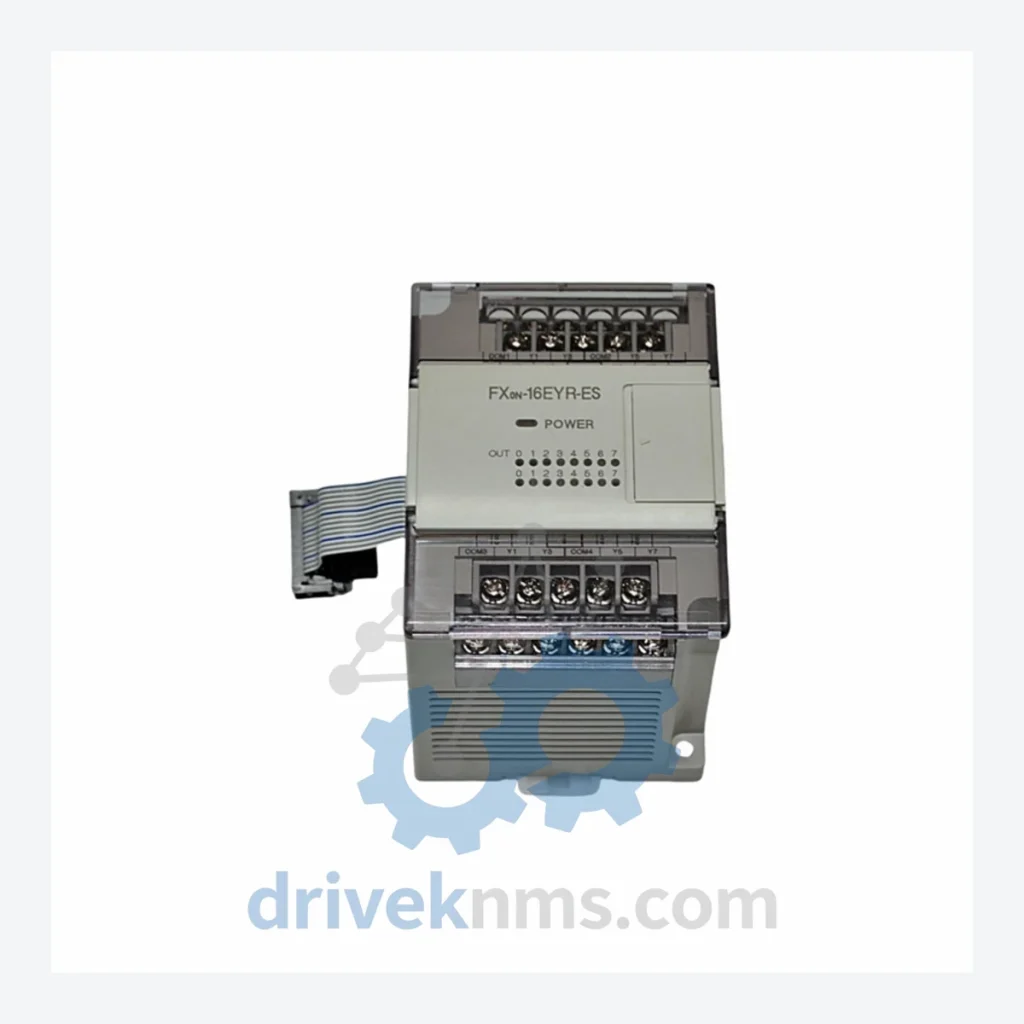
Model: FXON-16EYR FX0N-16EYR
Product Overview
Commercial availability is handled through direct RFQ, model verification and export-oriented follow-up rather than public cart checkout.
Datasheet Preview
Use attached product manuals when available. If the manual is not public yet, request the full file directly through RFQ.
Commercial Path
Product pages on DRIVEKNMS are designed to verify model, brand and series first, then move the buyer into one clean quotation path.
Technical Dossier
A failed FX0N-16EYR on a production line is not a module problem. It is a capital decision forced on a facility that was not prepared for it. The Mitsubishi MELSEC FX0N series has been officially discontinued. The control architecture it anchors — embedded across packaging lines, injection molding cells, conveyor systems, and discrete manufacturing equipment installed throughout the 1990s and early 2000s — cannot be replaced without a full engineering redesign. Migrating to a current-generation PLC platform requires new I/O wiring, revised HMI and SCADA programming, updated documentation, and weeks of commissioning downtime. Conservative project costs begin at USD $150,000 and routinely exceed $1,000,000 on complex lines. A verified FX0N-16EYR sourced from physical stock eliminates that exposure entirely.
DriveKNMS maintains dedicated inventory of discontinued Mitsubishi MELSEC components for facilities that have made a deliberate decision to extend the operational life of proven automation assets rather than absorb the cost and risk of premature system replacement.
| Parameter | Detail |
|---|---|
| Part Number | FX0N-16EYR / FXON-16EYR |
| Manufacturer | Mitsubishi Electric |
| Series | MELSEC FX0N |
| Product Status | Discontinued / Obsolete – No longer manufactured by Mitsubishi Electric |
| Module Type | Expansion I/O Module – Relay Output |
| Output Points | 16 relay outputs |
| Output Type | Relay contact output (dry contact) |
| Compatible Base Units | Mitsubishi FX0N series main units (e.g. FX0N-24MR, FX0N-40MR, FX0N-60MR) |
| Country of Origin | Japan |
| Condition Available | New surplus / Tested refurbished (specified at time of order) |
The FX0N-16EYR is not a generic I/O card. It communicates with the FX0N CPU via Mitsubishi's proprietary extension bus. No third-party equivalent achieves a true drop-in replacement without firmware-level reconfiguration. Facilities running FX0N-based control systems face a binary choice: source original hardware, or commit to a full system overhaul.
The FX0N platform was widely deployed where cycle time reliability and compact panel footprint were priorities. These systems remain mechanically sound and operationally effective. The only vulnerability is component availability. A relay output module subjected to high-cycle switching loads — common in packaging and press applications — will eventually reach end of contact life. At that point, having a verified spare on the shelf is the difference between a two-hour swap and a six-week capital project.
How facilities extend FX0N system life by 5 to 10 years beyond official support: The facilities that have successfully deferred system replacement share three consistent practices. First, they maintain a minimum two-unit spare inventory for every critical I/O module in the installed base — not one unit, two. Second, they run a scheduled inspection cycle for relay contact resistance on high-cycle outputs, typically every 12 to 18 months, catching degradation before it becomes a failure. Third, they maintain off-system backups of all ladder logic programs with revision history, so that any replacement module can be verified against a known-good program state without relying on the CPU's internal memory. The annual cost of this approach — spare parts, inspection labor, documentation maintenance — is typically less than 1% of the capital cost of a replacement system. For a line with a replacement cost of $500,000, that is $5,000 per year to eliminate the risk of forced migration. The financial case is not complicated.
Secondary market availability of FX0N components is finite and declining. Mitsubishi ceased production years ago. Each year, the pool of available new-surplus and serviceable refurbished units contracts as existing stocks are consumed and not replenished. Procurement decisions made in 2025 and 2026 directly determine whether replacement hardware will be accessible in 2028 or 2030. Facilities that have deferred spare parts procurement have subsequently faced extended lead times, no availability, or counterfeit risk from unverified sources.
Discontinued hardware sourced from secondary markets carries inherent risk. DriveKNMS applies a five-stage inspection protocol to all FX0N-16EYR units before shipment:
1. Visual and Mechanical Inspection: Board-level examination for physical damage, pin corrosion, and connector integrity. Units with oxidized or bent I/O pins are rejected at this stage.
2. Electrolytic Capacitor Assessment: FX0N-era power supply and filter capacitors are evaluated for bulging, leakage, and ESR deviation. Capacitor degradation is the primary failure mode in aged relay output modules and is not detectable without bench testing.
3. Relay Contact Resistance Measurement: Each output relay is cycled and contact resistance is measured. Units exceeding acceptable thresholds are either reconditioned with OEM-equivalent relay components or removed from serviceable stock.
4. Firmware and Label Verification: Hardware revision markings are cross-referenced against Mitsubishi's published revision history to confirm compatibility with target FX0N CPU firmware versions.
5. Functional Power-On Test: Each unit is powered and all 16 output channels are verified under load conditions before packaging.
The FX0N-16EYR installs directly onto the FX0N extension bus without any parameter configuration or programming changes to the host CPU. Replacement is a physical swap — disconnect the extension cable, remove the module, install the replacement, restore power. No engineering involvement is required for a like-for-like substitution.
This drop-in replacement characteristic is the core financial argument for maintaining original hardware rather than migrating to a current platform. A maintenance technician can execute the replacement during a scheduled shutdown window. The equivalent task on a redesigned system requires a controls engineer, updated documentation, and a full functional acceptance test — a process measured in days, not hours.
For facilities managing multiple FX0N installations across a plant or across sites, standardizing on a common spare module inventory eliminates the need for site-specific engineering support and reduces mean time to repair across the entire installed base. No reprogramming. No engineering redesign. No commissioning downtime.
What warranty applies to discontinued parts?
DriveKNMS provides a 90-day warranty covering functional failure under normal operating conditions. This applies to both new surplus and tested refurbished units. Warranty claims require return of the defective unit for inspection.
How do I confirm the unit is new or genuine refurbished?
Each unit shipped by DriveKNMS is accompanied by an inspection report documenting the condition grade, test results, and any reconditioned components. New surplus units retain original Mitsubishi packaging where available. Refurbished units are clearly identified with DriveKNMS inspection labels and test date stamps.
Should I purchase more than one unit?
For any FX0N installation classified as production-critical, a minimum of two spare FX0N-16EYR modules is the standard recommendation. Secondary market availability is finite and declining. Procurement decisions made today directly determine whether replacement hardware will be accessible in three to five years. Facilities that have deferred spare parts procurement have subsequently faced extended lead times or no availability at all.
Can this module work with FX1N or FX2N systems?
The FX0N-16EYR is designed for the FX0N extension bus. Compatibility with FX1N or FX2N systems is not confirmed and should not be assumed without consulting Mitsubishi's hardware compatibility documentation for your specific CPU revision.
© 2026 DriveKNMS. All trademarks belong to their respective owners. Specifications are for reference only and subject to change without notice. Verify all parameters against official documentation before installation.
Related Paths
Mitsubishi QX48Y57 BD627B662G51 PLC Combination Unit: Supply Continuity Strategy for Mission-Critical Operations The Mitsubishi QX48Y57 BD627B662G51 is a combination I/O…
Mitsubishi MW400 Series: Comprehensive Module Range and Technical Overview The Mitsubishi Electric MW400 series represents a generation of industrial circuit…
Mitsubishi PD21 PD21B Series: Comprehensive Module Range and Technical Overview The Mitsubishi PD21 and PD21B are DC power supply modules…