
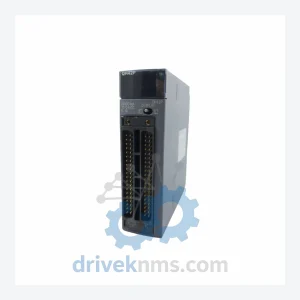
Mitsubishi QX48Y57 BD627B662G51 Combination Unit – PLC Module
Mitsubishi QX48Y57 BD627B662G51 PLC Combination Unit: Supply Continuity Strategy for Mission-Critical Operations The Mitsubishi QX48Y57 BD627B662G51 is a combination I/O…
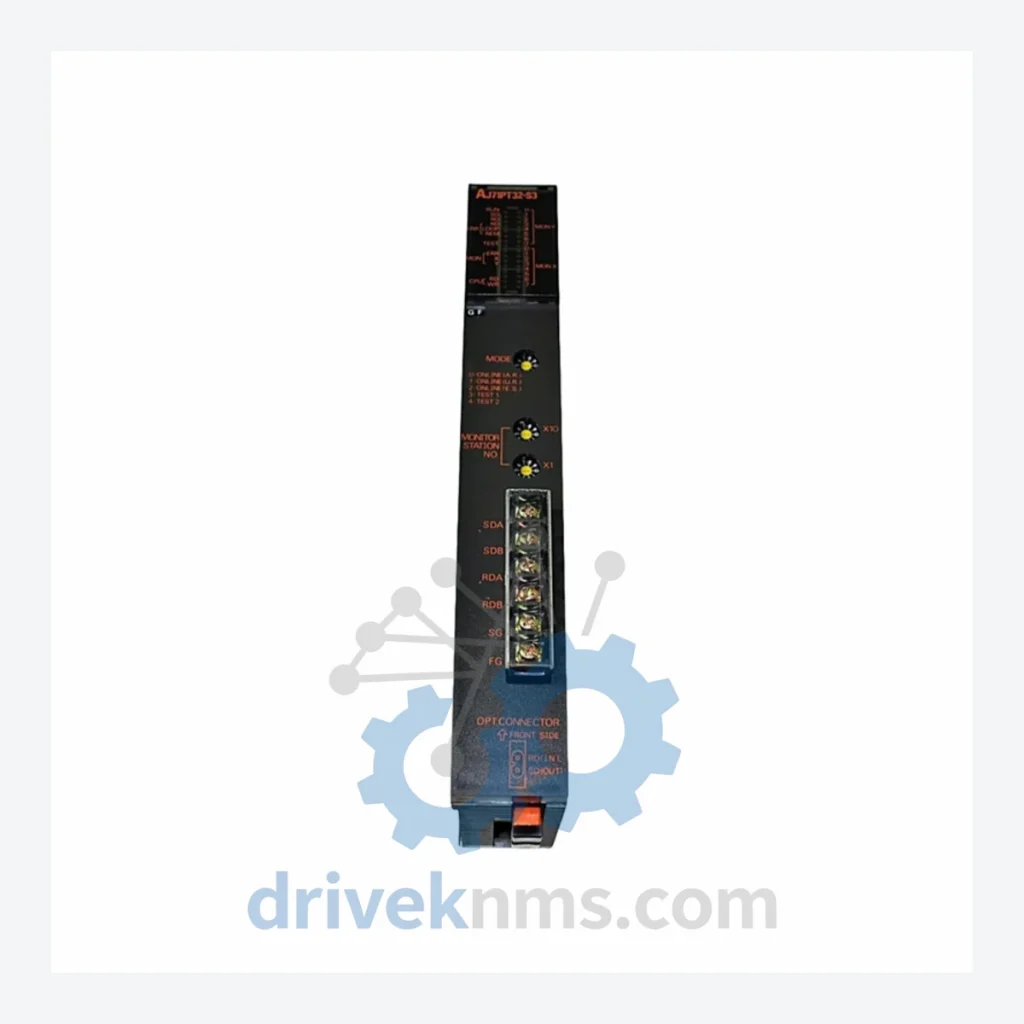
Model: AJ71PT32-S3
Product Overview
Commercial availability is handled through direct RFQ, model verification and export-oriented follow-up rather than public cart checkout.
Datasheet Preview
Use attached product manuals when available. If the manual is not public yet, request the full file directly through RFQ.
Commercial Path
Product pages on DRIVEKNMS are designed to verify model, brand and series first, then move the buyer into one clean quotation path.
Technical Dossier
The Mitsubishi Electric MELSEC-A Series is one of the most widely deployed programmable logic controller (PLC) platforms in global heavy industry. Installed across petrochemical complexes, nuclear power facilities, steel mills, and oil refineries from the 1980s through the 2000s, the MELSEC-A platform established Mitsubishi Electric as a tier-one automation supplier in process-critical environments. Its modular backplane architecture, deterministic scan cycle performance, and broad I/O density made it the default selection for distributed control system (DCS) integration projects requiring long-term operational continuity. Facilities running MELSEC-A hardware today typically operate under 20–30 year asset lifecycles, making spare parts availability a mission-critical procurement concern.
The MELSEC-A Series was introduced in the early 1980s as a successor to Mitsubishi's MELSEC-K platform. The architecture is built around a parallel backplane bus (A-BUS) that supports synchronous data exchange between CPU modules and peripheral I/O, communication, and special function modules. Early configurations centered on the A2CPU and A3CPU processors, which used proprietary ladder logic execution engines with fixed scan cycles. By the late 1980s, Mitsubishi introduced the A2ACPU and A3ACPU variants with expanded program memory and enhanced interrupt handling for high-speed process control.
The 1990s saw the integration of open fieldbus protocols into the MELSEC-A ecosystem. The AJ71PT32-S3 PROFIBUS-DP master module and the AJ71PB92D represent this generation — purpose-built communication adapters that bridged the proprietary A-BUS to IEC 61158-compliant fieldbus networks. This allowed MELSEC-A systems to interface with third-party field devices (valve positioners, variable frequency drives, remote I/O stations) without replacing the core CPU infrastructure. Compatibility constraints are significant: these communication modules are slot-position dependent, require specific base unit types (A38B, A68B, A98B), and are not forward-compatible with the MELSEC-Q or MELSEC-iQ-R platforms without gateway hardware.
The MELSEC-A Series entered end-of-life (EOL) status progressively between 2008 and 2015. Mitsubishi Electric officially discontinued manufacturing of most A-Series modules by 2013, with the recommended migration path being the MELSEC-Q Series (QnUDE CPU family) or the current MELSEC iQ-R platform. However, due to the capital cost of full system replacement and the complexity of re-engineering validated process control logic, a substantial installed base remains in active service globally, particularly in the chemical processing and power generation sectors.
CPU Modules
Digital Input (DI) Modules
Digital Output (DO) Modules
Analog I/O Modules
Communication & Network Modules
Power Supply Modules
DriveKNMS maintains a dedicated inventory program for MELSEC-A Series hardware, with a focus on modules that have been discontinued by Mitsubishi Electric and are no longer available through authorized distribution channels. The AJ71PT32-S3 is a representative example: as a PROFIBUS-DP master module tied to an EOL platform, it cannot be substituted with a standard off-the-shelf alternative without significant engineering rework. DriveKNMS sources these units through controlled secondary market channels, including decommissioned plant asset liquidations, certified refurbishment programs, and long-term warehoused new-old-stock (NOS) inventory.
For facilities operating under IEC 61511 (functional safety) or ISO 55000 (asset management) frameworks, DriveKNMS provides full traceability documentation for each unit, including origin records, inspection reports, and test certificates. Procurement teams requiring long-term supply agreements (LTA) for multi-year maintenance contracts are encouraged to contact the sales team directly to discuss volume pricing and reservation programs.
MELSEC-A Series modules present specific technical challenges during incoming inspection due to their age profile and the complexity of their backplane communication logic. DriveKNMS applies a structured test protocol to all A-Series units prior to dispatch. For communication modules such as the AJ71PT32-S3, this includes functional verification of the PROFIBUS-DP master stack using a calibrated slave simulator, confirmation of GSD file compatibility, and bus timing validation at 9.6Kbps through 12Mbps baud rates. Backplane connector integrity is inspected under magnification for pin deformation, oxidation, and solder joint fatigue — failure modes common in modules removed from high-vibration industrial environments.
CPU modules undergo full program memory read/write cycle testing, battery-backed RAM retention verification, and scan cycle timing measurement against factory specification. All analog I/O modules are calibrated against NIST-traceable reference standards. Units that do not pass all test criteria are quarantined and not offered for sale. Test records are retained for a minimum of five years and are available to customers upon request.
Related Paths
Mitsubishi QX48Y57 BD627B662G51 PLC Combination Unit: Supply Continuity Strategy for Mission-Critical Operations The Mitsubishi QX48Y57 BD627B662G51 is a combination I/O…
Mitsubishi MW400 Series: Comprehensive Module Range and Technical Overview The Mitsubishi Electric MW400 series represents a generation of industrial circuit…
Mitsubishi PD21 PD21B Series: Comprehensive Module Range and Technical Overview The Mitsubishi PD21 and PD21B are DC power supply modules…