
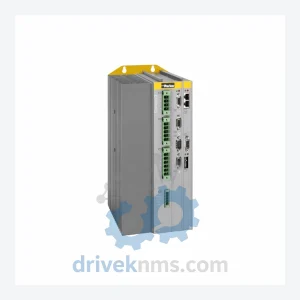
Parker C3S300V4F11I31T30M00A42 Servo Drive – Compax3 Series
Parker C3S300V4F11I31T30M00A42 Servo Drive: Securing Supply for a Discontinued Motion Control Asset The Parker Compax3 C3S300V4F11I31T30M00A42 is a high-performance single-axis…
Model: PA210T-133
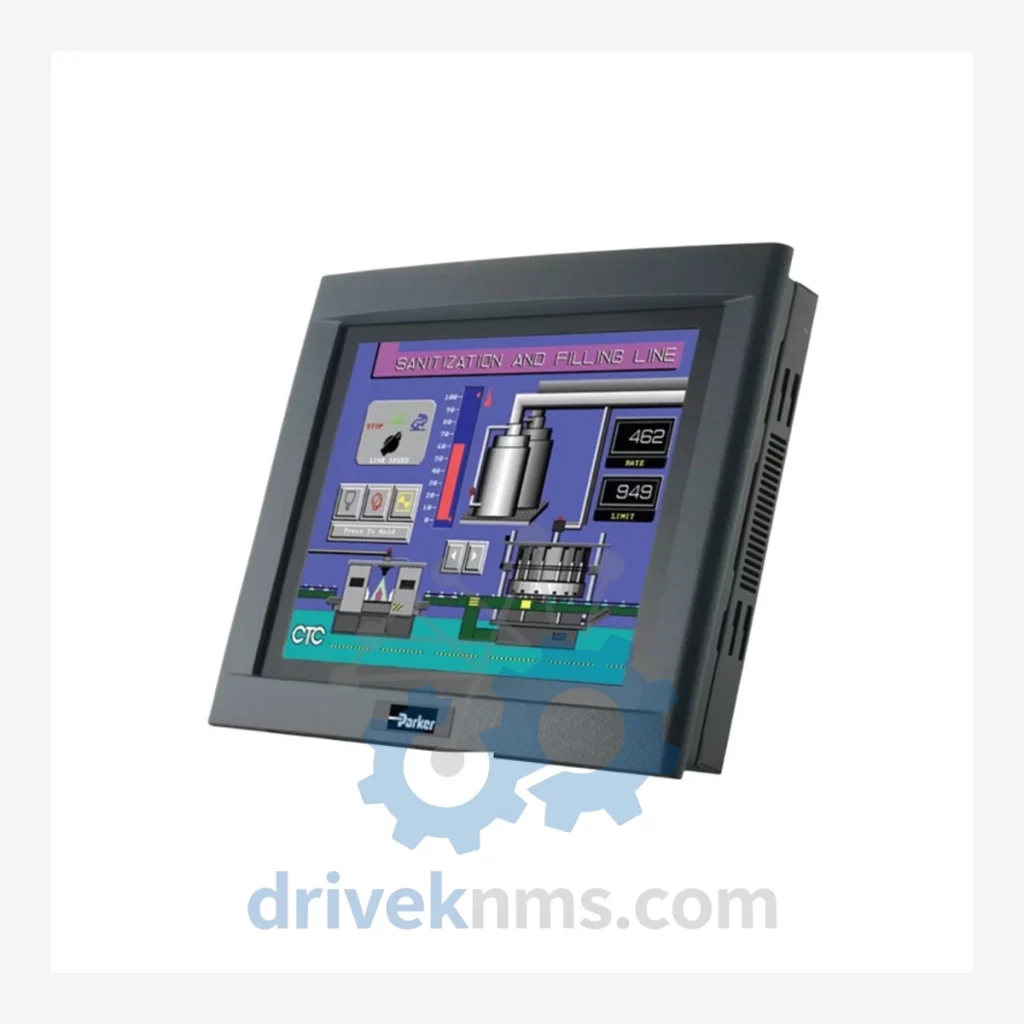
Product Overview
Commercial availability is handled through direct RFQ, model verification and export-oriented follow-up rather than public cart checkout.
Datasheet Preview
Use attached product manuals when available. If the manual is not public yet, request the full file directly through RFQ.
Commercial Path
Product pages on DRIVEKNMS are designed to verify model, brand and series first, then move the buyer into one clean quotation path.
Technical Dossier
When a Parker PA210T-133 fails on the production floor, the instinct is to call the OEM — only to be told the part was discontinued years ago. At that point, plant managers face a choice that carries a price tag measured in millions: either source the original component and keep the existing system running, or commit to a full pneumatic system overhaul that disrupts production schedules, demands months of re-engineering, and burns through capital budgets that were never allocated for this purpose.
DriveKNMS maintains verified stock of the Parker PA210T-133. This is not a listing built on speculation. It is a direct response to the documented procurement gap that exists when OEM channels close and the installed base of legacy Parker pneumatic systems remains operational across manufacturing facilities worldwide.
| Part Number | PA210T-133 |
| Brand | Parker Hannifin |
| Product Series | PA Series Pneumatic Preparation Units |
| Product Type | Pneumatic Filter Regulator (Combination Unit) |
| Country of Origin | United States |
| OEM Status | Discontinued / Obsolete – No longer available through Parker authorized distribution channels |
| Compatibility | Compatible with Parker PA Series modular pneumatic preparation systems; suitable for integration into legacy compressed air circuits requiring regulated, filtered supply |
| Condition Available | New Old Stock (NOS) / Professionally Refurbished – confirmed per unit prior to shipment |
Note: Electrical and dimensional parameters are confirmed against physical unit inspection. No parameters are published without verification. Contact us for a full datasheet based on your specific unit serial range.
Parker's PA Series pneumatic preparation components were engineered for long-cycle industrial environments — precisely the environments where they are now most difficult to replace. These units are embedded in compressed air circuits that feed actuators, valves, and control systems across automotive assembly lines, food processing facilities, and discrete manufacturing cells. The PA210T-133 specifically serves as a front-end conditioning unit: without it, downstream pneumatic components receive unregulated, contaminated air supply, which accelerates wear across the entire circuit.
The discontinuation of this part does not reflect a decline in its installed base. Parker's own service documentation for legacy PA Series systems remains in circulation precisely because these systems continue to operate. The problem is not the equipment — it is the supply chain. When a plant has invested in a pneumatic infrastructure built around Parker PA Series architecture, the cost of migrating to a current-generation platform involves not just new hardware, but requalification of process parameters, retraining of maintenance personnel, and potential production downtime measured in weeks.
A single PA210T-133 sourced from verified stock eliminates that entire cost exposure. For facilities operating under lean maintenance budgets, this is not a convenience — it is a capital preservation decision.
This component is commonly found in systems paired with Parker's legacy valve islands, SMC pneumatic circuits, and compressed air preparation trains in older Siemens or Allen-Bradley PLC-controlled automation cells. If your facility runs any of these configurations, maintaining a buffer stock of the PA210T-133 is a direct hedge against unplanned downtime.
Factory management teams facing system retirement pressure from corporate asset review cycles often underestimate the cost differential between a targeted spare parts strategy and a full system replacement. The following framework applies directly to facilities running legacy Parker pneumatic infrastructure:
1. Conduct a failure mode audit before the OEM window closes. Identify the three to five components in your pneumatic preparation train most likely to fail within the next operational cycle. For PA Series systems, filter elements, regulator diaphragms, and combination units like the PA210T-133 are the highest-frequency failure points. Source these before they become emergency procurement events.
2. Separate consumable wear parts from structural components. The PA210T-133 is a structural conditioning unit. Its failure is not gradual — it is a hard stop. Treating it as a consumable and maintaining one or two units in bonded stores costs a fraction of the downtime exposure it prevents.
3. Negotiate multi-unit procurement when verified stock is available. Obsolete parts do not restock. When a supplier confirms availability, the procurement decision should account for the full remaining service life of the system, not just the immediate replacement need. A facility planning to run its current pneumatic infrastructure for another seven years should hold stock accordingly.
4. Document the sourcing chain. For audit and insurance purposes, procurement records for obsolete components should include supplier verification documentation, condition assessment reports, and traceability to the specific unit serial range. DriveKNMS provides this documentation as standard.
5. Align spare parts strategy with planned maintenance windows. Installing a replacement PA210T-133 during a scheduled shutdown costs zero additional downtime. Installing it during an unplanned failure costs the full production loss for the duration of emergency sourcing — which, for a discontinued part, can extend to weeks.
Every PA210T-133 unit processed through DriveKNMS undergoes a structured five-stage assessment before it is offered for sale. This protocol is designed specifically for legacy pneumatic components where age-related degradation follows predictable failure patterns:
Stage 1 – Visual and Mechanical Inspection: External housing integrity, port thread condition, bowl condition, and mounting interface are inspected against OEM dimensional references. Units with structural compromise are rejected at this stage.
Stage 2 – Diaphragm and Seal Assessment: Regulator diaphragms and bowl seals are the primary age-related failure points in PA Series units. Each unit is assessed for elastomer degradation, cracking, and set. Seals are replaced where condition does not meet service standard.
Stage 3 – Filter Element Verification: Filter media condition is assessed and replaced as standard on refurbished units. New Old Stock units are verified for element integrity prior to listing.
Stage 4 – Functional Pressure Test: Units are bench-tested under regulated supply pressure to confirm regulator response, pressure stability, and absence of internal or external leakage.
Stage 5 – Packaging and Preservation: Units are packaged with port protection and moisture barrier packaging appropriate for long-term storage if the unit is being held as a buffer spare.
The PA210T-133 is a direct form-fit-function replacement for the original installed unit. There is no requirement for system reprogramming, control logic modification, or pneumatic circuit redesign. Installation follows the original Parker service procedure. This is the defining advantage of sourcing an original-specification spare part versus pursuing an alternative that requires engineering adaptation.
Facilities that have attempted to substitute non-OEM equivalent components in PA Series positions have documented issues with pressure regulation stability and increased downstream component wear. The PA210T-133 eliminates this risk by maintaining the original design intent of the pneumatic preparation circuit.
For maintenance teams operating under time pressure during a production stoppage, the drop-in replacement characteristic of this part means that a qualified technician can complete the installation and return the system to service without specialist support. This directly reduces the labor cost and elapsed time of the repair event.
What warranty applies to an obsolete part like the PA210T-133?
DriveKNMS provides a 3-month warranty covering functional performance against the specifications confirmed during our QA process. Warranty terms are documented in writing at the time of sale.
How do I confirm whether the unit is new or refurbished?
Each unit is individually classified as New Old Stock or Professionally Refurbished prior to listing. The classification, along with the QA stage results, is provided in the shipment documentation. We do not mix classifications within a single order without explicit disclosure.
Should I purchase more than one unit?
For any facility planning to operate PA Series pneumatic infrastructure beyond the next 24 months, holding a minimum of one buffer unit is a defensible maintenance decision. For facilities with multiple PA210T-133 positions in service, proportional buffer stock is recommended. Once current stock is exhausted, restock availability cannot be guaranteed.
Related Paths
Parker C3S300V4F11I31T30M00A42 Servo Drive: Securing Supply for a Discontinued Motion Control Asset The Parker Compax3 C3S300V4F11I31T30M00A42 is a high-performance single-axis…
Parker COMPAX-S Series: Comprehensive Module Range and Technical Overview The Parker COMPAX-S series is a compact, high-performance servo drive platform…
Parker CPX2500 Series: Comprehensive Module Range and Technical Overview The Parker CPX2500 series is a compact, high-performance servo controller platform…