
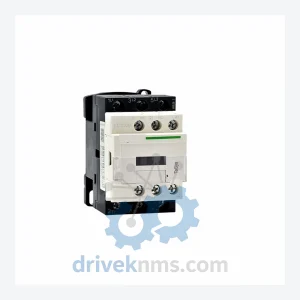
Schneider Electric TeSys D Series Contactors: LC1D09M7C
Schneider Electric LC1D09M7C is listed for TeSys D RFQ review. Confirm quantity, condition and destination before quotation.
RFQ-ready industrial model
Model: LC1D410M7C
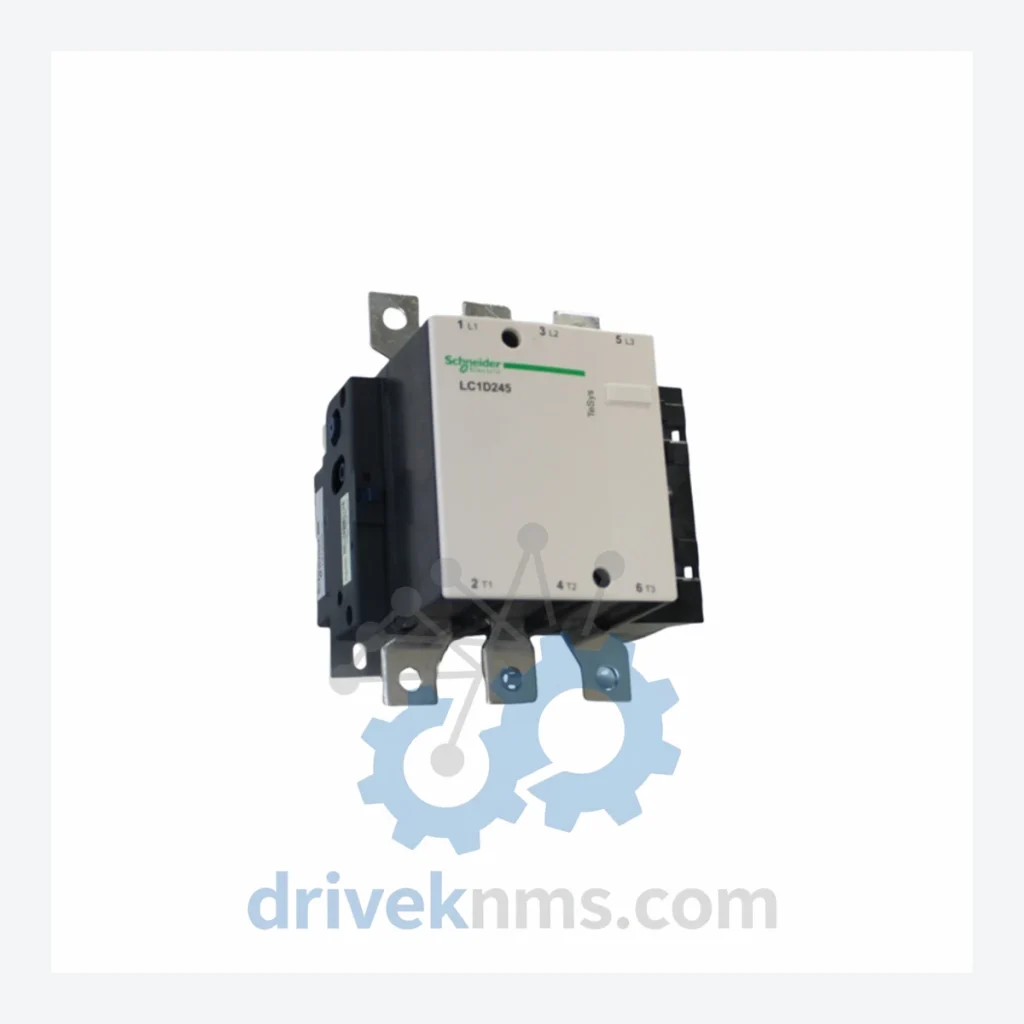
Product Overview
Commercial availability is handled through direct RFQ, model verification and export-oriented follow-up rather than public cart checkout.
Datasheet Preview
Use attached product manuals when available. If the manual is not public yet, request the full file directly through RFQ.
Commercial Path
Product pages on DRIVEKNMS are designed to verify model, brand and series first, then move the buyer into one clean quotation path.
Technical Dossier
| Parameter | Value |
|---|---|
| Manufacturer | Schneider Electric |
| Part Number / SKU | LC1D410M7C |
| Series | TeSys D |
| Product Type | 3-Pole AC Contactor / Motor Starter |
| Rated Operational Current (Ith) | 410 A |
| Poles | 3 Main Poles + 1 NO Auxiliary |
| Coil Voltage | 220 V AC (M7C suffix = 220 VAC, 50/60 Hz) |
| AC-3 Duty Rating | 200 kW @ 400 V |
| Mounting | DIN Rail / Screw Mount |
| Country of Origin | France |
| Production Status | Active – Critical Spare Recommended |
How to Extend Your Motor Control Asset Life by 5–10 Years Without System Overhaul
1. Contactor replacement on condition, not on failure. Inspect contact wear and coil resistance at scheduled intervals. Replace the LC1D410M7C before contact erosion reaches the point of welding under load — a welded contactor in a motor circuit creates a far more expensive failure cascade than a planned swap.
3. Standardize on a single coil voltage across the facility. Mixed coil voltages (220 VAC vs. 110 VAC vs. 24 VDC) are the primary source of incorrect spare installation. The M7C suffix (220 VAC) should be confirmed against your panel drawings before ordering.
4. Document the TeSys D form factor in your asset register. When the time for MCC modernization does arrive, having a complete inventory of TeSys D contactors by rating and coil voltage allows engineering to plan a phased replacement rather than an emergency overhaul.
Every LC1D410M7C unit shipped by DriveKNMS passes a structured 5-step inspection protocol before dispatch:
Step 1 – Visual and Mechanical Inspection: Housing integrity, contact carrier movement, and arc chute condition are checked against OEM reference standards. Units with cracked housings, deformed contact carriers, or missing arc chutes are rejected.
Step 2 – Contact Surface Assessment: Main contact faces are inspected for erosion depth and surface condition. Units showing contact material loss beyond serviceable limits are not shipped.
Step 3 – Coil Resistance Verification: Coil DC resistance is measured and compared against the published specification for the M7C coil. Out-of-tolerance coils indicate insulation degradation and result in unit rejection.
Step 4 – Auxiliary Contact Continuity Test: The 1 NO auxiliary contact block is tested for correct make/break operation and contact resistance within specification.
Step 5 – Functional Energization Test: Where test infrastructure permits, units are energized at rated coil voltage and cycled to confirm correct armature pull-in, hold, and release without chatter or delayed dropout.
Units that pass all five steps are individually bagged, labeled with inspection date and technician ID, and shipped in anti-static protective packaging.
The LC1D410M7C is a direct drop-in replacement for any existing TeSys D 410A 3-pole contactor installation with a 220 VAC coil. No rewiring of the main power circuit is required. No modification to the auxiliary control wiring is required, provided the existing installation uses the standard 1 NO auxiliary contact configuration. No firmware, parameter configuration, or drive commissioning is involved — this is a purely electromechanical device.
For maintenance teams, this means a verified replacement can be installed and the motor circuit returned to service within the time it takes to isolate the panel, swap the contactor, and restore power. There is no engineering involvement required, no software tool, and no revalidation of drive parameters. The total cost of the repair is the part cost plus one technician's time. This is the defining advantage of maintaining the existing TeSys D platform rather than migrating to a newer contactor family that may require auxiliary contact block reconfiguration or different mounting hardware.
Q: How many units should we hold as site spares?
A: For any motor circuit where an unplanned outage would halt production, hold a minimum of one unit on-site. For critical single-point-of-failure circuits — compressors, main cooling pumps, primary conveyor drives — consider holding two units. The carrying cost of a second spare is a fraction of the cost of a single production stoppage while waiting for emergency procurement.
Q: What is the coil voltage for the LC1D410M7C?
A: The M7C suffix designates a 220 VAC, 50/60 Hz coil. Verify your panel control voltage before ordering. If your installation uses a different control voltage, contact us — we may have alternative coil voltage variants available.
Continue The Model Path
Move from this exact model into the matching system hub, brand archive, model-family archive or lifecycle sourcing route before sending a final RFQ list.
Related Paths
Schneider Electric LC1D09M7C is listed for TeSys D RFQ review. Confirm quantity, condition and destination before quotation.
Schneider Electric LC1D38M7C is listed for TeSys D RFQ review. Confirm quantity, condition and destination before quotation.
Schneider Electric LC1D32M7C is listed for TeSys D RFQ review. Confirm quantity, condition and destination before quotation.