
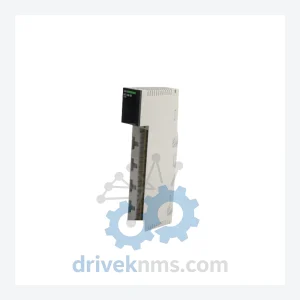
Schneider SCP401 Inductive Proximity Sensor – Obsolete OsiSense XS Spare Part
Schneider Electric SCP401 is listed for OsiSense XS RFQ review. Confirm quantity, condition and destination before quotation.
RFQ-ready industrial model
Model: XS630B1MAL2
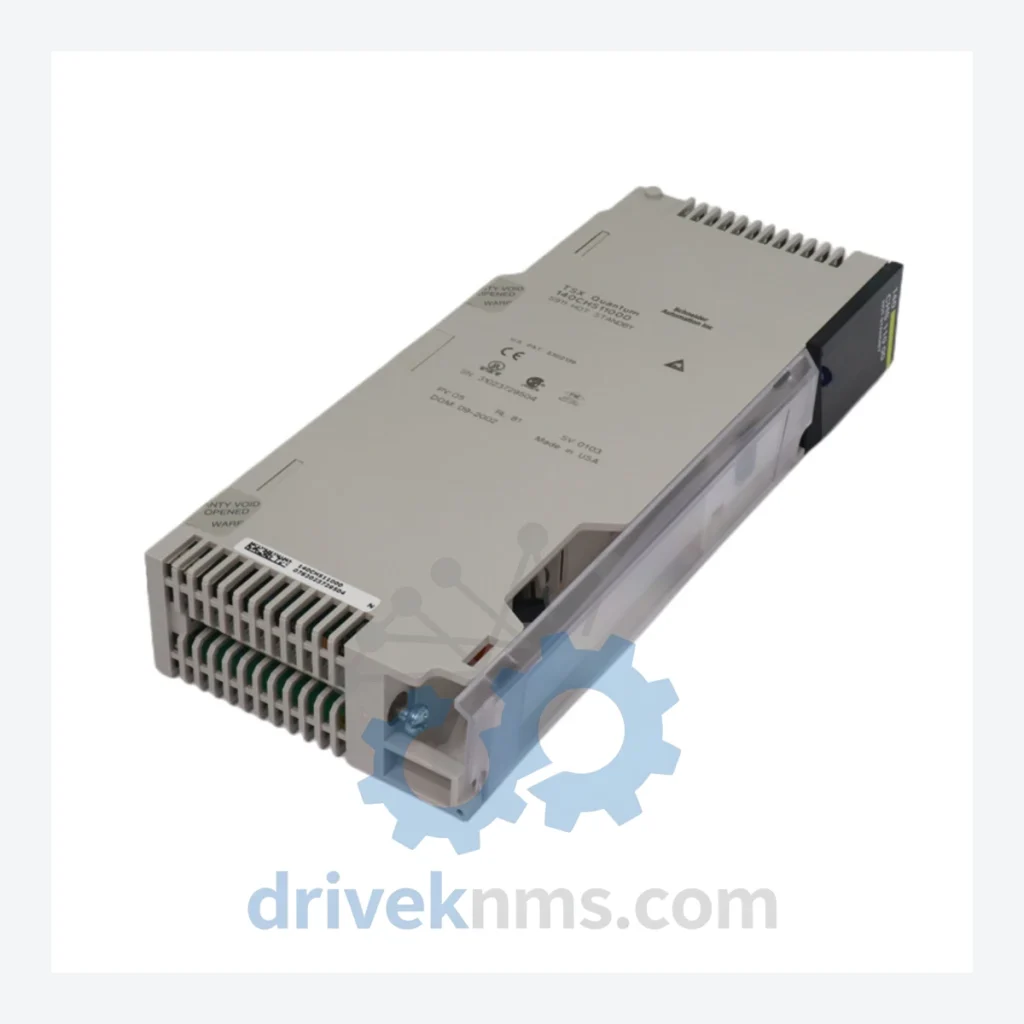
Product Overview
Commercial availability is handled through direct RFQ, model verification and export-oriented follow-up rather than public cart checkout.
Datasheet Preview
Use attached product manuals when available. If the manual is not public yet, request the full file directly through RFQ.
Commercial Path
Product pages on DRIVEKNMS are designed to verify model, brand and series first, then move the buyer into one clean quotation path.
Technical Dossier
DriveKNMS maintains RFQ-reviewed sourcing status of the XS630B1MAL2. Inventory is finite and not replenishable through standard distribution channels.
RFQ support for obsolete parts: Send the model number, required quantity and destination so DriveKNMS can confirm sourcing options before quotation.
| Parameter | Value |
|---|---|
| Part Number | XS630B1MAL2 |
| Manufacturer | Schneider Electric (formerly Telemecanique) |
| Series | OsiSense XS |
| Sensor Type | Inductive Proximity Sensor |
| Housing Diameter | 30 mm cylindrical |
| Detection Distance | 15 mm (nominal) |
| Output Type | PNP, Normally Open (NO) |
| Supply Voltage | 24–240 V AC/DC |
| Connection Type | Cable, 2 m (M12 connector variant) |
| IP Rating | IP67 |
| Country of Origin | France |
| Discontinuation Status | Obsolete – No longer manufactured or distributed through standard channels |
| Compatible Legacy Systems | Schneider Modicon TSX Micro, TSX Premium, Telemecanique PLC platforms |
Note: Parameters are provided based on published manufacturer documentation. Verify against your specific installation requirements before procurement.
The XS630B1MAL2 was engineered for demanding industrial environments where detection reliability directly governs throughput. In legacy Schneider and Telemecanique control architectures, this sensor series was integrated at the field device level with fixed I/O addressing, specific cable routing, and pre-configured PLC input parameters. Replacing it with a modern equivalent is not a plug-and-swap operation — it requires I/O remapping, potential firmware adjustments, and in some cases, panel rewiring.
For plant managers operating under capital expenditure constraints, the calculus is straightforward: a verified OEM-equivalent spare at a fraction of the cost versus a forced system upgrade that disrupts production schedules, requires external engineering resources, and introduces new validation cycles. Facilities in the chemical processing, automotive stamping, and food packaging sectors have documented this cost differential repeatedly.
The decision to retire an automation system is rarely driven by the system's core controller reaching end of life. More often, it is a cascade failure triggered by a single unavailable field device — a sensor, a relay, a drive module — that forces an unplanned upgrade. This is a preventable outcome.
For plant management teams facing system retirement pressure, the following approach has proven effective across multiple industries:
1. Conduct a field device audit before EOL announcements force your hand. Identify every sensor, actuator, and I/O module in your legacy system that has been discontinued or is approaching discontinuation. The XS630B1MAL2 is a representative example — a high-cycle-count sensor in a form factor that no current product directly replaces without integration work.
3. Prioritize sensors at mechanical wear points. Inductive sensors mounted near moving tooling, stamping dies, or conveyor transfer points experience accelerated housing stress and cable fatigue. These are the first failure points in any legacy sensor installation.
4. Document firmware and configuration states before any field replacement. In legacy PLC environments, sensor replacement without configuration documentation creates diagnostic ambiguity. Maintain a living record of I/O assignments, detection thresholds, and cable routing for every critical field device.
5. Negotiate long-term supply agreements with verified secondary market suppliers. Single-purchase sourcing of obsolete parts introduces supply risk. A structured relationship with a supplier holding RFQ-reviewed sourcing status — with documented condition grading — provides a more stable maintenance posture.
Applied consistently, this approach has allowed facilities to defer system-wide automation upgrades by five to ten years, redirecting capital expenditure toward planned modernization rather than emergency replacement.
Sourcing obsolete components from the secondary market carries inherent risk. DriveKNMS applies a five-stage inspection protocol to every unit before dispatch review:
Stage 1 – Visual and Mechanical Inspection: Housing integrity check, thread condition assessment, cable jacket examination for cracking or abrasion damage.
Stage 2 – Electrolytic Capacitor Assessment: Internal capacitor condition is evaluated where accessible. Capacitor degradation is a primary failure mode in sensors stored beyond five years and is not visible externally.
Stage 3 – Pin and Connector Inspection: All connector pins are examined under magnification for oxidation, corrosion, and mechanical deformation. Affected contacts are treated or the unit is rejected.
Stage 4 – Functional Verification: Each unit is bench-tested against a reference target at the rated supply voltage. Output switching, response time, and LED indicator function are verified.
Stage 5 – Firmware and Labeling Verification: Part number, date code, and country of origin markings are cross-referenced against manufacturer documentation to confirm authenticity.
Units that do not pass all five stages are not offered for sale.
Drop-in mechanical replacement: The XS630B1MAL2 uses a standard M30 threaded housing. Mounting bracket compatibility with existing installations is maintained without modification.
No PLC reprogramming required: Output signal characteristics match the original specification. Existing I/O configurations, detection thresholds, and ladder logic remain valid.
Eliminates engineering redesign costs: Substituting a non-equivalent modern sensor into a legacy system requires I/O remapping and validation. A verified OEM-equivalent spare avoids this entirely.
Immediate operational continuity: Units are tested and ready for installation. No incoming inspection delay for facilities with active production schedules.
Q: How do I confirm the unit is genuine and not counterfeit?
A: Every unit is inspected against Schneider Electric's published part number documentation. Markings, housing geometry, and connector specifications are verified. We provide inspection documentation on request.
Q: Should I purchase multiple units as long-term reserves?
A: For any sensor in an active legacy system, holding a minimum of two spare units is a standard risk management practice. Given the XS630B1MAL2's obsolete status, restocking from any source cannot be guaranteed. Procurement decisions should account for the full remaining service life of the host system.
Continue The Model Path
Move from this exact model into the matching system hub, brand archive, model-family archive or lifecycle sourcing route before sending a final RFQ list.
Related Paths
Schneider Electric SCP401 is listed for OsiSense XS RFQ review. Confirm quantity, condition and destination before quotation.
Schneider Electric XS630B4PAL2 is listed for OsiSense XS RFQ review. Confirm quantity, condition and destination before quotation.
Schneider Electric XS4P30NA340 is listed for OsiSense XS RFQ review. Confirm quantity, condition and destination before quotation.