
Siemens ULC0065
Siemens ULC0065 is listed for Servo Drives RFQ review. Confirm quantity, condition and destination before quotation.
RFQ-ready industrial model
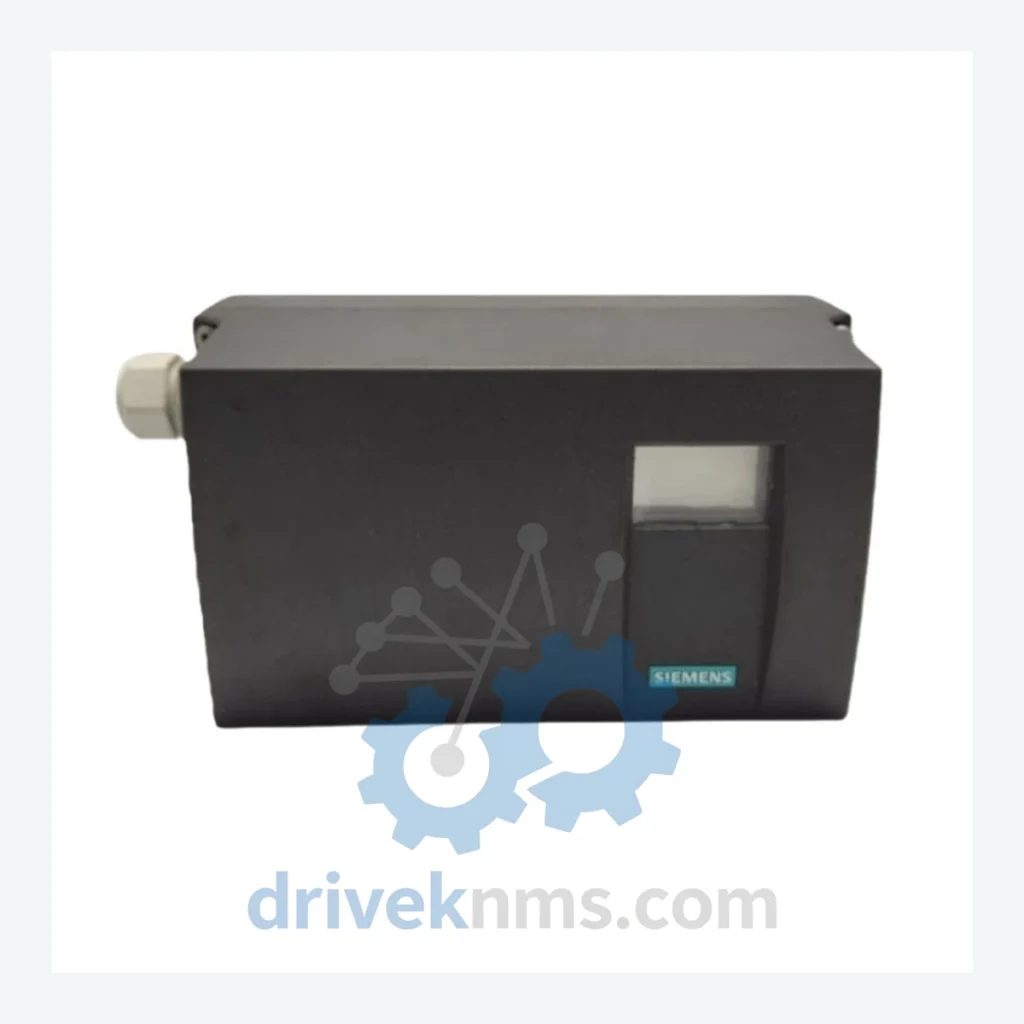
Model: 6DR5310-0NG00-0AA0
Product Overview
Commercial availability is handled through direct RFQ, model verification and export-oriented follow-up rather than public cart checkout.
Datasheet Preview
Use attached product manuals when available. If the manual is not public yet, request the full file directly through RFQ.
Commercial Path
Product pages on DRIVEKNMS are designed to verify model, brand and series first, then move the buyer into one clean quotation path.
Technical Dossier
When a Siemens SIPART PS2 positioner fails on a critical control loop, the consequences extend far beyond a single valve. In process plants where this unit governs flow, pressure, or temperature regulation, an unplanned shutdown can cascade into production losses measured in tens of thousands of dollars per hour. For facilities still operating legacy distributed control systems — including Siemens PCS 7, Siemens TELEPERM M, or third-party platforms such as Honeywell TDC 3000 and ABB MasterPiece 200 — sourcing a direct replacement for the 6DR5310-0NG00-0AA0 is not a procurement exercise. It is an asset protection decision.
RFQ support for obsolete parts: Send the model number, required quantity and destination so DriveKNMS can confirm sourcing options before quotation.
| Parameter | Value |
|---|---|
| Manufacturer | Siemens AG |
| Part Number | 6DR5310-0NG00-0AA0 |
| Series | SIPART PS2 |
| Type | Electropneumatic Positioner |
| Enclosure Protection | IP66 |
| Supply Air Pressure | 1.4 – 7 bar (20 – 101 psi) |
| Signal Input | 4 – 20 mA (2-wire) |
| Actuator Type Compatibility | Single-acting and double-acting pneumatic actuators |
| Country of Origin | Germany |
| Discontinuation Status | Phased out; no longer available via standard Siemens distribution |
| Compatible DCS Platforms | Siemens PCS 7, TELEPERM M, Honeywell TDC 3000, ABB MasterPiece 200, Foxboro I/A Series |
Note: Parameters listed are based on published Siemens SIPART PS2 series documentation. Any site-specific configuration data should be verified against the original plant engineering records before installation.
The SIPART PS2 platform was deployed extensively across refining, chemical, and power generation facilities throughout the 1990s and 2000s. The 6DR5310-0NG00-0AA0 variant — configured for standard single/double-acting service with NAMUR mounting — became a default specification on thousands of control loops worldwide. Its communication architecture integrates directly with 4–20 mA analog loops without requiring HART or fieldbus infrastructure, which is precisely why it remains embedded in plants that have no near-term plans to migrate their control layer.
The discontinuation of this part number creates a specific operational risk: when a unit fails, the plant faces a binary choice between an extended production halt while sourcing a compatible replacement, or an unplanned capital project to re-engineer the loop. Neither outcome is acceptable in a facility operating on thin margins with aging infrastructure. Maintaining a verified spare on the shelf converts that binary risk into a managed maintenance event — a four-hour swap versus a four-week crisis.
Facilities that successfully operate legacy automation infrastructure beyond its intended service life share a common practice: they treat critical spare parts as capital assets, not consumables. For a plant running Siemens SIPART PS2 positioners on 50 or more control loops, the following framework has proven effective in extending operational life without triggering a full DCS migration:
1. Criticality-Based Inventory Stratification. Not every positioner on a loop carries equal risk. Identify the 10–15% of loops where a positioner failure would directly cause a process shutdown or safety system activation. These are the loops that require on-hand spares. The remaining population can be managed on a longer replenishment cycle.
2. Condition-Based Replacement Scheduling. SIPART PS2 units accumulate diagnostic data on valve travel, step response deviation, and actuator friction. Extracting this data during scheduled turnarounds allows maintenance teams to identify units approaching end-of-life before they fail in service. A positioner showing degraded step response is a planned replacement; one that fails at 3 AM on a Sunday is an emergency.
3. Firmware Version Control. Later firmware revisions introduced changes to auto-calibration behavior that can affect loop tuning. When replacing a unit, confirm the firmware version matches the installed base to avoid unexpected control behavior after swap-out. DriveKNMS verifies firmware versions as part of the pre-shipment QA process.
5. Documentation Preservation. Original loop diagrams, calibration records, and positioner configuration sheets are frequently lost during facility ownership changes or IT system migrations. Preserving this documentation is as important as maintaining physical spares. Without it, even a perfect replacement unit requires additional engineering time to commission correctly.
Every 6DR5310-0NG00-0AA0 unit shipped by DriveKNMS passes a five-stage quality verification process developed specifically for obsolete industrial components:
Stage 1 – Electrolytic Capacitor Assessment. Aging electrolytic capacitors are the primary failure mode in positioner electronics that have been in storage or service for extended periods. Each unit undergoes visual inspection and electrical testing of the capacitor bank to identify any units showing ESR degradation or physical swelling.
Stage 2 – Firmware Version Verification. The installed firmware version is documented and confirmed against the unit's hardware revision. This information is included in the shipment documentation so the receiving engineer can verify compatibility before installation.
Stage 3 – Pin and Connector Corrosion Inspection. All electrical connectors, terminal blocks, and pneumatic fittings are inspected under magnification for oxidation, corrosion, or mechanical damage. Affected contacts are cleaned or the unit is rejected from inventory.
Stage 5 – Functional Verification. Where test equipment permits, units are bench-tested against a 4–20 mA input signal to confirm correct mechanical response and output linearity before dispatch review.
The 6DR5310-0NG00-0AA0 is a direct mechanical and electrical replacement for existing SIPART PS2 installations on compatible actuator configurations. No DCS reprogramming is required. No loop re-engineering is necessary. The unit mounts to the same NAMUR bracket pattern, connects to the same terminal assignments, and responds to the same 4–20 mA command signal as the original installation.
Can you source specific firmware versions?
We document firmware versions across our inventory. If your installation requires a specific firmware revision for compatibility reasons, contact us before ordering and we will confirm availability.
Continue The Model Path
Move from this exact model into the matching system hub, brand archive, model-family archive or lifecycle sourcing route before sending a final RFQ list.
Related Paths
Siemens ULC0065 is listed for Servo Drives RFQ review. Confirm quantity, condition and destination before quotation.
Siemens RW3045-1AB14 is listed for SIRIUS Series RFQ review. Confirm quantity, condition and destination before quotation.
Siemens LDZ10500424.040 is listed for Servo Drives RFQ review. Confirm quantity, condition and destination before quotation.