

Siemens U-55N Input Module – S5 Series
Siemens U-55N is listed for S5 Series RFQ review. Confirm quantity, condition and destination before quotation.
RFQ-ready industrial model
Model: 6ES7231-7PB22-0XA0
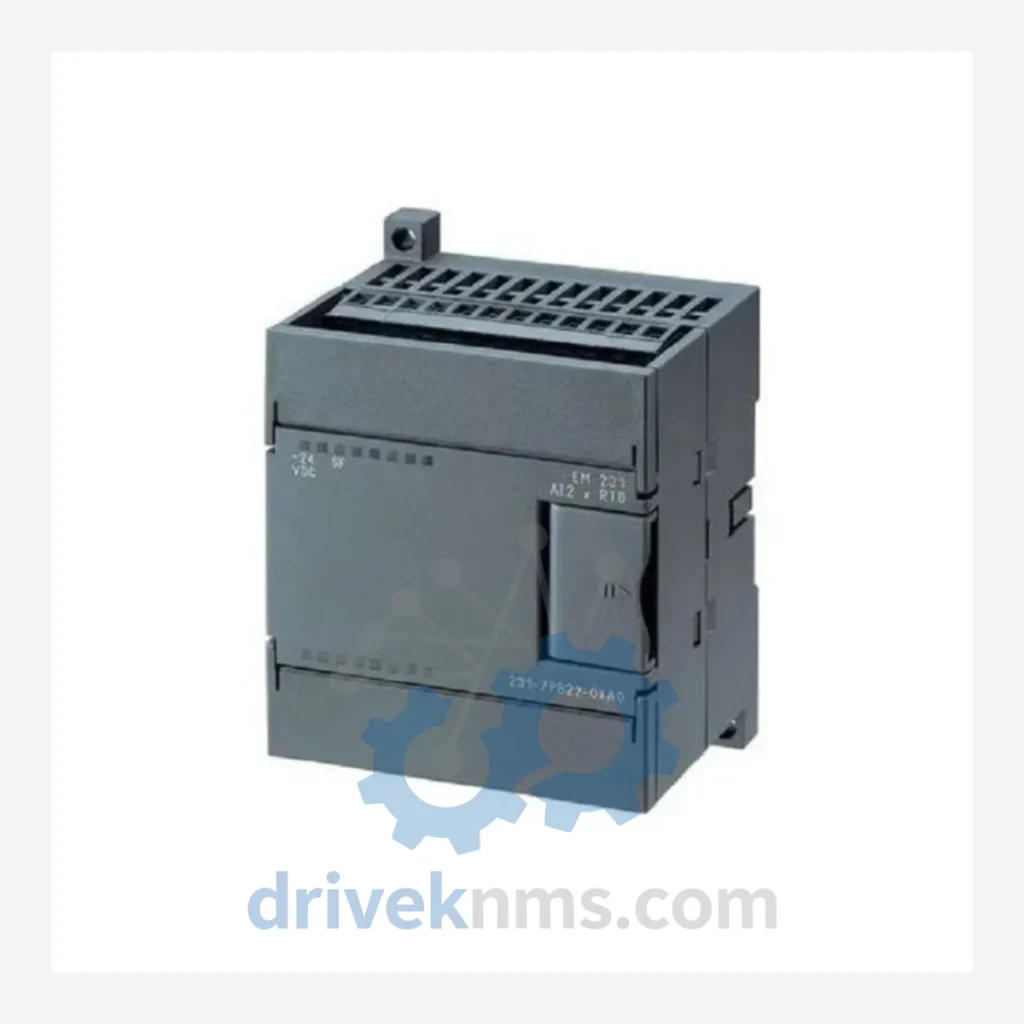
Product Overview
Commercial availability is handled through direct RFQ, model verification and export-oriented follow-up rather than public cart checkout.
Datasheet Preview
Use attached product manuals when available. If the manual is not public yet, request the full file directly through RFQ.
Commercial Path
Product pages on DRIVEKNMS are designed to verify model, brand and series first, then move the buyer into one clean quotation path.
Technical Dossier
RFQ support for obsolete parts: Send the model number, required quantity and destination so DriveKNMS can confirm sourcing options before quotation.
| Part Number | 6ES7231-7PB22-0XA0 |
| Brand | Siemens |
| Series | SIMATIC S7-200 |
| Module Type | Analog Input Module |
| Number of Analog Inputs | 2 |
| Input Signal Type | RTD (Resistance Temperature Detector) |
| Supported RTD Types | Pt100, Pt1000, Ni100, Ni1000, Cu10 |
| Resolution | 15-bit |
| Supply Voltage | 24 V DC |
| Communication Interface | S7-200 Expansion Bus |
| Discontinuation Status | Officially discontinued by Siemens. No longer available through standard distribution channels. |
| Compatible Systems | Siemens SIMATIC S7-200 CPU 221, 222, 224, 224XP, 226 |
| Country of Origin | Germany |
The Siemens S7-200 platform was officially discontinued, yet it remains embedded in thousands of active production environments worldwide — food processing lines, water treatment facilities, packaging machinery, and HVAC control systems that were engineered and commissioned between the late 1990s and mid-2000s. These systems were built to last, and in many cases they have. The problem is not the PLC itself. The problem is component attrition.
The 6ES7231-7PB22-0XA0 handles RTD temperature measurement — a function that is critical in process industries where thermal monitoring is tied directly to product quality, equipment protection, or regulatory compliance. There is no generic substitute. The module communicates over the S7-200 proprietary expansion bus, and its data format, addressing scheme, and configuration parameters are specific to the S7-200 CPU family. Replacing it with a module from a different platform requires hardware redesign, software rewrite, and full recommissioning.
For plant managers facing pressure to modernize, the calculus is straightforward: a verified replacement module at a fraction of the cost of a system upgrade buys 5 to 10 additional years of productive life from an asset that is already fully depreciated, fully understood by your maintenance team, and fully integrated into your process. That is not a workaround. That is asset protection.
Discontinued modules sourced from secondary markets carry risks that new-production parts do not. DriveKNMS applies a 5-step quality assurance process to every unit before dispatch review:
Step 1 – Visual and Mechanical Inspection: Each module is examined for physical damage, connector pin condition, and housing integrity. Corroded or bent pins are disqualifying defects.
Step 2 – Electrolytic Capacitor Assessment: Aged electrolytic capacitors are a primary failure mode in modules stored for extended periods. Units showing capacitor bulging, leakage, or ESR deviation are rejected.
Step 3 – Firmware Version Verification: The firmware revision is confirmed against known compatible versions for the S7-200 CPU family. Modules with unverifiable or mismatched firmware are quarantined.
Step 4 – Functional Bench Test: Each module is powered and tested for correct analog input response across the supported RTD range before packaging.
Step 5 – Anti-Static Packaging and Documentation: Units are shipped in ESD-safe packaging with condition documentation included.
The 6ES7231-7PB22-0XA0 is a direct, drop-in replacement for the same part number in any S7-200 installation. No hardware modification is required. No PLC program changes are needed. No re-engineering of the expansion bus configuration is necessary. The module is recognized automatically by the S7-200 CPU upon installation, consistent with the original system design.
This matters because engineering labor is not free. Every hour spent adapting software or rewiring field connections to accommodate a non-equivalent replacement is an hour of production exposure and an hour of cost. A verified equivalent spare eliminates that exposure entirely. It also preserves the integrity of the validated control program — a consideration that carries particular weight in regulated industries where any software modification triggers a revalidation requirement.
How do I confirm the unit is genuine and not counterfeit?
All units supplied by DriveKNMS are sourced from traceable channels. Each module includes its original Siemens labeling and markings. We do not supply units with removed, altered, or reprinted labels. Customers requiring additional authentication documentation should contact us prior to purchase.
Should I purchase more than one unit?
For any S7-200 installation where this module is in active use, holding at least one verified spare is a standard maintenance practice. Given the discontinued status of this part, availability cannot be guaranteed at the time of a future failure event. Facilities with multiple S7-200 nodes should assess their exposure accordingly.
Can you supply other S7-200 modules?
Yes. DriveKNMS specializes in obsolete and hard-to-find Siemens SIMATIC components. Contact us with your full bill of materials for a consolidated quotation.
Continue The Model Path
Move from this exact model into the matching system hub, brand archive, model-family archive or lifecycle sourcing route before sending a final RFQ list.
Related Paths
Siemens U-55N is listed for S5 Series RFQ review. Confirm quantity, condition and destination before quotation.

Siemens U-55T is listed for PLC Modules RFQ review. Confirm quantity, condition and destination before quotation.

Siemens LFL1.322 is listed for PLC Modules RFQ review. Confirm quantity, condition and destination before quotation.