Technical Dossier
Product Details And Specifications
Siemens SIMATIC S7-300 Series Technical Notes
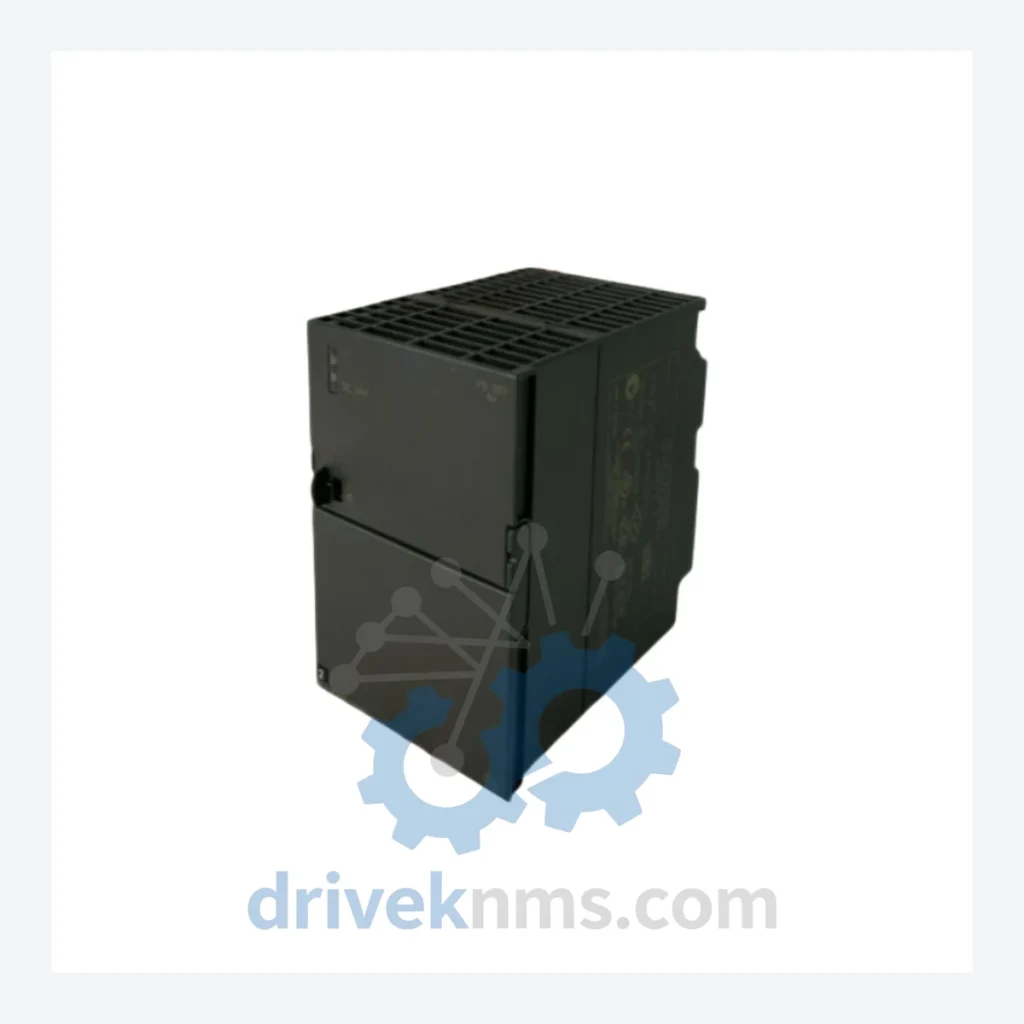
The Siemens SIMATIC S7-300 is one of the most widely deployed modular programmable logic controller (PLC) platforms in global heavy industry. Installed across petrochemical refineries, nuclear auxiliary systems, steel rolling mills, water treatment facilities, and automotive body-in-white lines, the S7-300 platform has accumulated an installed base spanning three decades. Its modular backplane architecture, deterministic scan cycle, and broad I/O density made it the default choice for process engineers from the mid-1990s through the 2010s. As of 2023, Siemens has formally announced end-of-life for the S7-300 product line, transitioning customers toward the SIMATIC S7-1500. This lifecycle status makes reliable sourcing of genuine spare modules — including the 6ES7307-1KA02-0AA0 power supply — a critical operational concern for plant maintenance teams worldwide.
The Evolution of S7-300 Architecture
The SIMATIC S7-300 was introduced in 1994 as a successor to the S5-115U/H series, adopting a 32-bit processor architecture and a standardized DIN-rail mounting system with passive backplane bus. Early CPUs (CPU 312, CPU 314) offered limited memory and no integrated PROFIBUS DP. By the late 1990s, Siemens introduced the DP-integrated CPU 315-2 DP and CPU 317-2 DP, enabling direct field device communication without a dedicated communications processor.
The 2000s saw the introduction of the F-series (Failsafe) CPUs — CPU 315F-2 DP, CPU 317F-2 DP — certified to IEC 61508 SIL 2/3, extending S7-300 into safety-instrumented systems. The ET 200M distributed I/O station, which uses S7-300 I/O modules on a remote IM 153 interface module, further extended the platform's reach into distributed architectures. Power supply modules evolved from the 2A PS 307 (6ES7307-1BA01) to the 10A variant (6ES7307-1KA02-0AA0), addressing higher-density rack configurations.
S7-300 Full Catalog & Functionalities (SKU List)
Power Supply Modules (PS 307)
- 6ES7307-1BA01-0AA0: PS 307, 2 A output, 24 VDC, single-phase input — entry-level rack power for small configurations.
- 6ES7307-1EA01-0AA0: PS 307, 5 A output, 24 VDC — mid-range power supply for standard I/O racks.
- 6ES7307-1KA02-0AA0: PS 307, 10 A output, 24 VDC — high-current supply for fully populated racks with mixed analog/digital I/O.
- 6ES7307-1KA01-0AA0: PS 307, 10 A, earlier hardware revision — functionally equivalent, revision-level verification required.
CPU Modules
- 6ES7312-1AE14-0AB0: CPU 312, 32 KB work memory, MPI interface — compact controller for small standalone applications.
- 6ES7314-1AG14-0AB0: CPU 314, 128 KB work memory, MPI — standard mid-range CPU for discrete and batch processes.
- 6ES7315-2EH14-0AB0: CPU 315-2 DP, 256 KB, integrated PROFIBUS DP master/slave — the most common S7-300 CPU in process industries.
- 6ES7317-2EK14-0AB0: CPU 317-2 DP, 1 MB work memory, dual PROFIBUS DP — high-performance controller for complex multi-axis or multi-zone systems.
- 6ES7318-3EL01-0AB0: CPU 319-3 PN/DP, 2 MB, PROFINET + PROFIBUS — the highest-spec S7-300 CPU, used in large distributed architectures.
- 6ES7315-2FJ14-0AB0: CPU 315F-2 DP, Failsafe, SIL 2 certified — safety CPU for burner management and emergency shutdown systems.
Digital Input/Output Modules (SM 321 / SM 322)
- 6ES7321-1BH02-0AA0: SM 321, 16 DI, 24 VDC — standard digital input module, the most widely stocked S7-300 I/O module globally.
- 6ES7322-1BH01-0AA0: SM 322, 16 DO, 24 VDC / 0.5 A — transistor output module for solenoid valves and indicator lamps.
- 6ES7321-1FF01-0AA0: SM 321, 8 DI, 120/230 VAC — AC input module for high-voltage field signals.
- 6ES7322-5HF00-0AB0: SM 322, 8 DO, relay output, 230 VAC / 2 A — relay output for motor starters and high-current loads.
Analog Input/Output Modules (SM 331 / SM 332)
- 6ES7331-7KF02-0AB0: SM 331, 8 AI, configurable 4–20 mA / ±10 V / thermocouple / RTD — universal analog input for process instrumentation.
- 6ES7332-5HB01-0AB0: SM 332, 4 AO, 0–20 mA / ±10 V — analog output for control valves and variable speed drives.
Communications Processors (CP)
- 6GK7343-1EX30-0XE0: CP 343-1, Industrial Ethernet TCP/IP — enables S7-300 integration into plant-level SCADA and MES networks.
- 6GK7342-5DA02-0XE0: CP 342-5, PROFIBUS DP master — adds a second PROFIBUS master port to CPUs without integrated DP.
Sourcing Hard-to-Find & Obsolete S7-300 Parts
With Siemens having discontinued the S7-300 line, the primary sourcing risk for maintenance teams is not price — it is authenticity and revision integrity. The secondary market contains a significant volume of refurbished, re-labeled, and counterfeit S7-300 modules, particularly for high-demand SKUs such as the CPU 315-2 DP and the SM 331 analog input module.
For plants operating S7-300 systems beyond 2030, DriveKNMS recommends establishing a strategic spare parts buffer covering: one spare CPU per critical line, two PS 307 10A power supplies per rack cluster, and a minimum of four units each of the highest-cycle I/O modules (SM 321 16DI, SM 322 16DO).
Quality Control for the S7-300 Range
S7-300 modules present specific testing challenges due to their passive backplane bus architecture. Unlike active backplane systems, faults in the bus connector pins or backplane PCB traces can cause intermittent communication errors that are not detectable through standard power-on self-test. DriveKNMS applies the following test protocol to all S7-300 modules:
- Backplane bus continuity test: All 48 bus connector pins verified for continuity and impedance against Siemens reference values.
- Functional rack test: Each module is installed in a live S7-300 rack running a diagnostic test program under STEP 7 v5.6. CPU modules are tested for full memory read/write cycles and PROFIBUS DP master/slave handshake.
- Analog module calibration: SM 331 and SM 332 modules are calibrated against a traceable reference standard. Input accuracy is verified across the full 4–20 mA and ±10 V ranges.
- Thermal burn-in: Power supply modules including the 6ES7307-1KA02-0AA0 are operated at full rated load (10 A) for a minimum of 4 hours to screen for early-life capacitor and regulator failures.
- Firmware version logging: CPU firmware version is recorded and disclosed on the packing slip to prevent compatibility issues at the customer site.