Technical Dossier
Product Details And Specifications
Siemens S7-400 SM 421 Series Technical Notes
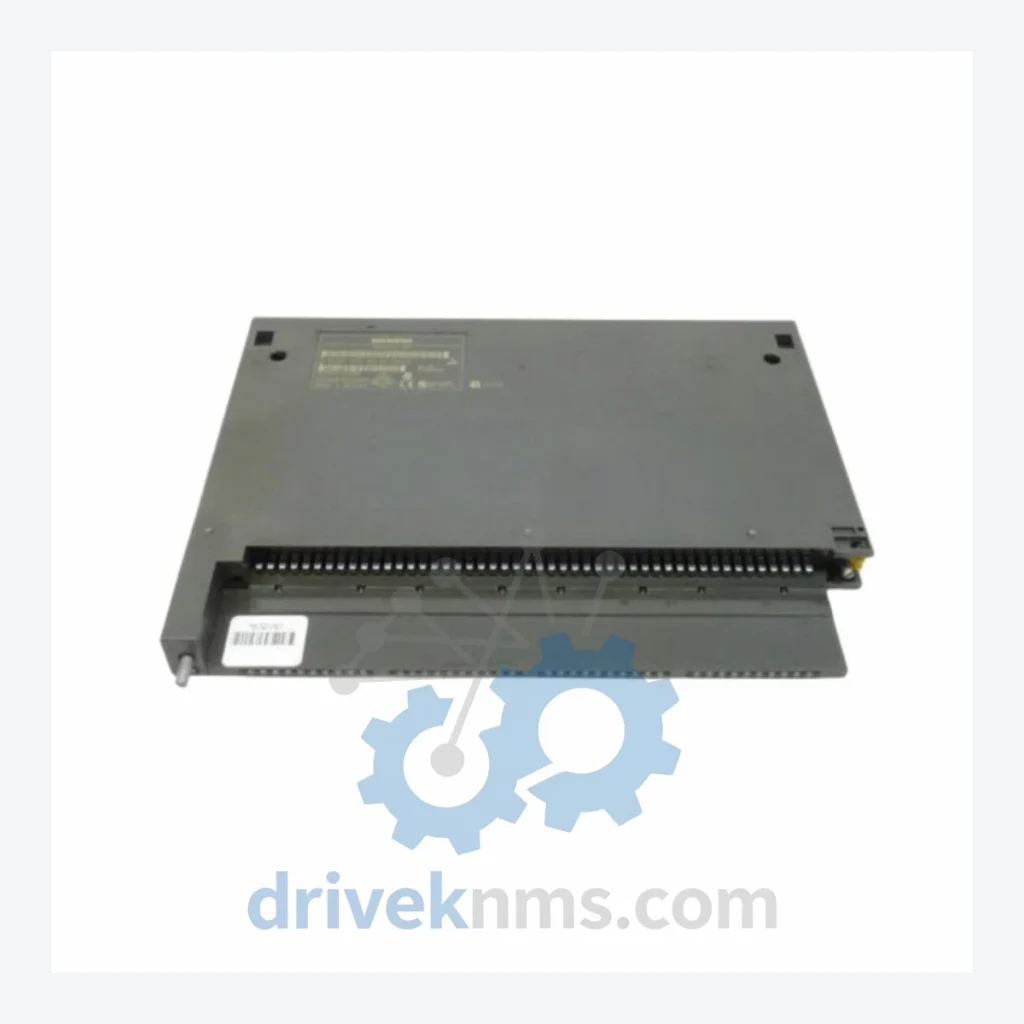
The Siemens SIMATIC S7-400 is a high-performance programmable logic controller platform engineered for demanding process automation environments. Deployed across chemical plants, nuclear power stations, oil refineries, steel mills, and large-scale water treatment facilities, the S7-400 system has established a dominant installed base in global heavy industry since its introduction in the mid-1990s. The SM 421 sub-family within the S7-400 rack constitutes the primary digital input (DI) signal acquisition layer, responsible for reading binary process signals from field devices including proximity switches, pushbuttons, relay contacts, and NAMUR sensors. The 6ES7421-1BL00-0AA0 is a 32-channel, 24 VDC digital input module representing one of the most widely deployed variants in this sub-family.
The Evolution of S7-400 SM 421 Architecture
The S7-400 platform was launched by Siemens in 1994 as the successor to the S5-115U/H and S5-135U/155U systems. The SM 421 digital input modules were designed from the outset to support the S7-400's modular backplane architecture, communicating over the P-bus (peripheral bus) and K-bus (communication bus) integrated into the UR1 and UR2 universal racks.
Early SM 421 variants (0AA0 firmware generation) established the baseline electrical interface: 24 VDC nominal input voltage, IEC 61131-2 Type 1/3 input compliance, and optical isolation between field and logic sides. Subsequent hardware revisions introduced improved EMC shielding, extended operating temperature ranges (–25°C to +60°C for select variants), and enhanced diagnostic capabilities including per-channel wire-break detection and short-circuit reporting via the STEP 7 hardware configuration tool.
With the introduction of the S7-400H (high-availability) and S7-400 FH (fault-tolerant) variants, SM 421 modules were qualified for use in redundant rack configurations, enabling hot-swap replacement without process interruption. The architecture remains backward-compatible: modules from the original 0AA0 generation can operate in UR1/UR2 racks alongside later-generation CPU 41x processors, provided the STEP 7 hardware catalog (HW Config) is updated to the corresponding GSD/HSP file revision.
As of 2023, Siemens has formally classified the S7-400 platform as a mature product with a committed spare parts supply through 2033. Migration paths to the SIMATIC S7-1500 and PCS 7 V9.1 are documented in Siemens Migration Guides MA01 and MA02. For sites where migration is not operationally feasible, long-term maintenance sourcing remains the primary strategy.
S7-400 SM 421 Full Catalog & Functionalities (SKU List)
Digital Input Modules (DI) — SM 421
- 6ES7421-1BL00-0AA0: 32-ch DI, 24 VDC, 0.5 ms input delay, no diagnostic interrupt
- 6ES7421-1BL01-0AA0: 32-ch DI, 24 VDC, hardware revision 1, improved EMC rating
- 6ES7421-1EL00-0AA0: 16-ch DI, 120/230 VAC, optically isolated, for high-voltage field signals
- 6ES7421-7BH01-0AB0: 16-ch DI, 24 VDC, with diagnostic interrupt and hardware interrupt capability
- 6ES7421-7DH00-0AB0: 16-ch DI, 24 VDC, NAMUR sensor compatible, Ex-rated for Zone 2
- 6ES7421-1FH20-0AA0: 16-ch DI, 24–125 VDC, wide voltage range input for mixed field installations
- 6ES7421-1BH00-0AA0: 16-ch DI, 24 VDC, standard density, no interrupt, cost-optimized variant
- 6ES7421-1BH50-0AA0: 16-ch DI, 24 VDC, SIL 2 capable, for safety-instrumented system integration
- 6ES7421-7BH00-0AB0: 16-ch DI, 24 VDC, diagnostic interrupt, process interrupt, configurable input delay
- 6ES7421-1EH00-0AA0: 8-ch DI, 120 VAC, for legacy AC field wiring in retrofit projects
Digital Output Modules (DO) — SM 422 (commonly paired with SM 421)
- 6ES7422-1BL00-0AA0: 32-ch DO, 24 VDC / 0.5 A, transistor output, standard density
- 6ES7422-1BH11-0AA0: 16-ch DO, 24 VDC / 2 A, transistor output, high current per channel
- 6ES7422-1FH00-0AA0: 16-ch DO, relay output, 230 VAC / 2 A, for AC load switching
- 6ES7422-7BL00-0AB0: 32-ch DO, 24 VDC, diagnostic interrupt, short-circuit protection per channel
- 6ES7422-1BL00-4AA0: 32-ch DO, 24 VDC, conformal-coated PCB for high-humidity environments
CPU Modules — S7-400 (rack-compatible with SM 421)
- 6ES7412-1XJ05-0AB0: CPU 412-1, 256 KB work memory, standard processing for mid-scale applications
- 6ES7414-2XK05-0AB0: CPU 414-2, 1 MB work memory, dual MPI/DP interface
- 6ES7416-3XS07-0AB0: CPU 416-3, 5.6 MB work memory, high-throughput process control
- 6ES7417-4HT14-0AB0: CPU 417-4H, redundant CPU for S7-400H high-availability systems
Sourcing Hard-to-Find & Obsolete S7-400 SM 421 Parts
For discontinued variants such as the 6ES7421-1BL00-0AA0 (0AA0 hardware generation), DriveKNMS applies a lifecycle extension model: each unit is cross-referenced against the Siemens spare parts database, inspected for capacitor aging on the DC/DC converter stage, and re-tested against the original Siemens acceptance test criteria before dispatch. Firmware version compatibility with the target CPU and STEP 7 project version is verified prior to shipment.
Quality Control for the S7-400 SM 421 Range
The SM 421 module family presents specific test challenges due to its multi-channel parallel input architecture and optical isolation barrier between field and logic sides. DriveKNMS applies the following test sequence to all SM 421 units processed through its facility:
- Visual inspection: PCB surface examination for corrosion, burned components, cracked solder joints, and connector pin deformation on the 48-pin backplane interface.
- Isolation resistance test: 500 VDC applied between field-side terminals and logic-side ground; minimum 10 MΩ required per IEC 61131-2.
- Per-channel functional test: Each of the 32 input channels is individually stimulated at 24 VDC nominal and verified for correct state reporting via the P-bus interface. Input delay timing is measured against the module's configured filter time.
- Backplane bus communication test: Module is installed in a reference S7-400 UR2 rack with a CPU 414-2 and verified for error-free data exchange over 72-hour continuous operation cycle.
- Diagnostic register verification: Module diagnostic data (SF LED behavior, channel status word) is read via STEP 7 online diagnostics and compared against expected values for a fault-free module.
- Thermal cycling: Units flagged as refurbished undergo 10-cycle thermal stress test (–10°C to +55°C) to screen for latent solder joint failures.