Technical Dossier
Product Details And Specifications
Siemens SIMATIC S7-300 MMC Series Technical Notes
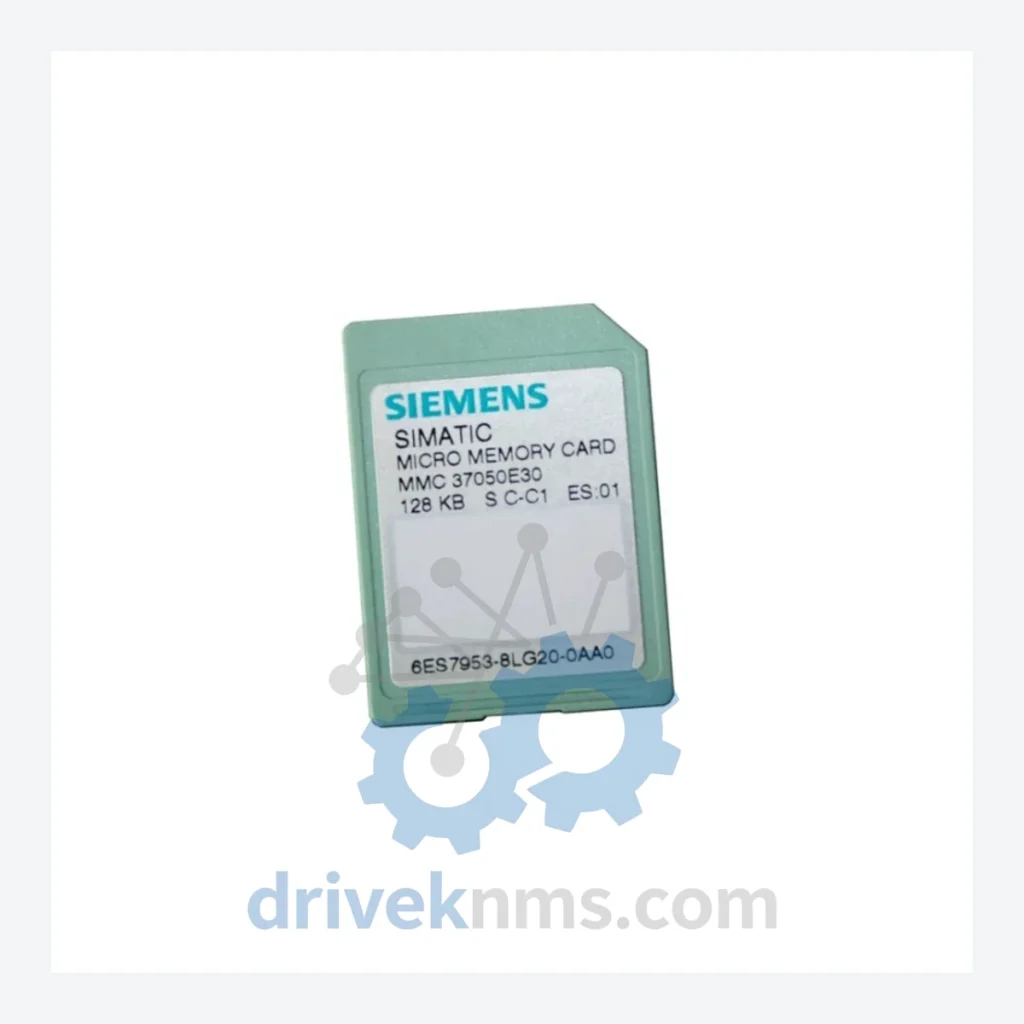
The Siemens SIMATIC S7-300 Micro Memory Card (MMC) series — cataloged under the 6ES7953 product family — is the standard non-volatile storage medium for S7-300 CPUs and ET 200 distributed I/O systems. These cards are mandatory for program retention across power cycles on all S7-300 CPUs from the 312 to 319 range. Deployed across global heavy industry sectors including petrochemical refineries, nuclear power auxiliary systems, offshore platforms, and continuous-process chemical plants, the 6ES7953 MMC series represents one of the highest-volume spare parts categories in Siemens automation infrastructure. Installed base counts in the millions of units globally, with active deployments spanning systems commissioned from 2001 through the present day. The S7-300 platform itself remains in extended lifecycle support, making MMC availability a critical operational concern for plant maintenance teams worldwide.
The Evolution of SIMATIC S7-300 MMC Architecture
The SIMATIC S7-300 platform was introduced in the mid-1990s using battery-backed RAM for program storage. Siemens transitioned to the MMC (Micro Memory Card) architecture in the early 2000s, eliminating the need for backup batteries in most CPU variants. The MMC uses industrial-grade flash memory formatted to Siemens' proprietary file system and is not interchangeable with standard commercial MMC cards.
The 6ES7953 series spans storage capacities from 64 KB to 8 MB, covering the full range of S7-300 CPU program sizes. Early deployments used the 64 KB and 128 KB variants (6ES7953-8LA11, 8LB11) for compact programs on CPU 312/313 platforms. As ladder logic and SCL programs grew in complexity through the 2000s, the 512 KB, 2 MB, and 4 MB variants became standard. The 8 MB variant (6ES7953-8LG20-0AA0) represents the maximum capacity available and is required for large CPU 319-3 PN/DP applications with extensive data logging or recipe management.
Compatibility is strictly governed by CPU firmware version. Cards with suffix -0AA0 (Version 2) replaced the earlier -0AA0 Version 1 cards and introduced improved write-cycle endurance. All 6ES7953 cards are forward-compatible with newer S7-300 CPU firmware but are not compatible with S7-1200 or S7-1500 platforms, which use SD card-based storage.
SIMATIC S7-300 MMC Full Catalog & Functionalities — 6ES7953 SKU List
Storage Capacity Tiers — Program & Data Memory Cards
Sourcing Hard-to-Find & Obsolete SIMATIC S7-300 MMC Parts
Siemens announced the S7-300 platform end-of-sale in 2023, with extended support commitments through 2033. However, field replacement demand for 6ES7953 MMC cards remains high due to the scale of installed base. Version 1 variants (suffix -8Lx11-0AA0) are no longer manufactured by Siemens and must be sourced from authorized aftermarket distributors or certified refurbishers.
All sourced cards are supplied with full traceability documentation. Counterfeit MMC cards — which may appear physically identical but fail CPU authentication — are a documented risk in the aftermarket. DriveKNMS applies authentication verification as a mandatory step in all MMC procurement workflows.
Quality Control for the SIMATIC S7-300 MMC Range
The 6ES7953 MMC series presents specific verification challenges due to the proprietary Siemens flash file system and CPU authentication handshake protocol. Standard flash memory testers cannot validate MMC functionality. DriveKNMS applies the following test protocol to all 6ES7953 units:
- CPU Authentication Test: Each MMC is inserted into a reference S7-300 CPU (matched to the card's rated capacity tier) and verified to pass the STEP 7 / TIA Portal memory card recognition sequence without error codes.
- Read/Write Cycle Verification: A full program load and readback cycle is performed using a standardized test project. Data integrity is confirmed via checksum comparison.
- Capacity Verification: Actual usable storage is confirmed against the rated specification. Counterfeit cards frequently report incorrect capacity values.
- Environmental Stress Screen: Cards destined for high-temperature applications (e.g., cabinet-mounted CPUs in tropical climates) undergo a 24-hour burn-in at 55°C prior to shipment.
- Firmware Compatibility Check: Card version (V1 vs V2) is confirmed and documented against the customer's CPU firmware revision to prevent compatibility mismatches.