Products / Siemens / E431-A6 Power Supply Module
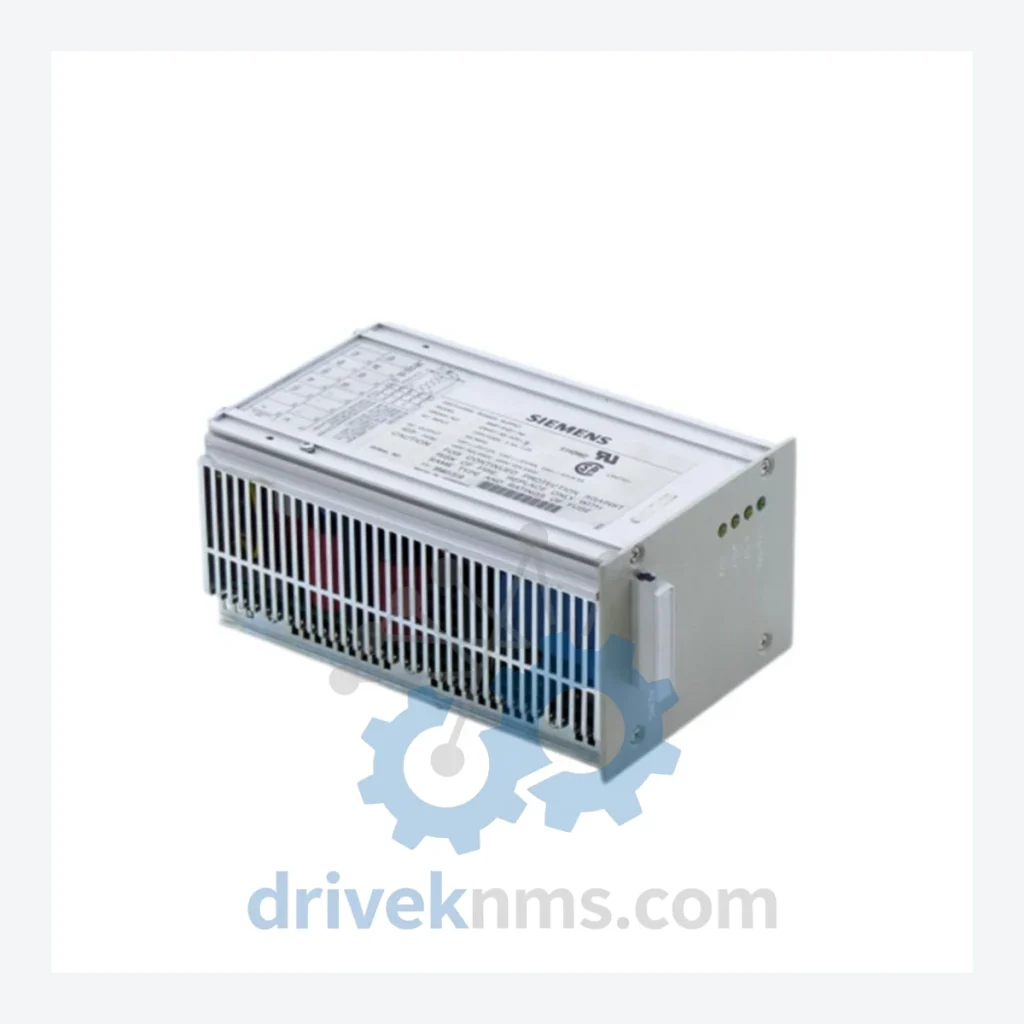
Siemens E431-A6 Power Supply Module

Siemens SMP-E431-A6 Power Supply Module – Obsolete SIMATIC S5 Spare Part

Model: SMP-E431-A6

Brand Siemens
Series E431-A6 Power Supply Module
Model SMP-E431-A6
RFQ-ready model route Obsolete and surplus sourcing Export follow-up by model list

Product Overview

Commercial availability is handled through direct RFQ, model verification and export-oriented follow-up rather than public cart checkout.

Datasheet Preview

Datasheet Preview

Use attached product manuals when available. If the manual is not public yet, request the full file directly through RFQ.

Request Full Manual

Commercial Path

Use This Page To Confirm The Model, Then Move To RFQ

Product pages on DRIVEKNMS are designed to verify model, brand and series first, then move the buyer into one clean quotation path.

Technical Dossier

Product Details And Specifications

Siemens SMP-E431-A6 Power Supply Module – Obsolete SIMATIC S5 Spare Part

When a power supply module fails inside a Siemens SIMATIC S5 control system, the consequences extend far beyond a single component. The S5 platform — discontinued by Siemens in the early 2000s — is no longer supported through standard distribution channels. A single unplanned failure of the SMP-E431-A6 can force a plant manager into an immediate choice: source a replacement from the shrinking pool of legacy inventory, or commit to a full system migration. That migration — encompassing new PLC hardware, rewiring, software re-engineering, operator retraining, and production downtime — routinely costs between $500,000 and several million USD depending on system complexity. The SMP-E431-A6 unit held in DriveKNMS inventory represents a direct, low-cost alternative to that scenario.

Technical Specifications

Parameter Detail
Manufacturer Siemens AG
Part Number SMP-E431-A6
Product Family SIMATIC S5 Series
Module Type Power Supply Module
Country of Origin Germany
Discontinuation Status Officially discontinued. No longer manufactured or supported by Siemens. Replacement parts available only through specialist legacy inventory suppliers.
Compatible Systems Siemens SIMATIC S5 (S5-115U, S5-135U, S5-155U series — compatibility should be verified against your specific rack configuration)

Note: Electrical parameters are not published here to prevent misapplication. Contact our technical team to verify compatibility with your specific system configuration before ordering.

Solving the Discontinued Hardware Crisis

The Siemens SIMATIC S5 platform was the backbone of industrial automation across process industries, automotive manufacturing, and utilities throughout the 1980s and 1990s. Tens of thousands of these systems remain in active operation globally — not because operators are unaware of the discontinuation, but because the cost and risk of migration outweigh the cost of maintenance, provided spare parts remain accessible.

The SMP-E431-A6 power supply module sits at a critical point in the S5 architecture. Power supply failures are among the most common failure modes in aging PLC systems, driven by electrolytic capacitor degradation over time. A failed or degraded power supply does not simply stop the module — it can introduce voltage instability that corrupts data across the entire rack, triggering cascading faults that are difficult to diagnose and expensive to recover from.

For plant managers operating under capital expenditure constraints, the calculus is straightforward: a verified replacement SMP-E431-A6 sourced today costs a fraction of one hour of unplanned production downtime. Maintaining a buffer stock of one to two units per critical system is a standard risk mitigation practice in facilities that have committed to operating S5-based infrastructure through the end of its productive life.

The window for sourcing these components is narrowing. As global legacy inventory is consumed and not replenished, per-unit prices rise and lead times extend. Facilities that establish their spare parts position now retain operational flexibility. Those that wait until a failure event face spot-market pricing and uncertain delivery timelines.

Condition & Reliability Assurance

Every SMP-E431-A6 unit processed by DriveKNMS passes through a structured five-step quality verification protocol before it is offered for sale:

  • Step 1 – Visual and Physical Inspection: Full examination of the PCB, connector pins, housing, and labeling. Units with corrosion, physical damage, or evidence of prior repair are quarantined.
  • Step 2 – Electrolytic Capacitor Assessment: Capacitor aging is the primary failure mechanism in power supply modules of this era. Each unit is assessed for capacitor condition. Units showing bulging, leakage, or ESR values outside acceptable range are not offered for sale.
  • Step 3 – Firmware and Label Verification: Where applicable, firmware revision markings and hardware revision labels are cross-referenced against known production records to confirm authenticity and revision consistency.
  • Step 4 – Pin and Contact Integrity Check: All connector pins are inspected for oxidation, bending, and contact resistance. Pins are cleaned where necessary using approved contact restoration methods.
  • Step 5 – Functional Verification: Units are powered and tested under controlled conditions where test equipment permits. Test results are documented and available upon request.

Key Features for System Maintenance

  • Drop-in Replacement: The SMP-E431-A6 is a direct form-fit-function replacement for the original module position in compatible S5 racks. No rack modification is required.
  • No Reprogramming Required: Power supply modules in the S5 architecture do not carry application logic. Replacement does not require PLC program changes, re-commissioning, or engineering intervention beyond standard installation procedure.
  • Avoids Engineering Reconstruction Costs: Substituting a verified spare part eliminates the need for system redesign, new hardware qualification, and the associated project management overhead that accompanies any migration effort.
  • Preserves Validated Process Logic: Facilities operating under regulatory frameworks (pharmaceutical, food processing, utilities) that have validated their S5-based control logic face significant re-validation costs upon migration. Maintaining the existing hardware preserves that validated state.

Extending Automation Asset Life: A Maintenance Strategy for S5 Operators

Industrial automation assets represent capital investments that depreciate slowly in accounting terms but degrade faster in practice when spare parts availability collapses. For SIMATIC S5 operators, the following approach has been used by maintenance engineering teams to extend productive system life by five to ten years beyond the point at which standard supply chains ceased to support the platform:

1. Conduct a criticality-weighted spare parts audit. Map every S5 module in your facility against its failure probability and its consequence of failure. Power supply modules, CPU modules, and communication processors typically carry the highest criticality scores. Prioritize buffer stock for these categories first.

2. Establish minimum stock levels per system. A common rule of thumb for legacy PLC power supplies is one spare unit per active system, with a second unit held at the facility level for multi-system sites. This provides immediate swap capability without relying on external sourcing under time pressure.

3. Source proactively, not reactively. The cost of holding a spare SMP-E431-A6 in a climate-controlled storage environment is negligible compared to the cost of a production stoppage. Reactive sourcing — initiated after a failure — exposes the facility to premium pricing, extended lead times, and the risk of receiving unverified units from unvetted sources.

4. Document your installed base. Maintain a current register of all S5 hardware by rack, slot, and revision. This documentation accelerates fault diagnosis, simplifies spare parts ordering, and provides the foundation for an eventual migration plan when the business case for migration becomes unavoidable.

5. Engage a specialist supplier with verified legacy inventory. General industrial distributors do not maintain deep stock of discontinued Siemens S5 components. Specialist suppliers with dedicated legacy inventory programs — and documented QA processes — are the appropriate sourcing channel for components of this type.

FAQ

Q: What warranty applies to discontinued parts?
A: DriveKNMS provides a 90-day warranty against defects in material and workmanship on all verified units. Warranty terms are confirmed in writing at the time of order. Extended warranty arrangements are available for volume purchases — contact our team to discuss.

Q: How do I know the unit is genuine and not counterfeit?
A: All units are sourced through documented supply chains and undergo the five-step QA process described above. Siemens part markings, revision labels, and date codes are verified as part of the inspection process. Documentation is available upon request.

Q: Should I buy more than one unit?
A: For any system where the SMP-E431-A6 is a single point of failure, holding at least one verified spare on-site is a minimum prudent position. Given the narrowing availability of S5 components globally, facilities with multiple S5 systems or long planned operational horizons should consider securing additional units while verified stock is accessible.

Q: Can you source other S5 modules?
A: Yes. DriveKNMS maintains inventory across a range of discontinued Siemens SIMATIC S5 modules. Contact us with your full bill of materials for a consolidated sourcing assessment.

© 2026 DriveKNMS. Status: DRAFT

WhatsApp Prefilled Inquiry Email [email protected] Phone +86 18359293191 Top Back To Top