
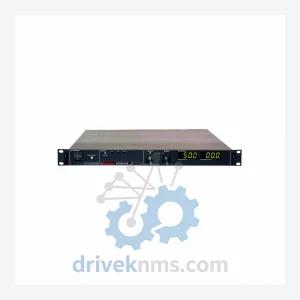
Sorensen DCS50-20EM9C DC Power Supply – Obsolete DCS50-20E Series Spare Part
Sorensen DCS50-20EM9C DCS50-20E is listed for Power Supplies RFQ review. Confirm quantity, condition and destination before quotation.
RFQ-ready industrial model
Model: SORENSEN DCS50-20EM9C DCS50-20E Programmable DC Power Supply
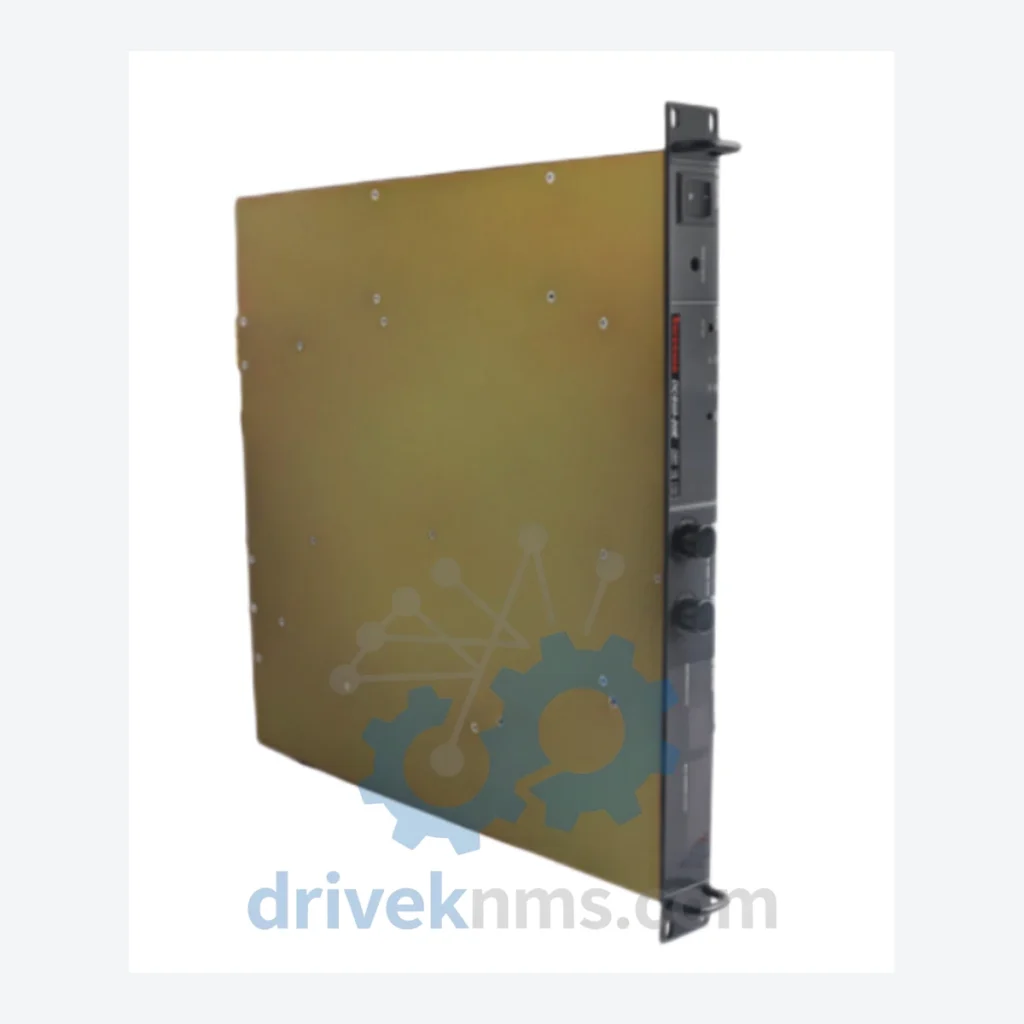
Product Overview
Commercial availability is handled through direct RFQ, model verification and export-oriented follow-up rather than public cart checkout.
Datasheet Preview
Use attached product manuals when available. If the manual is not public yet, request the full file directly through RFQ.
Commercial Path
Product pages on DRIVEKNMS are designed to verify model, brand and series first, then move the buyer into one clean quotation path.
Technical Dossier
The Sorensen DCS series represents one of the most widely deployed families of programmable DC power supplies in global heavy industry. Installed across petrochemical refineries, nuclear power facilities, semiconductor fabrication plants, and aerospace test laboratories, the DCS platform has established a benchmark for precision voltage and current regulation in demanding continuous-duty environments. Its modular architecture, wide output range, and compatibility with both analog and digital control interfaces have made it a default specification in industrial test and process power applications worldwide.
The Sorensen DCS series was introduced as a successor to earlier fixed-output bench supplies, incorporating programmable output control via front-panel potentiometers and rear-panel analog inputs (0–5 V or 0–10 V). Early production units used linear regulation topologies, prioritizing low output ripple and noise — critical for sensitive instrumentation loads. As industrial automation advanced, the DCS line was extended with the EM (enhanced memory) and M9C (9-pin D-sub remote control) suffix variants, enabling integration with GPIB, RS-232, and later Ethernet-based control systems.
Compatibility across DCS generations is maintained through a standardized rear-panel interface: a 9-pin D-sub connector for remote voltage/current programming, enable/disable control, and fault monitoring. This backward compatibility has allowed facilities to upgrade control infrastructure without replacing installed power supply hardware — a key factor in the series' longevity in maintenance-intensive industries. Units manufactured from the mid-1990s through current production share the same rack footprint (3U, 19-inch) and output terminal configuration, simplifying spare parts management.
The DCS series spans output voltages from 8 V to 600 V and output currents from 1.7 A to 125 A. The following SKUs represent the core catalog, organized by output power class:
Low-Voltage / High-Current Models (≤20 V output)
Mid-Range Models (33 V – 60 V output)
High-Voltage Models (80 V – 600 V output)
Several DCS variants — particularly early E-suffix single-range units and EM-suffix memory models — have reached end-of-manufacture status. Sorensen (now part of AMETEK Programmable Power) no longer produces replacement PCB assemblies or front-panel control boards for pre-2005 production units. DriveKNMS maintains a dedicated inventory of tested surplus and refurbished DCS modules, including output filter capacitor assemblies, SCR trigger boards, and reference regulator cards, to support lifecycle extension for installed base equipment.
Each DCS unit processed by DriveKNMS undergoes a structured verification protocol before dispatch. Output voltage and current are measured at 0%, 25%, 50%, 75%, and 100% of rated load using calibrated electronic loads traceable to national standards. Remote programming accuracy is verified via the 9-pin D-sub interface across the full analog input range. Ripple and noise are measured with a 20 MHz bandwidth oscilloscope at full load. Thermal cycling (ambient to 50 °C) is applied to units with repaired power stage components. All results are documented on a unit-specific test record shipped with the equipment.
Continue The Model Path
Move from this exact model into the matching system hub, brand archive, model-family archive or lifecycle sourcing route before sending a final RFQ list.
Related Paths
Sorensen DCS50-20EM9C DCS50-20E is listed for Power Supplies RFQ review. Confirm quantity, condition and destination before quotation.
Alstom MVAJ105RA0802A is listed for MiCOM Series RFQ review. Confirm quantity, condition and destination before quotation.
Moore 16137-174 is listed for Servo Drives RFQ review. Confirm quantity, condition and destination before quotation.