
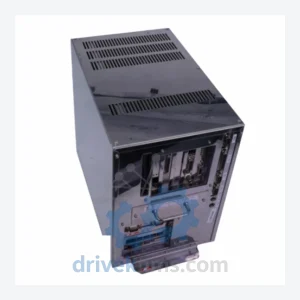
Tokyo Electron (TEL) TEL 2986-411806-11
Tokyo Electron (TEL) 2986-411806-11 is listed for Controller Cards RFQ review. Confirm quantity, condition and destination before quotation.
RFQ-ready industrial model
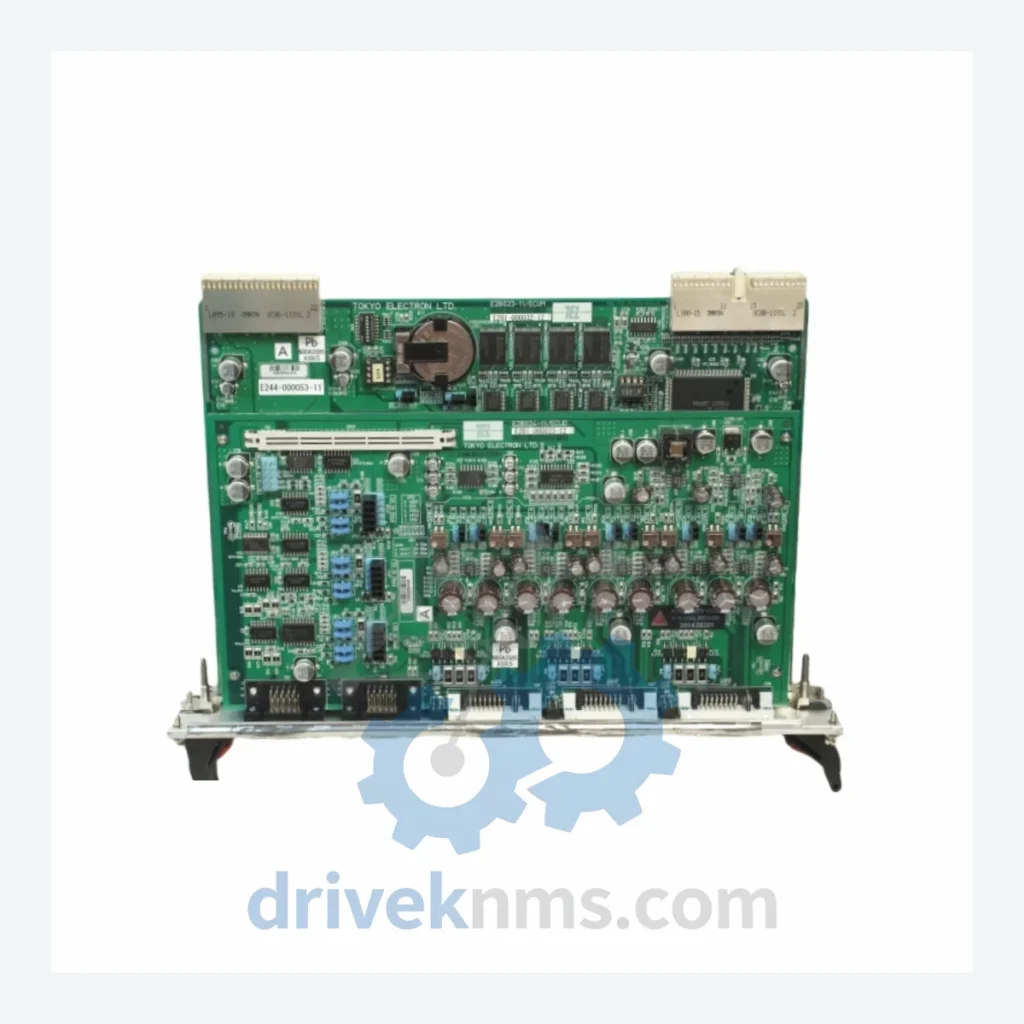
Model: E2B023/ECU E2B023-11/ECUM
Product Overview
Commercial availability is handled through direct RFQ, model verification and export-oriented follow-up rather than public cart checkout.
Datasheet Preview
Use attached product manuals when available. If the manual is not public yet, request the full file directly through RFQ.
Commercial Path
Product pages on DRIVEKNMS are designed to verify model, brand and series first, then move the buyer into one clean quotation path.
Technical Dossier
The Tokyo Electron (TEL) ECU series — anchored by the E2B023/ECU E2B023-11/ECUM board — is a core control and communication module deployed across TEL semiconductor process equipment, including Diffusion Furnaces, CVD systems, and Etch platforms. These boards are installed in high-uptime production environments at semiconductor fabs, flat-panel display manufacturers, and advanced packaging facilities globally. The ECU (Equipment Control Unit) architecture serves as the primary interface between the host process controller and field-level I/O, motion, and recipe management subsystems. Given TEL's dominant position in the Asia-Pacific and North American semiconductor capital equipment market, the ECU E2B023-11 and its ECUM variant represent a high-demand spare parts category for both active maintenance and long-term lifecycle support programs.
TEL's Equipment Control Unit architecture evolved through several generations tied to the company's process equipment platform transitions. Early ECU boards (pre-2000) used proprietary parallel bus architectures with discrete logic ICs and were designed for single-chamber control. The E2B023 series represents a mid-generation design incorporating surface-mount components, onboard EEPROM for recipe storage, and a standardized backplane connector interface compatible with TEL's modular rack systems.
The ECU E2B023-11 variant introduced enhanced noise immunity for RF-intensive etch environments, while the ECUM sub-variant added expanded memory addressing for multi-step recipe sequences. Compatibility with TEL's proprietary MACS (Multi-chamber Automation Control System) software was maintained across the E2B023 revision tree, making cross-revision substitution feasible in most cases with firmware alignment. As TEL transitioned to newer platform architectures (post-2010), the E2B023 series entered the mature/end-of-life phase. OEM production has ceased; all procurement is now sourced through the secondary market, certified repair channels, and specialist distributors.
The following SKUs represent the verified ECU E2B023-11 series and closely related TEL control board modules. Each entry reflects a distinct functional role within TEL equipment control architecture:
E2B023/ECU E2B023-11/ECUM: Primary equipment control unit board, ECUM memory variant, multi-step recipe support.
E2B023/ECU E2B023-11: Standard ECU board, single-chamber process control, MACS-compatible backplane interface.
E2B023-10: Earlier ECU revision, parallel bus architecture, discrete logic, pre-SMT design.
E2B023-12: Revised ECU with updated EEPROM addressing and improved EMI shielding layer.
E2B023-13: Late-series ECU revision with expanded I/O polling rate for high-speed etch processes.
E2B023/DIO: Digital I/O expansion board, 32-channel DI/DO, direct backplane mount, ECU-compatible.
E2B023/AIO: Analog I/O interface board, 16-channel AI/AO, 12-bit resolution, process signal conditioning.
E2B023/COM: Serial communication adapter board, RS-232/RS-485 dual-port, host interface module.
E2B023/CPU: Central processing unit board, 16-bit embedded controller, real-time OS kernel support.
E2B023/PSU: Power supply regulation board, +5V/±12V/+24V rail distribution, overcurrent protection.
E2B023/MEM: Memory expansion module, SRAM-based, recipe and event log storage extension.
E2B023/NET: Network interface board, Ethernet 10BASE-T, SECS/GEM host communication support.
E2B023/MOT: Motion control interface board, stepper/servo axis coordination, wafer handling integration.
E2B023/TMP: Temperature measurement and control board, thermocouple input, PID loop output.
E2B023/INT: Interrupt controller board, priority-based I/O event handling, real-time response module.
E2B023/BUS: Backplane bus arbitration board, multi-slot rack coordination, slot address decoding.
E2B023/RLY: Relay output board, 16-channel solid-state relay array, process interlock control.
TEL ECU boards present specific test challenges due to their proprietary backplane bus protocol and onboard EEPROM configuration dependencies. DriveKNMS applies a structured inspection and functional verification process to all E2B023-series boards:
Continue The Model Path
Move from this exact model into the matching system hub, brand archive, model-family archive or lifecycle sourcing route before sending a final RFQ list.
Related Paths
Tokyo Electron (TEL) 2986-411806-11 is listed for Controller Cards RFQ review. Confirm quantity, condition and destination before quotation.
Tokyo Electron (TEL) 1805-320125-21 ES1805-320125-21 27224CR-001 BTS10-5/10-24-RL-721 CTLR TC600 TMU 071-003 is listed for Controller Cards RFQ review. Confirm quantity, condition and destination before…
Tokyo Electron (TEL) 118100031717 MC-31035D DIG 32-OK01 Y2O3-TTELY2O3 KIT 030-001772 is listed for Controller Cards RFQ review. Confirm quantity, condition and destination before quotation.