
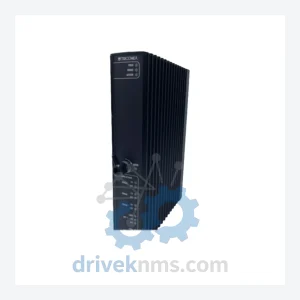
Triconex Tricon CX Series Modules: CM3201S2 CPU Module
Triconex CM3201S2 is listed for Tricon RFQ review. Confirm quantity, condition and destination before quotation.
RFQ-ready industrial model
Model: 3003
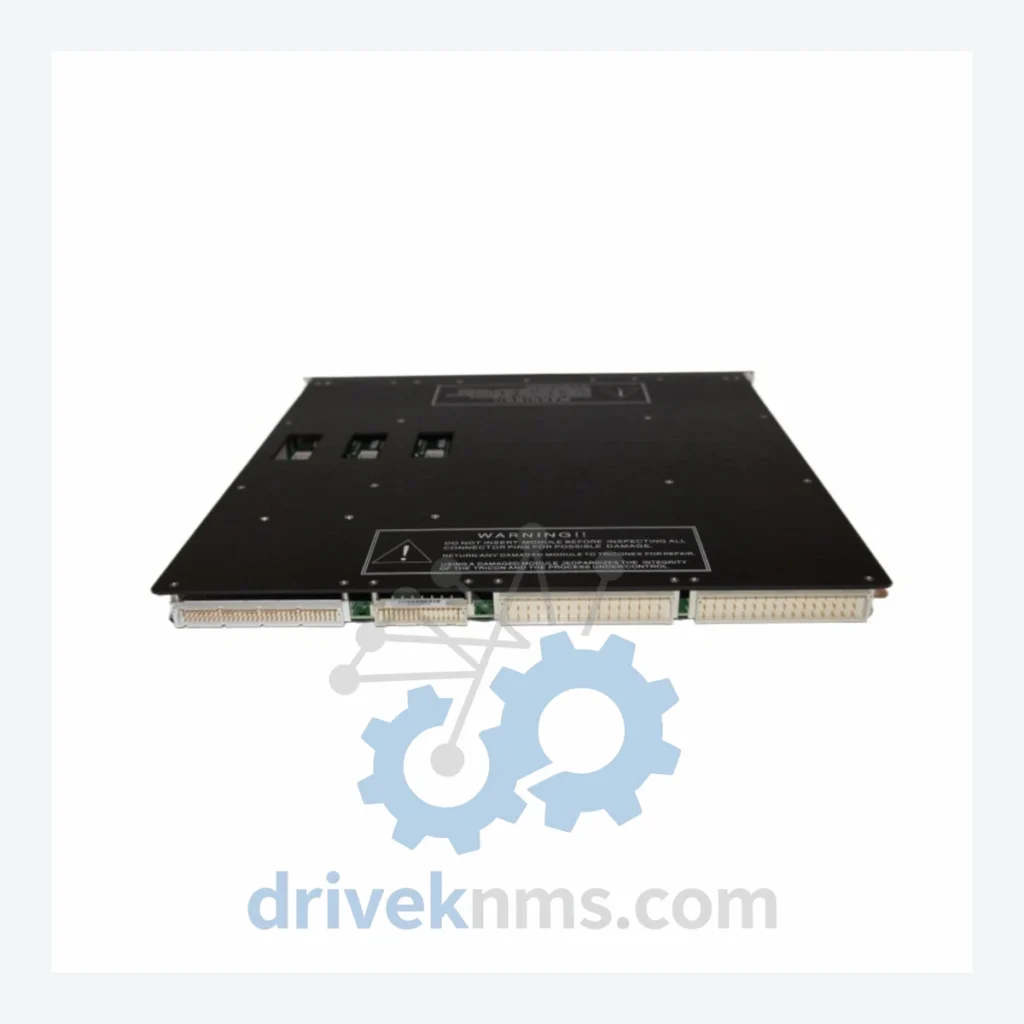
Product Overview
Commercial availability is handled through direct RFQ, model verification and export-oriented follow-up rather than public cart checkout.
Datasheet Preview
Use attached product manuals when available. If the manual is not public yet, request the full file directly through RFQ.
Commercial Path
Product pages on DRIVEKNMS are designed to verify model, brand and series first, then move the buyer into one clean quotation path.
Technical Dossier
The Triconex Tricon Triple Modular Redundancy (TMR) safety system is one of the most widely deployed Safety Instrumented System (SIS) platforms in global heavy industry. Installed across petrochemical complexes, nuclear power stations, LNG terminals, offshore platforms, and refinery process units, the Tricon architecture is certified to IEC 61511 and IEC 61508 SIL 3. Its fault-tolerant design — based on three independent processing legs voting 2-out-of-3 — has made it the reference standard for high-demand safety applications where unplanned shutdown costs exceed millions of dollars per hour. The 3003 Main Processor Module is the central computational unit of the Tricon chassis, executing the safety application logic, managing I/O communication across the backplane, and coordinating the TMR voting mechanism in real time.
The Triconex Tricon platform was introduced in the mid-1980s as one of the first commercially available TMR-based safety controllers. The architecture has evolved through several hardware generations while maintaining backward compatibility at the chassis and I/O module level — a critical design decision that has extended the operational life of early installations into the 2020s.
Generation 1 (Tricon v1–v7, 1980s–1990s): Original backplane architecture with parallel bus communication. Modules such as the 3003 and 3006 processors operated under Triconex Executive Software (TREX) and communicated via proprietary TriBus. I/O modules were fixed-function with discrete wiring.
Generation 2 (Tricon v9–v10, late 1990s–2000s): Introduction of enhanced communication modules (TCM, ACM), expanded analog I/O density, and support for Modbus and HART field device integration. The 3008 Enhanced Processor Module replaced the 3003 as the primary CPU in new installations during this period.
Generation 3 (Tricon v10.3+, 2010s): Integration of TriStation 1131 v4/v5 programming environment, OPC-DA/UA support, and cybersecurity hardening per IEC 62443. The 3009 processor introduced dual-port Ethernet for redundant network connectivity.
Current Status: The Tricon platform has entered its mature/end-of-life phase for many hardware modules. Schneider Electric (which acquired Invensys/Triconex) has transitioned new SIS projects to the Tricon CX platform. However, the installed base of legacy Tricon systems remains enormous, and long-term maintenance support for modules including the 3003, 3006, 3008, and associated I/O cards remains a critical operational requirement for asset owners through 2035 and beyond.
The following SKUs represent verified, commonly deployed modules within the Triconex Tricon TMR safety system platform. Modules are classified by functional category.
— Processor / CPU Modules —
3003: Main Processor Module; executes TMR safety logic, manages backplane I/O bus arbitration, SIL 3 rated.
3006: Enhanced Main Processor Module; higher scan rate than 3003, supports larger application memory.
3007: Tricon Communication Module (TCM); handles peer-to-peer Tricon network and Modbus RTU/TCP.
3008: Enhanced Processor Module v2; dual redundant power inputs, extended diagnostic coverage.
3009: Advanced Processor Module; dual Ethernet ports, OPC-UA server, IEC 62443 cybersecurity features.
— Digital Input (DI) Modules —
3501: 32-channel 24VDC Digital Input Module; field-side isolated, TMR voting per channel.
3503: 32-channel 120VAC Digital Input Module; for high-voltage field device interfaces.
3504: 32-channel 24VDC Digital Input Module with enhanced diagnostics and short-circuit detection.
3511: 16-channel 24VDC Digital Input Module; used in high-density SIS loop configurations.
— Digital Output (DO) Modules —
3601: 16-channel 24VDC Digital Output Module; solid-state relay outputs, SIL 3 capable.
3603: 16-channel 120VAC Digital Output Module; for solenoid valve and motor starter interfaces.
3607: 16-channel 24VDC DO Module with output readback diagnostics for valve position verification.
— Analog Input (AI) Modules —
3701: 8-channel 4–20mA Analog Input Module; HART pass-through, TMR signal voting.
3703: 8-channel Analog Input Module; supports thermocouple and RTD inputs, cold junction compensation.
3704: 16-channel 4–20mA Analog Input Module; high-density process variable acquisition.
— Analog Output (AO) Modules —
3805: 8-channel 4–20mA Analog Output Module; used for positioner and control valve interfaces.
— Power Supply Modules —
8312: Tricon Power Supply Module; 24VDC input, redundant hot-swap capable, per-leg power distribution.
8110: Tricon Chassis / Main Backplane; 15-slot TMR backplane, supports all I/O and processor modules.
As the Tricon TMR platform transitions from active production to legacy support status, procurement of replacement modules — particularly the 3003, 3006, 3501, and 3601 — has become increasingly difficult through standard OEM channels. Schneider Electric's official spare parts program prioritizes current-generation Tricon CX hardware, leaving operators of legacy Tricon systems dependent on the secondary market and specialist distributors.
Tricon TMR modules present specific testing challenges due to their three-leg internal architecture, proprietary TriBus backplane protocol, and embedded firmware dependencies. Standard bench testing procedures used for conventional PLC I/O cards are insufficient for validating TMR module integrity.
DriveKNMS applies the following verification procedures to all Tricon modules prior to dispatch:
Continue The Model Path
Move from this exact model into the matching system hub, brand archive, model-family archive or lifecycle sourcing route before sending a final RFQ list.
Related Paths
Triconex CM3201S2 is listed for Tricon RFQ review. Confirm quantity, condition and destination before quotation.
Triconex PI3381 is listed for Tricon RFQ review. Confirm quantity, condition and destination before quotation.
Triconex 7400221-100 is listed for Tricon RFQ review. Confirm quantity, condition and destination before quotation.