
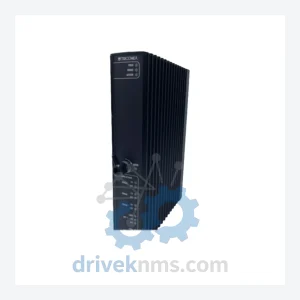
Triconex Tricon CX Series Modules: CM3201S2 CPU Module
Triconex CM3201S2 is listed for Tricon RFQ review. Confirm quantity, condition and destination before quotation.
RFQ-ready industrial model
Model: 3700
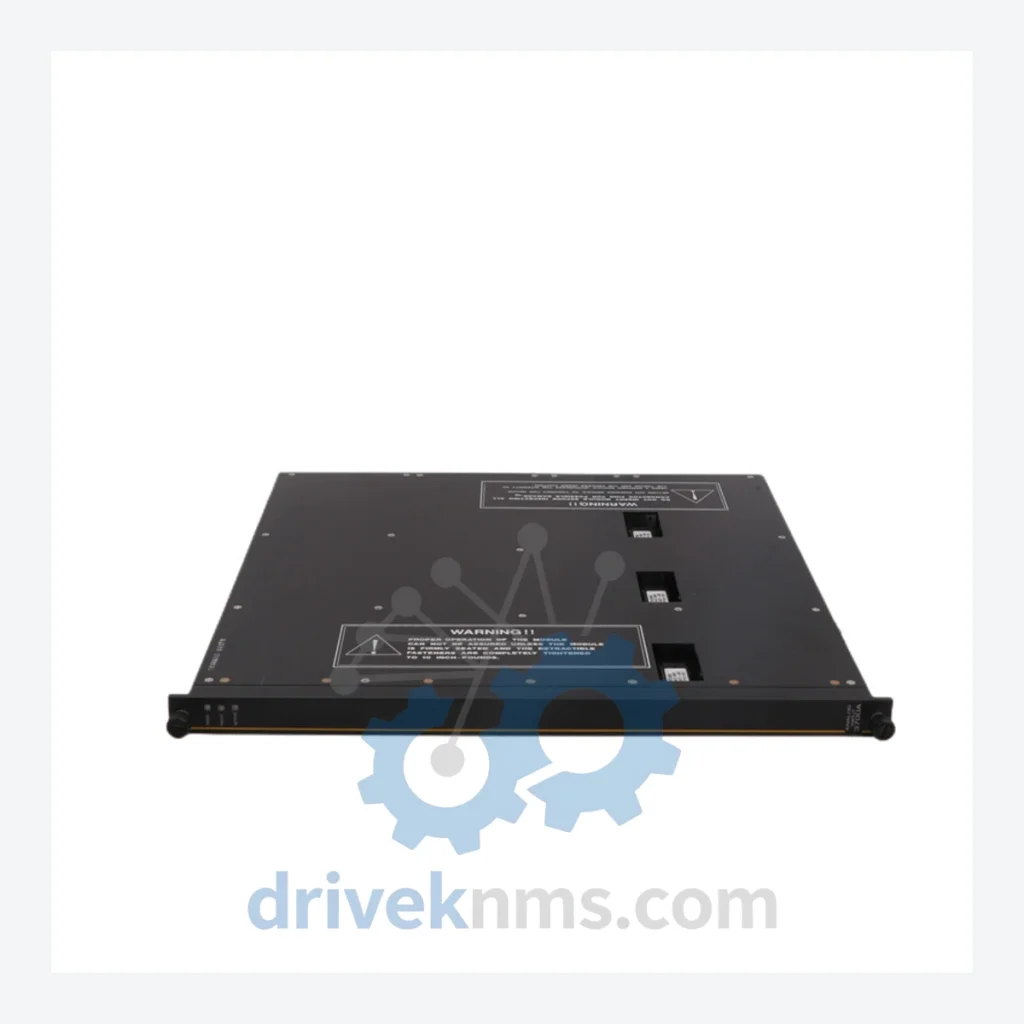
Product Overview
Commercial availability is handled through direct RFQ, model verification and export-oriented follow-up rather than public cart checkout.
Datasheet Preview
Use attached product manuals when available. If the manual is not public yet, request the full file directly through RFQ.
Commercial Path
Product pages on DRIVEKNMS are designed to verify model, brand and series first, then move the buyer into one clean quotation path.
Technical Dossier
The Triconex Tricon platform is a Triple Modular Redundant (TMR) Safety Instrumented System (SIS) that has achieved dominant installed-base status across global heavy industry. Deployed in petrochemical complexes, offshore oil & gas platforms, nuclear power generation facilities, LNG terminals, and refinery process units, the Tricon architecture executes IEC 61511 / IEC 61508 SIL 3 safety functions with hardware fault tolerance (HFT) of 1. Its TMR voting logic (2oo3) ensures continuous operation even under single-module failure conditions, making it the reference standard for Emergency Shutdown (ESD), High Integrity Pressure Protection Systems (HIPPS), and Burner Management Systems (BMS) in facilities where unplanned shutdowns carry multi-million-dollar consequences. The TRICONEX 3700 Analog Input Module is a core I/O component within this architecture, accepting 4–20 mA field signals and converting them to digital values processed by the Tricon Main Processor for safety-critical decisions.
The Triconex Tricon platform was introduced in the mid-1980s by Triconex Corporation (subsequently acquired by Invensys, then Schneider Electric). The architecture has evolved through several hardware generations while maintaining backward compatibility at the chassis and backplane level — a deliberate design decision that protects long-term capital investment in installed systems.
Generation 1 (Tricon v1–v7, 1985–1995): Original TMR chassis with 3-slot and 8-slot configurations. Processor modules in this era (e.g., early MP3000 variants) operated at lower clock speeds. I/O modules used parallel backplane communication. Many of these systems remain operational in legacy chemical plants under extended lifecycle agreements.
Generation 2 (Tricon v8–v9, 1995–2005): Introduction of the high-density I/O chassis, expanded analog I/O resolution (12-bit to 16-bit ADC), and enhanced diagnostics. The 3700, 3703, and 3805 modules belong to this generation. Communication modules such as the 4351B (Modbus TCP) were introduced to interface with DCS historians.
Generation 3 (Tricon v10–v11, 2005–present): Adoption of the Tricon Communication Module (TCM) architecture, TriStation 1131 v4+ programming environment, and integration with Triconex Safety Manager (TSM) for SIS-DCS integration. Modules in this generation (e.g., 3805E, 3625) feature enhanced self-diagnostics and reduced scan times. The platform is currently in its mature/sustaining phase; Schneider Electric has announced the Tricon CX as the next-generation successor, but the legacy Tricon platform continues to receive long-term maintenance support (LTMS) through 2030+.
Compatibility Note: Tricon I/O modules are chassis-slot specific. The 3700-series analog input modules are compatible with the 8-slot and 16-slot Tricon main chassis. They are not interchangeable with Triconex Trident or TriGP platform modules without engineering re-qualification.
The following SKUs represent verified, commonly deployed modules within the Triconex Tricon platform. Each entry includes its functional classification and primary application descriptor.
Analog Input Modules (AI)
3700: 16-channel, 4–20 mA analog input module; TMR voting; 12-bit resolution; field-powered signals.
3703: 16-channel analog input module with HART pass-through capability; supports smart field device diagnostics.
3706: 8-channel, high-accuracy analog input; 16-bit ADC; used in precision pressure/temperature measurement loops.
3708: 8-channel analog input module; isolated channels; designed for high-noise industrial environments.
3721: 16-channel analog input; 1–5 VDC input range; used with voltage-output transmitters in legacy installations.
Analog Output Modules (AO)
3805: 8-channel, 4–20 mA analog output module; TMR output voting; drives control valves and positioners.
3805E: Enhanced 8-channel analog output; extended diagnostics; HART communication support on output channels.
3808: 8-channel analog output; high-drive current capacity; suitable for long cable runs to field actuators.
Digital Input Modules (DI)
3501: 32-channel, 24 VDC digital input module; used for pushbutton, switch, and discrete sensor inputs.
3503: 32-channel digital input; 120 VAC field voltage; suitable for legacy field wiring at 120 V installations.
3504: 32-channel digital input; 48 VDC; used in telecom-adjacent and battery-backed field circuits.
3625: 16-channel digital input; high-speed pulse counting; used for turbine speed and flow measurement.
3511: 32-channel digital input; 24 VDC; enhanced noise immunity; used in high-EMI process environments.
Digital Output Modules (DO)
3601: 16-channel, 24 VDC digital output; solid-state relay outputs; drives solenoid valves and shutdown actuators.
3603: 16-channel digital output; 120 VAC; used for motor starter and relay coil actuation in legacy panels.
3607: 8-channel digital output; high-current capacity; suitable for direct solenoid valve actuation without interposing relays.
3611: 16-channel digital output; 24 VDC; supervised output with open-circuit and short-circuit diagnostics.
Main Processor Modules (CPU)
MP3008: Tricon Main Processor; dual-ported memory; executes TriStation 1131 safety logic; supports v9.x–v10.x firmware.
MP3010: Enhanced Main Processor; increased scan rate; expanded program memory; compatible with Tricon v10–v11 chassis.
Communication Modules
4351B: Tricon Communication Module; Modbus RTU/TCP; interfaces Tricon SIS with DCS historian and operator stations.
4352B: Enhanced communication module; supports Modbus TCP and OPC DA; dual Ethernet ports for redundant network topology.
4119A: Tricon Network Communication Module; peer-to-peer Tricon-to-Tricon communication; used in geographically distributed SIS architectures.
Power Supply Modules
8312: Tricon chassis power supply; 24 VDC input; redundant power bus architecture; hot-swappable under TMR operation.
8110: AC/DC power supply module; 120/240 VAC input; converts to regulated 24 VDC chassis bus; used in AC-powered control rooms.
Tricon modules present specific test challenges due to their TMR backplane architecture. A module that passes standard power-on self-test (POST) may still exhibit latent faults in one of its three internal processing legs — faults that would only manifest under TMR voting conditions in a live chassis. DriveKNMS applies the following test protocol to all Tricon modules prior to dispatch:
Chassis-Level Functional Test: Each module is installed in a live Tricon test chassis running TriStation 1131. All three TMR legs are exercised independently to verify voting integrity. Modules that fail single-leg diagnostics are rejected regardless of overall POST result.
Analog Signal Accuracy Verification (AI/AO modules): For analog input modules including the 3700 and 3703, calibrated 4–20 mA signal sources are applied to all channels. ADC linearity, zero-point offset, and full-scale accuracy are measured against factory specification tolerances (±0.1% FS).
Backplane Communication Integrity: Backplane bus communication between the module under test and the Main Processor is monitored for error frames, retransmissions, and timing violations using protocol analyzers.
Thermal Burn-In: Modules are operated at elevated ambient temperature (50°C) for a minimum of 4 hours to screen for early-life component failures (infant mortality).
Firmware Version Logging: Firmware revision is recorded for each module and matched to the customer's declared chassis firmware version to prevent compatibility mismatches.
Continue The Model Path
Move from this exact model into the matching system hub, brand archive, model-family archive or lifecycle sourcing route before sending a final RFQ list.
Related Paths
Triconex CM3201S2 is listed for Tricon RFQ review. Confirm quantity, condition and destination before quotation.
Triconex PI3381 is listed for Tricon RFQ review. Confirm quantity, condition and destination before quotation.
Triconex 7400221-100 is listed for Tricon RFQ review. Confirm quantity, condition and destination before quotation.