
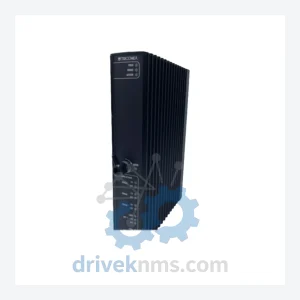
Triconex Tricon CX Series Modules: CM3201S2 CPU Module
Triconex CM3201S2 is listed for Tricon RFQ review. Confirm quantity, condition and destination before quotation.
RFQ-ready industrial model
Model: 7400219-040
Product Overview
Commercial availability is handled through direct RFQ, model verification and export-oriented follow-up rather than public cart checkout.
Datasheet Preview
Use attached product manuals when available. If the manual is not public yet, request the full file directly through RFQ.
Commercial Path
Product pages on DRIVEKNMS are designed to verify model, brand and series first, then move the buyer into one clean quotation path.
Technical Dossier
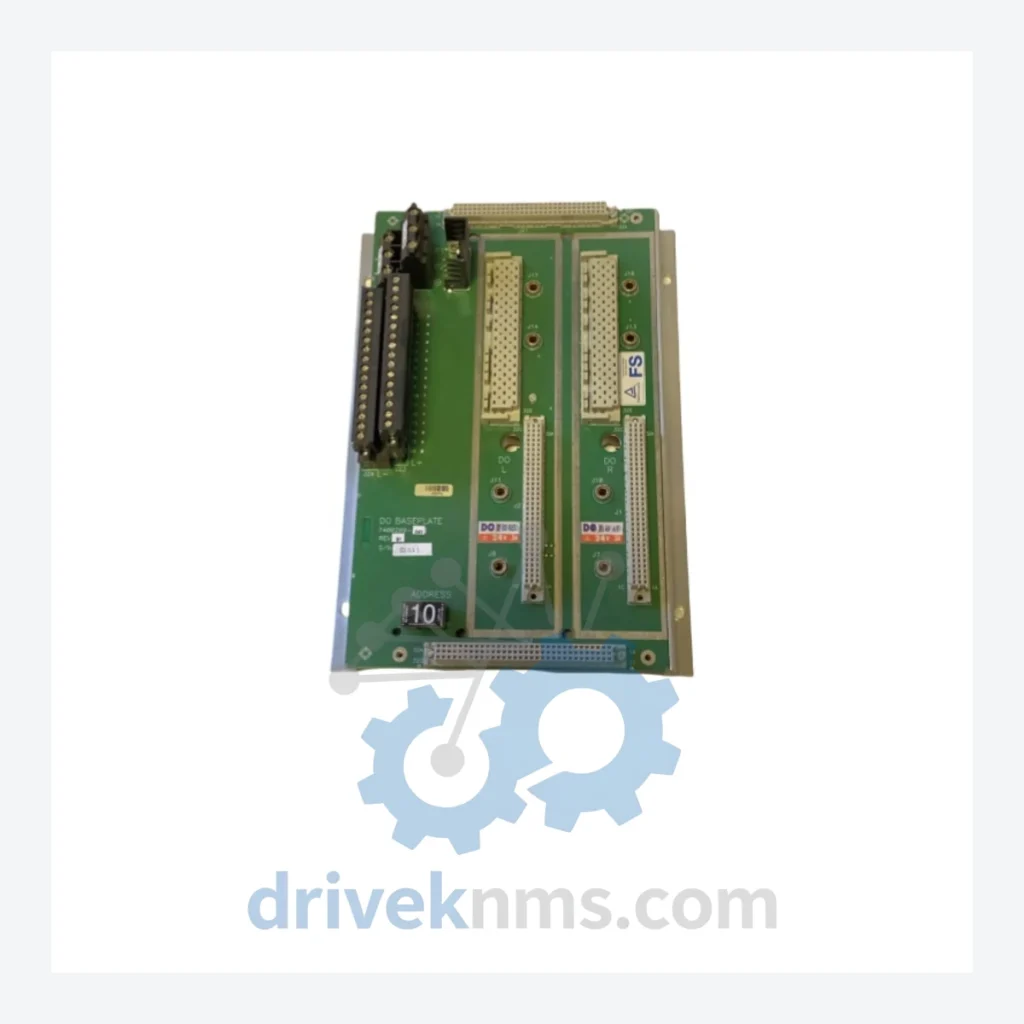
The Triconex 7400219-040 REV B1 Communication Module Base Plate is a discontinued hardware component. DriveKNMS maintains RFQ-reviewed sourcing status of this part — sourced, inspected, and held specifically for facilities that cannot afford to gamble on system continuity.
RFQ support for obsolete parts: Send the model number, required quantity and destination so DriveKNMS can confirm sourcing options before quotation.
| Parameter | Detail |
|---|---|
| Part Number | 7400219-040 |
| Revision | REV B1 |
| Manufacturer | Triconex (Schneider Electric) |
| Product Family | Tricon TMR (Triple Modular Redundant) Safety System |
| Module Type | Communication Module Base Plate |
| Country of Origin | United States |
| Discontinuation Status | Obsolete – No longer manufactured or supported by OEM |
| Compatible Systems | Triconex Tricon TMR Safety Controllers (legacy configurations) |
| Typical Application | SIS (Safety Instrumented Systems) in oil & gas, petrochemical, power generation |
The Triconex Tricon TMR platform has been deployed across critical process industries for decades. Its Triple Modular Redundant architecture — where three independent processing channels vote on every output — made it the standard of choice for SIL 2 and SIL 3 safety loops. That same architectural maturity is now its operational liability: the platform is mature enough that OEM support has been curtailed, yet deeply embedded enough that replacement is not a simple procurement decision.
The 7400219-040 base plate is the physical and electrical foundation for communication modules within the Tricon chassis. Without a functional base plate, the communication module cannot seat correctly, signal integrity is compromised, and the TMR voting architecture is degraded. In a redundant safety system, a degraded channel is not a tolerable condition — it is a compliance and safety event.
For plant managers and reliability engineers facing pressure to retire aging Tricon-based SIS infrastructure, a full system migration is rarely the only option — and almost never the lowest-cost one in the near term. The following strategy has been applied successfully across multiple facilities to defer migration costs while maintaining full SIL compliance:
1. Conduct a Component-Level Criticality Audit. Map every Tricon chassis slot against its current hardware revision and cross-reference against known obsolescence timelines. Identify which base plates, I/O modules, and communication cards are single-point-of-failure items with no available hot spares on site.
2. Build a Tiered Spare Parts Reserve. For components like the 7400219-040, where OEM supply has ceased, procure a minimum of two verified spare units per critical chassis. One unit covers immediate failure response; the second covers the replacement of the first spare after it is consumed. This two-deep buffer is the difference between a two-hour repair and a two-week plant shutdown.
3. Establish Firmware Version Control. Legacy Tricon systems are sensitive to firmware mismatches between modules. Before introducing any replacement hardware — including base plates — verify that the firmware revision on the replacement unit is compatible with the installed system version. Document this verification in your maintenance management system.
4. Schedule Preventive Inspection Cycles. Electrolytic capacitor degradation, connector pin oxidation, and PCB trace corrosion are the primary failure modes for hardware of this age. A structured annual inspection of communication modules and their base plates — including thermal imaging under load — can identify degradation before it becomes a failure event.
Executing this strategy consistently extends the operational life of a Tricon-based SIS by five to ten years without requiring SIL re-certification of the overall system — provided that replacement hardware is functionally identical to the original specification.
Every Triconex 7400219-040 unit processed by DriveKNMS passes a five-stage quality protocol before it is offered for sale:
Step 1 – Visual and Mechanical Inspection: Full examination of the base plate housing, connector pins, and PCB surface for physical damage, corrosion, or evidence of prior field failure.
Step 2 – Electrolytic Capacitor Assessment: Capacitors are the primary age-related failure point in legacy industrial hardware. Each unit is assessed for capacitor bulging, leakage, and ESR deviation from specification.
Step 3 – Connector and Pin Integrity Check: All edge connectors and backplane interface pins are inspected for oxidation, deformation, and contact resistance. Corroded or deformed pins are documented and units are graded accordingly.
Step 4 – Firmware and Revision Verification: Where applicable, the hardware revision marking (REV B1) is verified against the physical unit. Revision mismatches are flagged and disclosed prior to sale.
Step 5 – Functional Continuity Test: Electrical continuity across the base plate signal paths is verified prior to packaging.
Units that do not pass all five stages are not offered for sale. Condition grade is disclosed in full at the time of quotation.
Drop-in Replacement: The 7400219-040 REV B1 is a direct physical and electrical replacement for the original installed unit. No chassis modification, no re-wiring, and no re-engineering of the safety logic is required.
No Reprogramming Required: The base plate carries no programmable firmware. Replacing it does not affect the safety application program, I/O configuration, or TMR voting parameters stored in the Tricon main processors.
Q: How do I know the unit is genuine and not a counterfeit?
A: All units are sourced through documented supply channels. Physical markings, revision labels, and PCB characteristics are verified against known-good reference units. Any anomalies are disclosed prior to sale. We do not sell units that cannot be verified.
Continue The Model Path
Move from this exact model into the matching system hub, brand archive, model-family archive or lifecycle sourcing route before sending a final RFQ list.
Related Paths
Triconex CM3201S2 is listed for Tricon RFQ review. Confirm quantity, condition and destination before quotation.
Triconex PI3381 is listed for Tricon RFQ review. Confirm quantity, condition and destination before quotation.
Triconex 7400221-100 is listed for Tricon RFQ review. Confirm quantity, condition and destination before quotation.