Technical Dossier
Product Details And Specifications
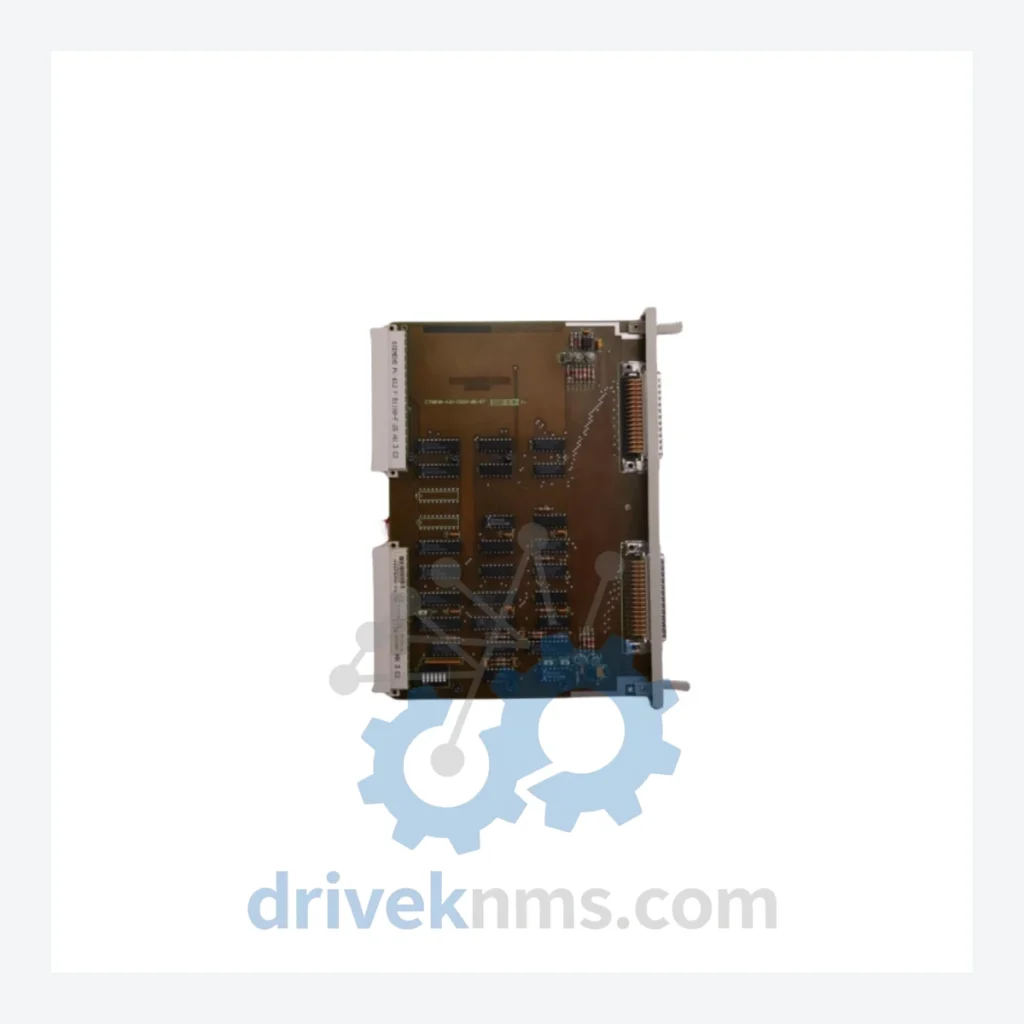
Vibro-Meter PLD772 254-774-010-024 Vibration Processor Module – Obsolete VM Series Spare Part
Technical Specifications
| Parameter | Detail |
| Manufacturer | Vibro-Meter SA (now Meggitt SA) |
| Part Number | 254-774-010-024 |
| Model | PLD772 |
| Series | VM Legacy Series |
| Function | Vibration Signal Processing Module |
| Country of Origin | Switzerland |
| Product Status | Discontinued / Obsolete – No longer manufactured |
| Typical System Compatibility | Vibro-Meter VM600 rack-based turbomachinery protection systems and earlier VM-series architectures |
Note: Electrical parameters such as input voltage range, output signal type, and channel count are not published here to prevent specification errors. Confirmed datasheet details are provided upon request with your system configuration.
Solving the Discontinued Hardware Crisis
The Vibro-Meter PLD772 was designed for continuous-duty signal conditioning in rotating machinery protection — gas turbines, steam turbines, compressors, and large pumps where vibration monitoring is a safety-critical function, not a convenience feature. These systems were engineered for 20–30 year operational lifespans, and many remain in service well past their original design horizon.
When Vibro-Meter's VM legacy product line was absorbed into Meggitt's portfolio and subsequently discontinued, facilities running these systems were left with a stark choice: fund a full platform migration or maintain the existing architecture through verified spare parts procurement. The migration path is rarely straightforward. Replacing a vibration monitoring rack in an operating plant requires sensor recalibration, cable rerouting, software reconfiguration, and in many jurisdictions, re-certification of the safety instrumented system — a process that can take 12 to 24 months and consume engineering resources that most maintenance teams do not have available.
A single verified PLD772 module, installed by a qualified technician, restores full system function without touching any other component in the protection chain. For plant managers operating under asset-life-extension mandates, this is not a workaround — it is the correct engineering decision. Facilities that have built a structured inventory of critical spare modules for their VM-series systems routinely extend operational asset life by 5 to 10 years beyond the manufacturer's stated support window, deferring capital replacement costs that compound significantly with inflation and supply chain volatility.
Condition & Reliability Assurance
Sourcing obsolete industrial electronics carries inherent risk. DriveKNMS applies a five-stage inspection protocol to every legacy module before it is offered for sale:
- Visual and mechanical inspection: Boards are examined for physical damage, connector pin integrity, and corrosion on exposed contact surfaces. Units with pin deformation or oxidation beyond acceptable limits are rejected at this stage.
- Electrolytic capacitor assessment: Aged electrolytic capacitors are the primary failure mode in legacy signal processing hardware. Each unit is evaluated for capacitor bulging, leakage residue, and ESR deviation. Capacitors showing degradation are flagged and, where applicable, replaced with specification-matched components.
- Firmware and configuration verification: Where accessible, firmware version and any stored configuration parameters are documented and disclosed to the buyer prior to shipment.
- Functional bench test: Modules are powered and tested for basic operational response under controlled conditions.
- Packaging for long-term storage: Units are packed in anti-static shielding with desiccant, suitable for immediate installation or controlled long-term storage.
Condition grade (New, Refurbished-Grade-A, or Tested-Used) is disclosed on each individual unit's documentation. No unit is shipped without a condition declaration.
Key Features for System Maintenance
How do I know the unit is genuine and not a counterfeit?
All units sourced by DriveKNMS are traceable to documented supply channels. Physical markings, board revision codes, and component layouts are cross-referenced against known-good reference units. Any unit that cannot be verified to manufacturer specification is not offered for sale.
Can you source other VM-series modules?
Yes. DriveKNMS specializes in legacy and obsolete industrial automation components. If you require additional VM-series modules, contact us with your full part number list and we will advise on availability.