Products / Wago / 280 Series
Wago 280 Series

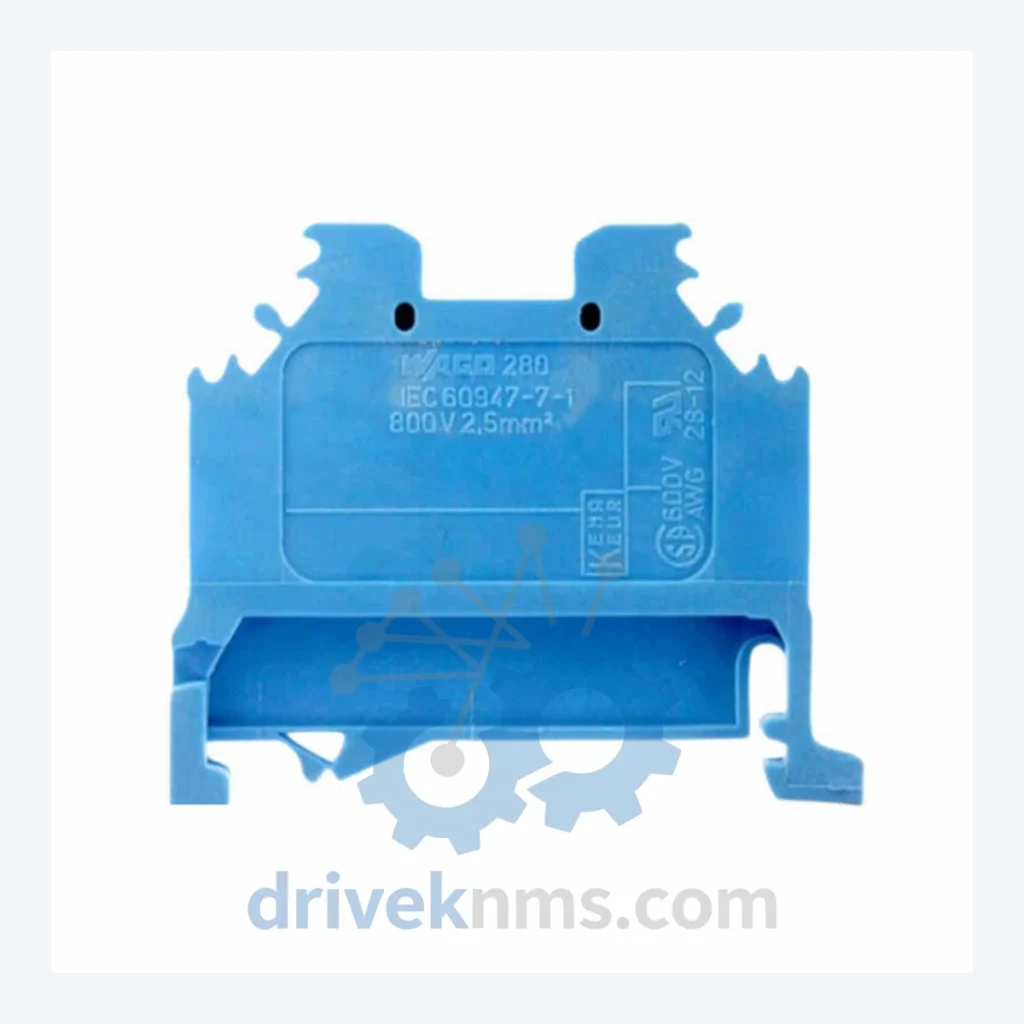
WAGO 280-104 Through Terminal Block – 280 Series DIN Rail Connector Spare Part

Model: 280-104

Brand Wago
Series 280 Series
Model 280-104
RFQ-ready model route Obsolete and surplus sourcing Export follow-up by model list

Product Overview

Commercial availability is handled through direct RFQ, model verification and export-oriented follow-up rather than public cart checkout.

Datasheet Preview

Datasheet Preview

Use attached product manuals when available. If the manual is not public yet, request the full file directly through RFQ.

Request Full Manual

Commercial Path

Use This Page To Confirm The Model, Then Move To RFQ

Product pages on DRIVEKNMS are designed to verify model, brand and series first, then move the buyer into one clean quotation path.

Technical Dossier

Product Details And Specifications

WAGO 280-104 Through Terminal Block – 280 Series DIN Rail Connector Spare Part

Every hour of unplanned downtime on an industrial production line carries a measurable cost — lost output, idle labor, delayed shipments, and contractual penalties. When a terminal block failure triggers a control cabinet fault, the root cause is rarely the machine itself. It is the failure of a small, overlooked passive component that no one thought to stock. The WAGO 280-104 is exactly that component: a through-type terminal block that sits at the heart of field wiring terminations across thousands of active industrial installations worldwide. DriveKNMS maintains verified inventory of the WAGO 280-104 to ensure your maintenance team is never caught without a direct replacement.

Technical Specifications

Parameter Value
Manufacturer WAGO
Part Number 280-104
Series WAGO 280
Type Through Terminal Block (Feed-Through)
Mounting DIN Rail (35 mm)
Country of Origin Germany
Product Status Current Production – Critical Spare Recommended

Note: Electrical parameters (rated voltage, current, wire cross-section) vary by sub-variant. Confirm your exact configuration with our technical team before ordering to ensure compatibility.

Why Stocking Spare Terminal Blocks Is a Non-Negotiable Maintenance Strategy

Terminal blocks are classified as passive components, which leads many maintenance planners to underestimate their failure risk. In practice, the 280-104 and its series siblings are subject to several real-world degradation mechanisms: conductor corrosion from ambient humidity in non-climate-controlled cabinets, insulation brittleness after years of thermal cycling, and clamping force loss in high-vibration environments such as compressor rooms or press lines.

A single failed terminal block can interrupt a 4–20 mA signal loop, a 24 VDC control circuit, or a safety interlock — any of which can halt an entire production cell. The cost of sourcing a replacement through standard distribution channels under emergency conditions — expedited freight, after-hours labor, production loss — routinely exceeds the cost of maintaining a small buffer stock by a factor of 50 to 100.

For facilities running WAGO 280-series terminal blocks across multiple cabinets, the recommended practice is to maintain a minimum of 10–20% spare coverage per installed quantity. This is not over-stocking; it is asset protection arithmetic. The capital tied up in a box of terminal blocks is negligible against the cost of a four-hour line stoppage.

Facilities that have extended the operational life of their wiring infrastructure by 5 to 10 years consistently share one practice: they treat passive termination components with the same procurement discipline as active control modules. Scheduled inspection cycles, documented replacement thresholds, and pre-positioned spares are the operational levers that keep aging control cabinets running without forcing a full panel redesign.

Condition & Reliability Assurance

DriveKNMS applies a structured 5-step inspection protocol to all terminal block inventory before shipment:

  • Visual Inspection: Housing integrity check — no cracks, deformation, or discoloration from heat events.
  • Clamping Mechanism Test: Each unit's clamping screw or push-in actuator is cycled to verify full mechanical function and rated clamping force retention.
  • Insulation Assessment: Insulation material is checked for brittleness, UV degradation, or chemical exposure indicators.
  • Contact Surface Examination: Conductor contact surfaces are inspected for oxidation, pitting, or contamination that would increase contact resistance.
  • Dimensional Verification: Pitch and rail-mounting geometry are confirmed against the 280-104 specification to guarantee drop-in fit.

Units that do not pass all five checkpoints are quarantined and not shipped. We do not offer graded or cosmetically impaired stock as primary inventory.

Key Features for System Maintenance

  • Drop-in Replacement: The 280-104 installs directly onto existing 35 mm DIN rail without modification to the rail, adjacent components, or wiring layout.
  • No Reprogramming Required: As a passive termination device, replacement requires only re-termination of field conductors — no software, no configuration, no engineering involvement.
  • Avoids Panel Redesign Cost: Maintaining the original terminal block series preserves existing wiring documentation, label schemes, and cabinet layout. Switching to an alternative series forces documentation revision, re-labeling, and potential re-certification — costs that dwarf the price of sourcing original spares.
  • Consistent Series Compatibility: The 280 series maintains consistent pitch and rail-mounting geometry across its range, simplifying mixed-cabinet maintenance planning.

FAQ

Q: What warranty applies to WAGO 280-104 units from DriveKNMS?
A: We provide a 90-day warranty covering manufacturing defects and functional failure under normal operating conditions. Warranty claims are handled directly — no third-party routing.

Q: Are these new or refurbished units?
A: We stock new, original WAGO 280-104 units. If refurbished stock is available for a specific order volume, it is disclosed explicitly before order confirmation. We do not mix stock conditions without prior customer agreement.

Q: How many units should we stock as long-term spares?
A: As a baseline, audit your installed quantity across all cabinets and maintain 10–15% as buffer stock. For facilities with cabinets in high-humidity or high-vibration environments, increase that buffer to 20%. Review and replenish annually or after any corrective maintenance event involving terminal block replacement.

Q: Can you supply in bulk for a planned maintenance shutdown?
A: Yes. Contact us with your required quantity and delivery window. We accommodate planned shutdown procurement with consolidated shipment and documentation packages.

© 2026 DriveKNMS. Status: DRAFT

WhatsApp Prefilled Inquiry Email [email protected] Phone +86 18359293191 Top Back To Top