
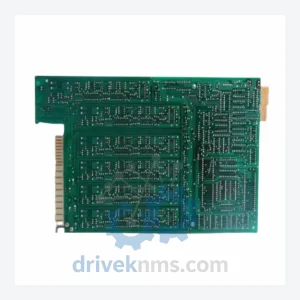
Westinghouse 5X00 Series Modules 5X00419G01
Westinghouse 5X00419G01 is listed for 5X00 Series RFQ review. Confirm quantity, condition and destination before quotation.
RFQ-ready industrial model
Model: 5X00106G01
Product Overview
Commercial availability is handled through direct RFQ, model verification and export-oriented follow-up rather than public cart checkout.
Datasheet Preview
Use attached product manuals when available. If the manual is not public yet, request the full file directly through RFQ.
Commercial Path
Product pages on DRIVEKNMS are designed to verify model, brand and series first, then move the buyer into one clean quotation path.
Technical Dossier
The Westinghouse 5X00 series represents a core hardware platform deployed across global heavy industry, including petrochemical refineries, nuclear power stations, and large-scale chemical processing facilities. Originally developed under the Westinghouse Process Control Division and later absorbed into Emerson's automation portfolio following the WDPF/Ovation transition, these modules remain embedded in thousands of legacy DCS installations worldwide. Their continued operational presence in critical infrastructure makes sourcing genuine, tested replacement units a high-priority maintenance requirement for plant engineers and procurement teams.
The 5X00 platform was engineered for the WDPF (Westinghouse Distributed Processing Family) architecture, a distributed control system designed for deterministic process control in environments demanding high availability and fault tolerance. Many installations dating from the 1980s through the 2000s continue to operate on this hardware, making lifecycle support and spare parts availability a strategic concern for asset managers.
The 5X00 series was introduced as part of the WDPF platform in the early 1980s, establishing a modular backplane architecture that allowed incremental expansion of I/O capacity without system-wide reconfiguration. Early revisions used parallel bus communication between modules; later iterations incorporated serial data highways to reduce wiring complexity and improve noise immunity in high-EMI industrial environments.
As Westinghouse transitioned its process automation business through successive corporate changes — including the Siemens acquisition of the power division and Emerson's integration of the Ovation DCS — the 5X00 hardware base entered a maintenance-only lifecycle. No new hardware revisions have been released since the mid-2000s. The current installed base is supported exclusively through spare parts procurement, third-party repair services, and controlled migration programs to Emerson Ovation or DeltaV platforms.
Compatibility between early and late 5X00 revisions is generally maintained at the backplane level, but firmware dependencies and I/O addressing differences require careful validation before substituting modules across system generations. Engineers should verify revision codes (G01, G02, G04, etc.) against the original system configuration documentation before installation.
The following SKUs represent verified, commonly stocked components within the Westinghouse 5X00 / WDPF module family. Each entry reflects the module's primary functional classification:
5X00106G01: Electronics module; core processing and signal conditioning unit for WDPF controller nodes.
5X00105G01: Analog input module; 16-channel, 4–20 mA process signal acquisition.
5X00109G01: Digital output module; 16-channel discrete output for valve and actuator control.
5X00119G01: Analog output module; 8-channel, 4–20 mA for final control element positioning.
5X00226G01: Data highway interface module; WDPF serial bus communication adapter.
5X00241G01: Power supply module; regulated 24 VDC backplane power for I/O chassis.
5X00300G01: CPU module; primary controller for WDPF distributed processing unit.
5X00301G01: Redundant CPU module; hot-standby processor for fault-tolerant control loops.
5X00357G01: Digital input module; 32-channel, 24 VDC discrete signal acquisition.
5X00489G01: Communication interface module; Ethernet gateway for WDPF-to-DCS integration.
5X00070G01: Termination assembly; field wiring interface for analog I/O modules.
5X00070G04: Termination assembly, revision 4; updated field wiring interface with improved terminal density.
5X00273G01: Pulse input module; frequency and count signal acquisition for turbine and flow applications.
5X00501G01: Sequence of events module; high-resolution timestamping for alarm and event logging.
1C31234G01: Ovation I/O module; analog input, compatible with WDPF migration chassis.
1C31227G02: Ovation controller module; bridge unit for WDPF-to-Ovation system migration paths.
The 5X00 series has been formally discontinued by Emerson. OEM support, including factory repair and new unit supply, is no longer available through standard distribution channels. Plants operating WDPF systems must rely on the secondary market for replacement modules.
The 5X00 backplane architecture uses a parallel bus structure with direct module-to-module electrical coupling. This design requires that replacement modules be tested under load conditions that replicate the backplane environment, not merely bench-tested in isolation.
DriveKNMS applies the following verification steps to all 5X00 series units prior to shipment:
Continue The Model Path
Move from this exact model into the matching system hub, brand archive, model-family archive or lifecycle sourcing route before sending a final RFQ list.
Related Paths
Westinghouse 5X00419G01 is listed for 5X00 Series RFQ review. Confirm quantity, condition and destination before quotation.
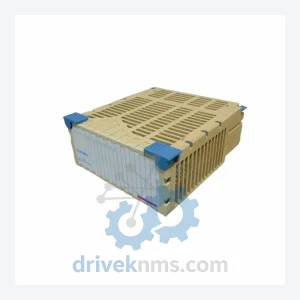
Westinghouse 5X00226G02 is listed for WDPF Series RFQ review. Confirm quantity, condition and destination before quotation.
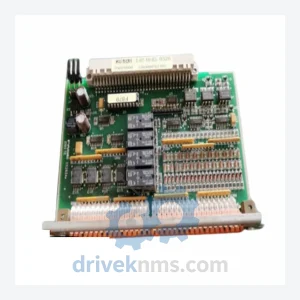
Westinghouse F356-IOE is listed for WDPF DCS RFQ review. Confirm quantity, condition and destination before quotation.