
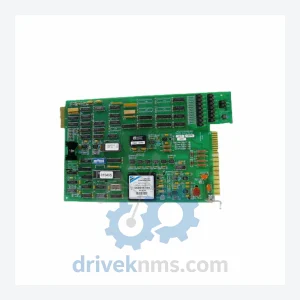
Westinghouse 7381A73G01 Speed Sensor Card – Obsolete WDPF Spare Part
Westinghouse 7381A73G01 is listed for WDPF RFQ review. Confirm quantity, condition and destination before quotation.
RFQ-ready industrial model
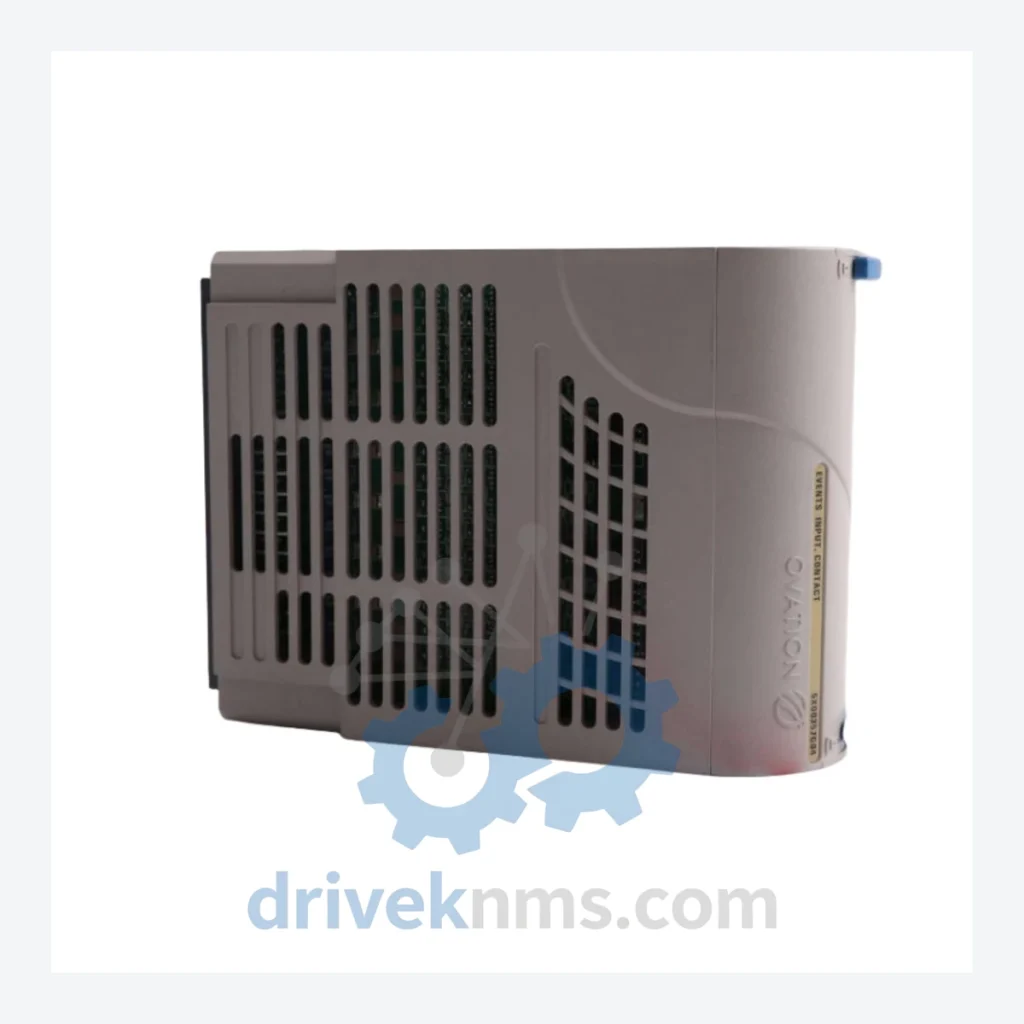
Model: 5X00357G04
Product Overview
Commercial availability is handled through direct RFQ, model verification and export-oriented follow-up rather than public cart checkout.
Datasheet Preview
Use attached product manuals when available. If the manual is not public yet, request the full file directly through RFQ.
Commercial Path
Product pages on DRIVEKNMS are designed to verify model, brand and series first, then move the buyer into one clean quotation path.
Technical Dossier
DriveKNMS reviews sourcing status and documentation for this model during RFQ handling before quotation.
RFQ support for obsolete parts: Send the model number, required quantity and destination so DriveKNMS can confirm sourcing options before quotation.
| Part Number | 5X00357G04 |
| Description | Enhanced Digital Input EMOD |
| Manufacturer | Westinghouse Electric Corporation |
| Series / Platform | WDPF (Westinghouse Distributed Processing Family) |
| Module Function | Digital Input (DI) – Enhanced EMOD format |
| Compatible Systems | Westinghouse WDPF DCS, WDPF II |
| Form Factor | EMOD plug-in module |
| Manufacturer Status | Discontinued / Obsolete – no longer in production |
| Country of Origin | United States |
The Westinghouse WDPF platform was the backbone of distributed control in power utilities and heavy process industries from the 1980s through the early 2000s. Westinghouse's process control division was absorbed through a series of corporate transactions, and WDPF hardware has been out of production for well over a decade. No authorized repair depot, no factory spare parts program, and no OEM support contract exists for this equipment today.
The 5X00357G04 EMOD occupies a specific slot in the WDPF I/O subsystem. It is not interchangeable with standard-format modules, and its signal conditioning and bus interface logic are unique to the WDPF backplane architecture. A failed unit cannot be substituted with a generic digital input card. The only operationally safe replacement is an identical or functionally equivalent EMOD from RFQ-reviewed sourcing status.
Plant managers facing WDPF system retirement pressure should weigh the following: a phased asset-life extension strategy built around critical spare procurement consistently delivers a 5-to-10-year operational extension at 3–8% of the cost of a full DCS migration. The logic is straightforward — the mechanical and structural infrastructure surrounding the control system (field wiring, junction boxes, transmitters, final control elements) has its own replacement cycle. Forcing a DCS migration before that infrastructure reaches end-of-life compounds capital expenditure unnecessarily. Maintaining a curated inventory of high-failure-risk modules such as the 5X00357G04 decouples the control system retirement decision from emergency hardware failure events, restoring it to a planned, budget-controlled timeline.
Obsolete modules sourced from the secondary market carry risks that new production parts do not. DriveKNMS applies a structured 5-step inspection protocol before any WDPF EMOD is offered for sale:
Step 1 – Electrolytic Capacitor Assessment: Capacitors on boards manufactured in the 1990s and early 2000s are the single most common failure point in aged electronics. Each board is inspected for bulging, electrolyte leakage, and ESR deviation. Units with suspect capacitors are quarantined.
Step 2 – Firmware and Label Verification: The G04 revision designation carries specific firmware and hardware characteristics. Version markings on the board are cross-referenced against known revision documentation to confirm the unit matches the listed part number exactly.
Step 3 – Pin and Connector Inspection: EMOD connectors are examined under magnification for oxidation, pin deformation, and contact contamination. Corroded contacts are the second most common cause of intermittent faults in legacy I/O modules.
Step 4 – Functional Bench Test: Where test infrastructure permits, modules are powered and input channels are exercised to confirm basic digital input response.
Step 5 – Packaging for Long-Term Storage: Units are packed in anti-static bags with desiccant and sealed against humidity ingress, suitable for immediate installation or controlled long-term storage.
The 5X00357G04 is a direct drop-in replacement for a failed unit in the same WDPF I/O rack position. No software reconfiguration, no database modification, and no engineering rework is required at the DCS level — the WDPF system recognizes the module by slot address and resumes normal operation. This eliminates the engineering labor cost that accompanies any hardware substitution requiring re-parameterization, which in a WDPF environment can run to 40–80 hours of specialist time per module type. The financial case for sourcing an identical replacement rather than attempting a cross-platform workaround is unambiguous.
How do I know the unit is genuine and not a counterfeit?
All units are inspected for authentic Westinghouse markings, correct PCB revision codes, and physical construction consistent with known genuine examples. We do not source from unverified liquidation channels.
Should I buy more than one unit?
For any WDPF module that is no longer in production, the answer is yes. Secondary market availability is not predictable. If your system contains multiple racks using the 5X00357G04, holding at least one cold spare per rack is the minimum prudent position. A managed spare pool of two to three units per critical module type is the standard recommendation for facilities committed to a 5-to-10-year asset life extension strategy.
Can you source other WDPF modules?
Yes. DriveKNMS specializes in obsolete and hard-to-find industrial automation components across multiple legacy DCS and PLC platforms. Contact us with your full BOM or individual part numbers.
Continue The Model Path
Move from this exact model into the matching system hub, brand archive, model-family archive or lifecycle sourcing route before sending a final RFQ list.
Related Paths
Westinghouse 7381A73G01 is listed for WDPF RFQ review. Confirm quantity, condition and destination before quotation.
Westinghouse 1C31113G05 is listed for WDPF RFQ review. Confirm quantity, condition and destination before quotation.
Westinghouse 5X00376G01 is listed for WDPF RFQ review. Confirm quantity, condition and destination before quotation.