
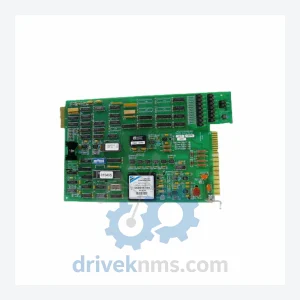
Westinghouse 7381A73G01 Speed Sensor Card – Obsolete WDPF Spare Part
Westinghouse 7381A73G01 is listed for WDPF RFQ review. Confirm quantity, condition and destination before quotation.
RFQ-ready industrial model
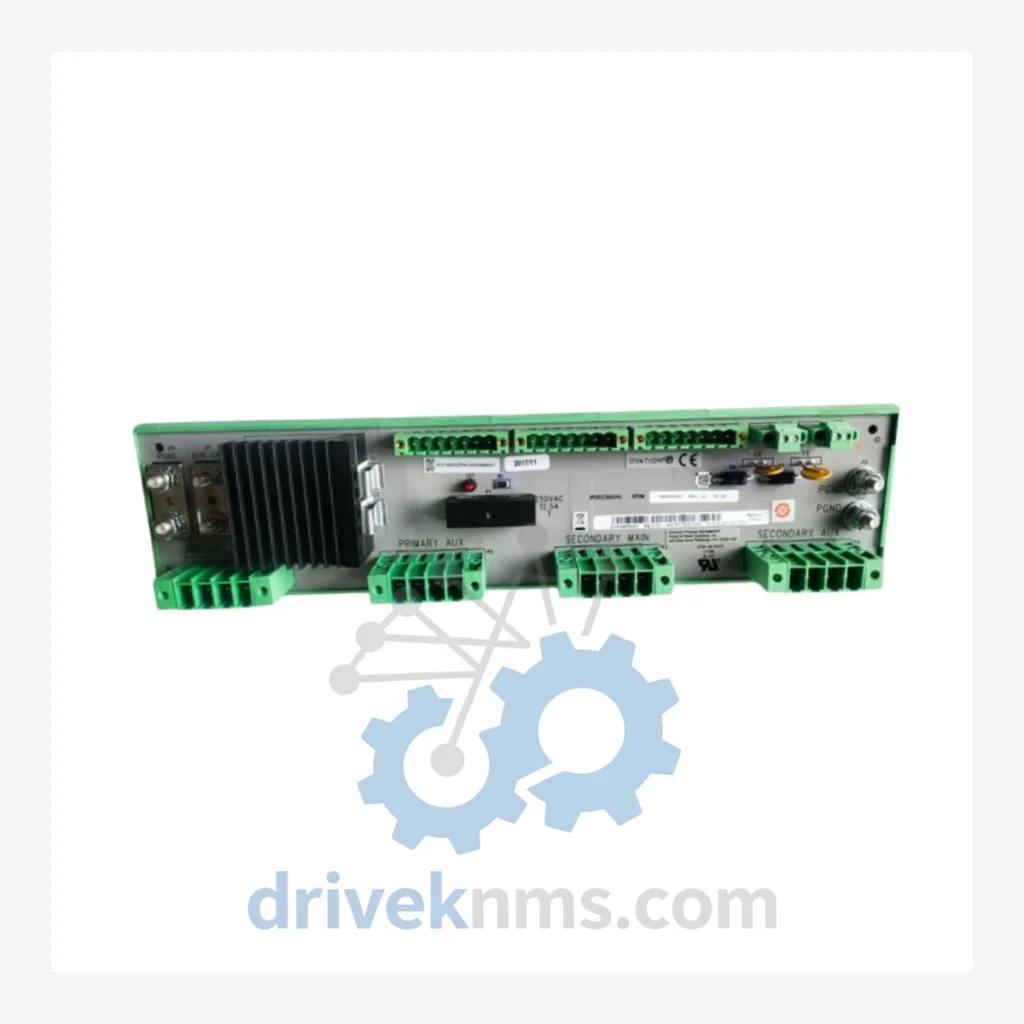
Model: 5X00489G01
Product Overview
Commercial availability is handled through direct RFQ, model verification and export-oriented follow-up rather than public cart checkout.
Datasheet Preview
Use attached product manuals when available. If the manual is not public yet, request the full file directly through RFQ.
Commercial Path
Product pages on DRIVEKNMS are designed to verify model, brand and series first, then move the buyer into one clean quotation path.
Technical Dossier
RFQ support for obsolete parts: Send the model number, required quantity and destination so DriveKNMS can confirm sourcing options before quotation.
| Manufacturer | Westinghouse Electric Corporation |
|---|---|
| Part Number | 5X00489G01 |
| Description | Power Distribution Module |
| Product Series | WDPF (Westinghouse Distributed Processing Family) |
| Manufacturer Status | Discontinued / Obsolete – No longer in production |
| Country of Origin | United States |
| Typical System Compatibility | Westinghouse WDPF DCS, WDPF II |
| Form Factor | Rack-mounted module |
Note: Electrical parameters such as voltage ratings, current capacity, and bus specifications are not published here to prevent misapplication. Please contact our technical team to confirm compatibility with your specific system revision before ordering.
The Westinghouse WDPF platform was deployed extensively across power generation, refining, and chemical processing facilities from the 1980s through the early 2000s. Emerson acquired the Westinghouse process control division, and WDPF hardware has been out of production for well over a decade. No authorized manufacturing channel exists for new 5X00489G01 units.
The Power Distribution Module occupies a non-negotiable position in the WDPF architecture. It supplies regulated power to the I/O highway and associated field modules. Without a functioning unit, the entire node it serves goes offline. Unlike a failed analog input card — which affects only the signals wired to it — a failed power distribution module takes down every module drawing from that bus segment simultaneously.
Plant managers operating WDPF systems face a documented and well-understood dilemma: the cost of maintaining a small, strategic inventory of critical obsolete modules is a fraction of one percent of the cost of an unplanned system migration. A single unplanned outage lasting 72 hours in a mid-scale refinery or power plant can generate production losses that exceed the entire annual maintenance budget for the control system. The 5X00489G01 is precisely the type of module that belongs in a protected spare parts cabinet — not sourced reactively after a failure event.
Facilities that have extended WDPF system life by 5 to 10 years beyond the original decommission timeline consistently share one operational characteristic: they identified critical single-point-of-failure modules early, secured verified spares, and established a documented replacement protocol. The 5X00489G01 qualifies as a critical single-point-of-failure module by any reasonable risk assessment standard.
Every 5X00489G01 unit processed by DriveKNMS passes a structured 5-stage inspection protocol before it is offered for sale. This protocol is designed specifically for the failure modes common to power distribution hardware that has been in storage or field service for extended periods.
Stage 1 – Visual and Mechanical Inspection: Full examination of the PCB surface, connector pins, and housing for physical damage, corrosion, or evidence of thermal stress. Units with pin corrosion or oxidation on the bus connector are rejected at this stage.
Stage 2 – Electrolytic Capacitor Assessment: Power distribution modules of this era rely on electrolytic capacitors for filtering and regulation. Capacitor aging — evidenced by bulging, electrolyte leakage, or measured ESR deviation — is the most common latent failure mode in stored units. Each capacitor is individually assessed.
Stage 3 – Firmware and Configuration Verification: Where applicable, firmware revision is documented and cross-referenced against known compatible WDPF system revisions. Units with unverifiable or mismatched firmware states are flagged and disclosed.
Stage 4 – Functional Power-Up Test: The module is powered under controlled conditions and output parameters are observed for stability. Units that exhibit oscillation, dropout, or out-of-tolerance behavior are removed from saleable inventory.
Stage 5 – Final Documentation and Packaging: Passing units are photographed, serialized in our inventory system, and packaged in anti-static, moisture-barrier packaging suitable for long-term storage if the unit is not immediately installed.
The 5X00489G01 is a direct drop-in replacement for the original module position in the WDPF rack. No firmware programming, no hardware reconfiguration, and no engineering intervention is required beyond the physical swap and system restart sequence defined in the WDPF maintenance documentation. This is the operational reality that makes sourcing a verified spare unit the lowest-cost maintenance decision available to a WDPF operator.
For facilities operating under asset life extension programs, the 5X00489G01 represents a documented, low-cost intervention that directly supports continued operation of an otherwise functional and well-understood control system.
Should I buy more than one unit?
For any facility where the WDPF system is expected to remain in service for more than 24 months, holding a minimum of one additional spare 5X00489G01 is a defensible risk management decision. Given that our inventory is finite and not replenishable from the manufacturer, availability cannot be guaranteed at a future date. Facilities with multiple WDPF nodes sharing this module type should assess their exposure across all nodes.
Continue The Model Path
Move from this exact model into the matching system hub, brand archive, model-family archive or lifecycle sourcing route before sending a final RFQ list.
Related Paths
Westinghouse 7381A73G01 is listed for WDPF RFQ review. Confirm quantity, condition and destination before quotation.
Westinghouse 1C31113G05 is listed for WDPF RFQ review. Confirm quantity, condition and destination before quotation.
Westinghouse 5X00376G01 is listed for WDPF RFQ review. Confirm quantity, condition and destination before quotation.