
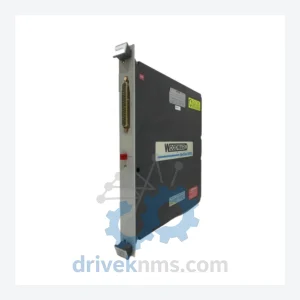
Woodward 5463 Series Modules – 5463-785 Input Module
Woodward 5463-785 is listed for PLC Modules RFQ review. Confirm quantity, condition and destination before quotation.
RFQ-ready industrial model
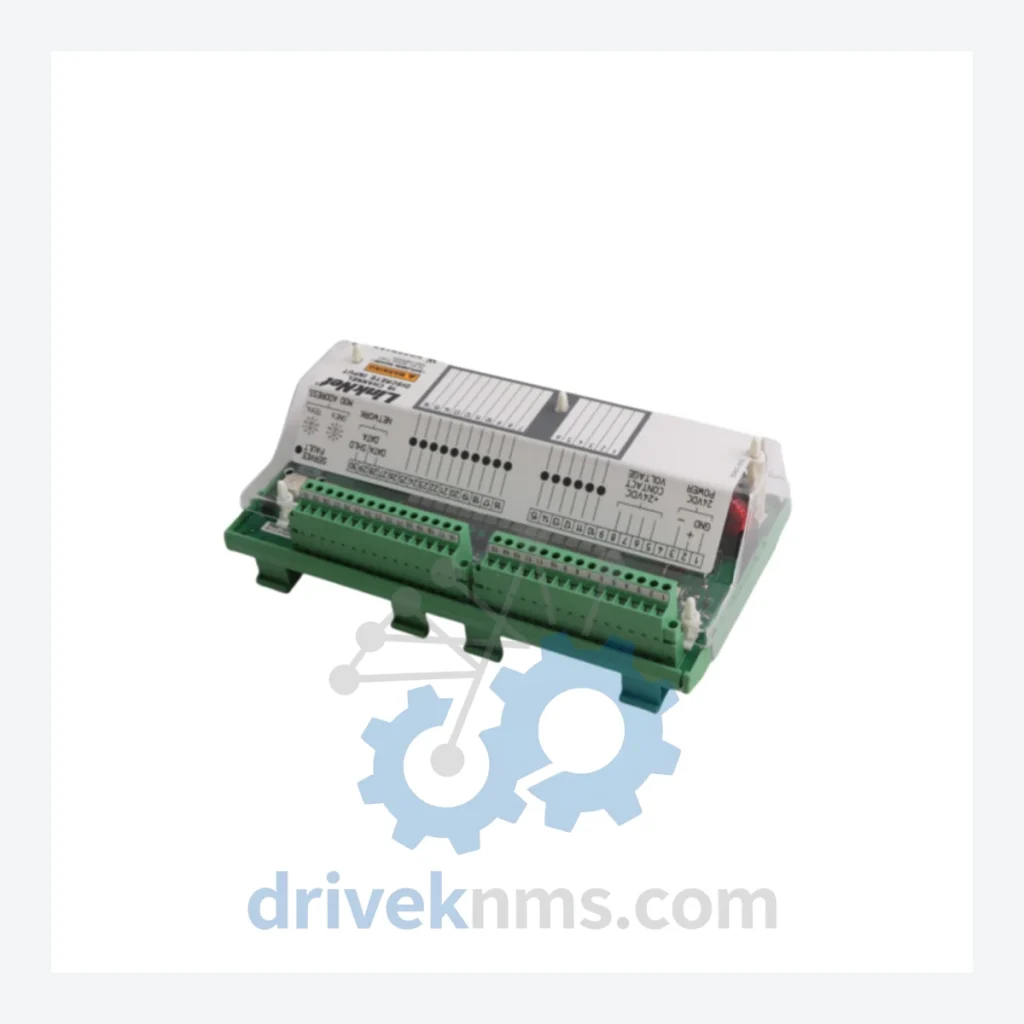
Model: 9905-971
Product Overview
Commercial availability is handled through direct RFQ, model verification and export-oriented follow-up rather than public cart checkout.
Datasheet Preview
Use attached product manuals when available. If the manual is not public yet, request the full file directly through RFQ.
Commercial Path
Product pages on DRIVEKNMS are designed to verify model, brand and series first, then move the buyer into one clean quotation path.
Technical Dossier
When a Woodward 9905-971 Discrete Input Module fails in a running plant, the consequences are rarely limited to a single I/O channel. This module is a core signal acquisition component in Woodward's legacy governor and turbine control architectures. Its failure can cascade into a full control system shutdown — and in facilities where the surrounding infrastructure is equally aged, a forced upgrade is not a matter of weeks. It is a matter of months of engineering, commissioning, and validation, with total project costs routinely exceeding seven figures. DriveKNMS maintains RFQ-reviewed sourcing status of the 9905-971. For plant managers and maintenance engineers operating under asset-preservation mandates, this is not a commodity listing — it is a risk mitigation option.
RFQ support for obsolete parts: Send the model number, required quantity and destination so DriveKNMS can confirm sourcing options before quotation.
Note: Electrical parameters such as input voltage range, channel count, and signal type are not published here to prevent inaccurate specifications. Confirmed datasheet details are provided upon inquiry.
Woodward's 9900-series control modules were engineered for long-cycle industrial environments — gas turbines, steam turbines, and compressor trains where a control system is expected to run for 20 to 30 years without architectural change. The 9905-971 Discrete Input Module occupies a defined slot in that architecture, handling binary signal acquisition from field devices such as limit switches, pressure switches, and safety interlocks.
The practical alternative, chosen by maintenance teams at facilities worldwide, is to maintain a strategic spare inventory of critical 9900-series modules. A single 9905-971 unit, sourced and verified today, can prevent a forced upgrade cycle that would otherwise consume years of capital budget. DriveKNMS specializes in locating, verifying, and supplying exactly these components — not as a general distributor, but as a focused obsolete-parts procurement operation.
The decision to extend the operational life of a legacy Woodward governor control system is a capital allocation decision, not merely a maintenance decision. The following framework is used by asset-intensive facilities to justify and execute that strategy:
3. Condition-based monitoring: Implement periodic functional testing of installed 9900-series modules — particularly discrete input channels — to detect degradation before failure. Woodward's legacy diagnostic tools, where still available, can be used for this purpose.
4. Firmware and configuration archiving: Ensure that all governor parameter sets, tuning files, and configuration backups are stored offline and version-controlled. A hardware replacement is only as fast as the configuration restore process.
5. Supplier qualification: Not all obsolete-parts suppliers apply consistent quality standards. Require documented inspection records, functional test results, and clear condition grading (new, refurbished, as-removed) before accepting any 9900-series module into your spare inventory.
Facilities that execute this strategy consistently report 5 to 10 additional years of reliable operation from legacy Woodward control systems — deferring capital expenditure and avoiding the operational disruption of a forced platform migration.
Every 9905-971 unit processed by DriveKNMS passes a structured 5-step inspection protocol before it is offered for sale:
Step 1 – Visual and mechanical inspection: Full external examination for physical damage, connector pin condition, and housing integrity. Units with bent pins, cracked housings, or evidence of thermal damage are rejected at this stage.
Step 2 – Electrolytic capacitor assessment: Legacy modules of this era use aluminum electrolytic capacitors with a finite service life. Each unit is inspected for capacitor bulging, electrolyte leakage, and ESR (equivalent series resistance) deviation. Capacitors showing degradation are replaced with specification-matched components before the unit is offered for sale.
Step 3 – Firmware and label verification: Where applicable, firmware version markings and OEM labels are cross-referenced against known production records to confirm authenticity and revision level.
Step 4 – Pin and contact corrosion check: Connector contacts are inspected under magnification for oxidation, corrosion, and contact deformation. Affected contacts are treated or the unit is downgraded accordingly.
Step 5 – Functional verification: Where test equipment permits, discrete input channels are exercised to confirm signal acquisition function prior to shipment.
Condition grade and inspection findings are documented and provided with each unit on request.
The 9905-971 is a direct form-fit-function replacement for the original installed module. It occupies the same backplane slot, uses the same connector pinout, and operates within the same system firmware environment. There is no requirement for control logic modification, HMI reconfiguration, or re-commissioning of the governor system. Maintenance personnel familiar with the 9900-series platform can complete a module swap during a planned outage window without specialist engineering support.
This drop-in replacement characteristic is the primary reason facilities choose spare-part procurement over system migration. The engineering cost of a migration — logic re-engineering, safety validation, operator retraining — is avoided entirely. The plant returns to operation on the existing, validated control architecture.
Should we hold more than one spare unit?
For a module with no current-production equivalent in a critical control system, holding a minimum of two units per site is standard practice. The cost of a second spare is negligible relative to the cost of an unplanned outage while sourcing a replacement under emergency conditions. For multi-unit plants, a shared site pool of three to five units is a defensible position.
Can you source other Woodward 9900-series modules?
Yes. DriveKNMS maintains sourcing capability across the 9900-series range. If you have a full BOM of required spares, submit it for a consolidated quotation.
Continue The Model Path
Move from this exact model into the matching system hub, brand archive, model-family archive or lifecycle sourcing route before sending a final RFQ list.
Related Paths
Woodward 5463-785 is listed for PLC Modules RFQ review. Confirm quantity, condition and destination before quotation.
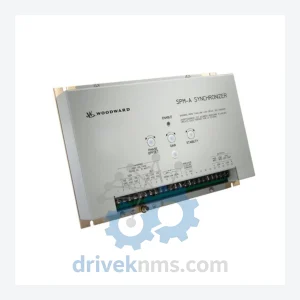
Woodward 9905-003 is listed for PLC Modules RFQ review. Confirm quantity, condition and destination before quotation.
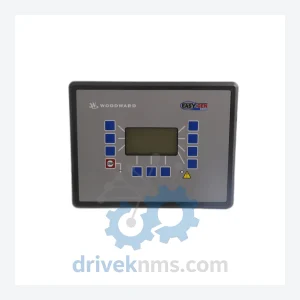
Woodward EASYGEN-2500-5 is listed for PLC Modules RFQ review. Confirm quantity, condition and destination before quotation.