
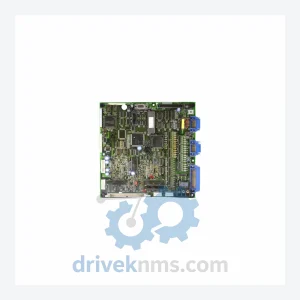
Yaskawa YPHT11014-1A Circuit Board – Obsolete Drive Control Spare Part
Yaskawa YPHT11014-1A Circuit Board – Obsolete Drive Control Spare Part When a Yaskawa YPHT11014-1A circuit board fails in a production…
Model: CC-Link SST-CCS-PCU Dx200 JARCR-YPC21-2 JARCR-YPC21-1 DX100 200 jZRCR-YPP01-1 JZRCR-YPP21-1
Product Overview
Commercial availability is handled through direct RFQ, model verification and export-oriented follow-up rather than public cart checkout.
Datasheet Preview
Use attached product manuals when available. If the manual is not public yet, request the full file directly through RFQ.
Commercial Path
Product pages on DRIVEKNMS are designed to verify model, brand and series first, then move the buyer into one clean quotation path.
Technical Dossier
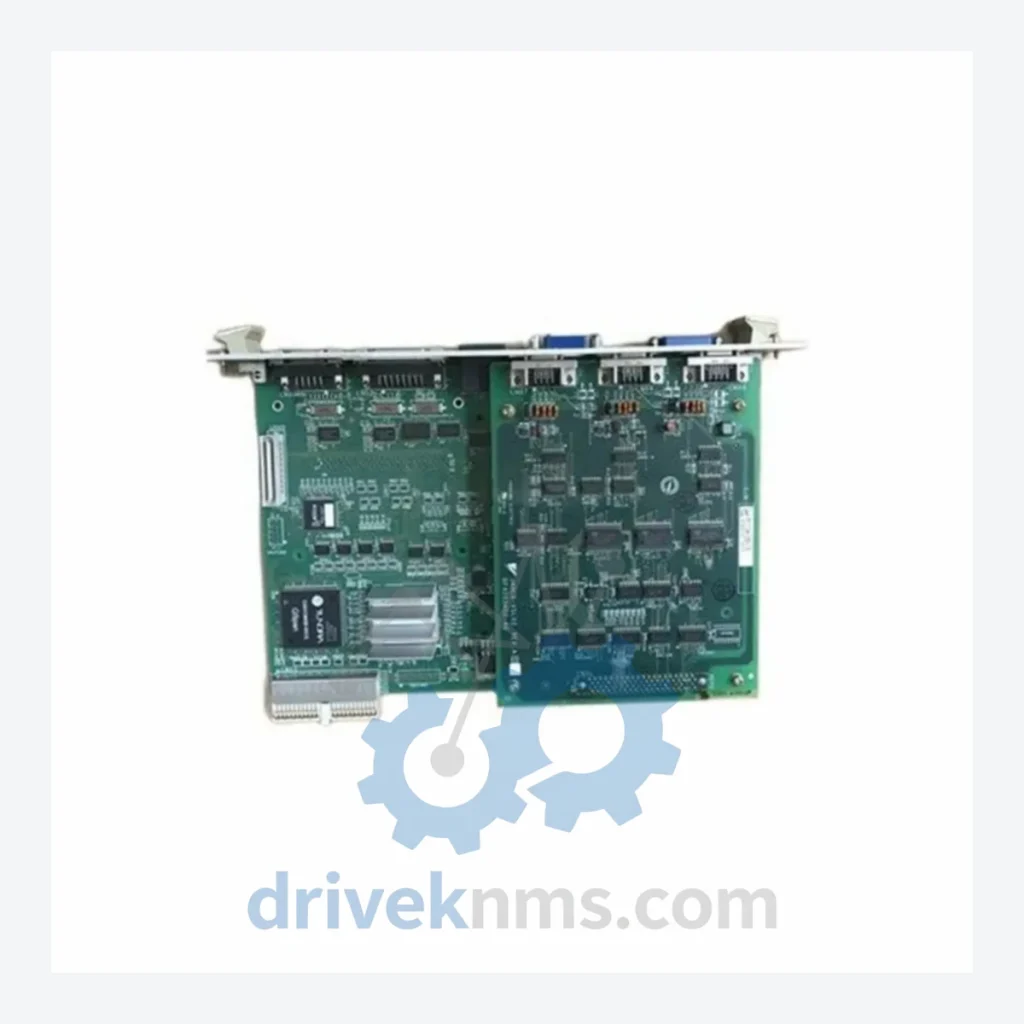
The Yaskawa CC-Link SST-CCS-PCU communication module family is a purpose-built fieldbus interface series designed for integration between Yaskawa DX100 and DX200 robot controllers and CC-Link industrial networks. CC-Link (Control & Communication Link) is a deterministic, open-standard fieldbus protocol widely deployed in Japanese and Asian heavy-industry automation environments, including automotive body-in-white lines, chemical processing plants, nuclear facility material handling systems, and petroleum refinery robotic welding cells. The SST-CCS-PCU modules serve as the physical and logical bridge between the robot controller's internal PCI bus and the CC-Link master or slave network segment, enabling real-time I/O exchange, diagnostic data transmission, and coordinated multi-axis motion sequencing across distributed control architectures. Yaskawa's DX-series controllers are installed in tens of thousands of industrial robot cells globally, making this communication module family a critical spare parts category for long-term plant maintenance programs.
Yaskawa's robot controller communication architecture has evolved across three distinct generations. The first generation, associated with the XRC and NX100 controller platforms (circa 1998–2006), used proprietary backplane communication cards with limited fieldbus options. CC-Link support was introduced as an optional PCI-format card requiring manual IRQ and DMA configuration under the controller's real-time OS.
The second generation, covering the DX100 platform (introduced approximately 2005), standardized the SST-CCS-PCU form factor. The JZRCR-YPP01-1 and JZRCR-YPP21-1 cards were the primary CC-Link interface options for DX100, supporting CC-Link Ver. 1.10 at up to 10 Mbps. These cards use a universal PCI bus interface and are compatible with the DX100's internal slot architecture.
The third generation, the DX200 platform (introduced approximately 2012), introduced the JARCR-YPC21-1 and JARCR-YPC21-2 variants. These modules support CC-Link Ver. 2.0, offering expanded remote device station support, higher cyclic data throughput, and improved noise immunity. The DX200 architecture also introduced enhanced diagnostic registers accessible via the teach pendant, reducing mean-time-to-repair for fieldbus faults. As of 2026, both DX100 and DX200 platforms are in the mature/end-of-active-production phase, with Yaskawa's YRC1000 and YRC1000micro controllers representing the current generation. This makes long-term spare parts availability for SST-CCS-PCU modules a primary concern for maintenance engineers managing legacy robot fleets.
DX200 Platform – CC-Link Communication Modules:
DX100 Platform – CC-Link Communication Modules:
NX100 Platform – Legacy CC-Link Modules (Obsolete):
DriveKNMS maintains a dedicated inventory program for Yaskawa DX100, DX200, and NX100 communication modules, including the full CC-Link SST-CCS-PCU range. As Yaskawa has transitioned its active product line to the YRC1000 platform, OEM channel availability for DX100 and DX200 communication cards has become increasingly constrained. Lead times through authorized distributors for modules such as the JARCR-YPC21-2 and JZRCR-YPP21-1 can extend to 16–26 weeks or result in end-of-availability notices.
DriveKNMS sources verified surplus, refurbished, and new-old-stock (NOS) units through a global procurement network covering Japan, South Korea, Germany, and North America. For fully obsolete NX100-era modules such as the JANCD-YCP01-E and JANCD-YCP21-E, DriveKNMS provides lifecycle extension support including board-level inspection, functional testing, and long-term storage under controlled humidity and ESD-safe conditions. Customers operating legacy robot fleets in continuous-process industries — where unplanned downtime costs exceed $10,000 USD per hour — rely on this inventory buffer to maintain production continuity without controller platform migration.
All Yaskawa CC-Link SST-CCS-PCU modules processed by DriveKNMS undergo a structured inspection and functional verification protocol prior to dispatch. The procedure addresses the specific failure modes common to PCI-bus communication cards in high-vibration and high-EMI industrial environments:
Related Paths
Yaskawa YPHT11014-1A Circuit Board – Obsolete Drive Control Spare Part When a Yaskawa YPHT11014-1A circuit board fails in a production…
Yaskawa YPCT11065-1-3 Circuit Board – Obsolete Varispeed Series Spare Part When a circuit board like the YPCT11065-1-3 fails inside a…
Yaskawa SGMG Series: Comprehensive Module Range and Technical Overview The Yaskawa SGMG series represents one of the most widely deployed…