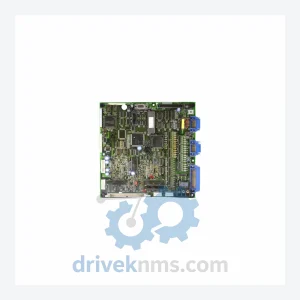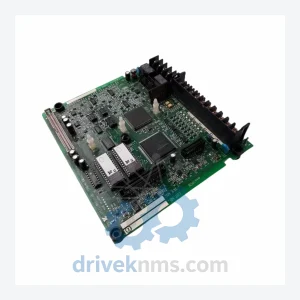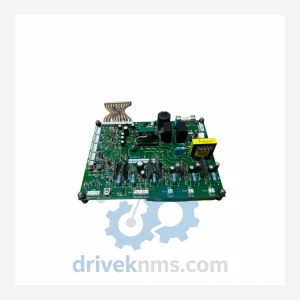
Products / Yaskawa / G7A43P7 AC Drive
Yaskawa G7A43P7 AC Drive

Yaskawa CIMR-G7A43P7 AC Drive – Obsolete G7 Series Spare Part

Model: YASKAWA CIMR-G7A43P7 Motors-AC servo
Brand Yaskawa
Series G7A43P7 AC Drive
Model YASKAWA CIMR-G7A43P7 Motors-AC servo
RFQ-ready model route Obsolete and surplus sourcing Export follow-up by model list

Product Overview

Commercial availability is handled through direct RFQ, model verification and export-oriented follow-up rather than public cart checkout.

Datasheet Preview

Datasheet Preview

Use attached product manuals when available. If the manual is not public yet, request the full file directly through RFQ.

Request Full Manual

Commercial Path

Use This Page To Confirm The Model, Then Move To RFQ

Product pages on DRIVEKNMS are designed to verify model, brand and series first, then move the buyer into one clean quotation path.

Technical Dossier

Product Details And Specifications

Yaskawa CIMR-G7A43P7 AC Drive – Obsolete G7 Series Spare Part

When a CIMR-G7A43P7 drive fails on your production line, the consequences extend far beyond a single component replacement. The Yaskawa G7 series has been officially discontinued, and sourcing a verified replacement unit is no longer a matter of placing a standard purchase order. For facilities still operating G7-dependent automation infrastructure, an unplanned drive failure can trigger a forced system-wide upgrade — a process that routinely costs manufacturers between $500,000 and $2,000,000 USD when engineering redesign, new PLC integration, downtime losses, and revalidation are factored in. DriveKNMS maintains verified stock of the CIMR-G7A43P7 specifically to protect facilities from that scenario.

Technical Specifications

Parameter Value
Manufacturer Yaskawa Electric Corporation
Model Number CIMR-G7A43P7
Series G7 (Varispeed G7)
Product Status Discontinued / Obsolete
Drive Type AC Variable Frequency Drive (VFD)
Input Voltage 3-Phase, 380–480V AC
Output Power 3.7 kW (5 HP)
Output Current 8.0 A (rated)
Control Method Open Loop Vector / V/f Control
Enclosure Rating IP00 (panel mount)
Country of Origin Japan
Compatible Systems Yaskawa G7 series infrastructure, legacy SCADA/DCS environments

Note: Parameters above are sourced from published Yaskawa G7 series documentation. Any site-specific configuration data should be verified against the original installation records before replacement.

Solving the Discontinued Hardware Crisis

The Yaskawa Varispeed G7 was a dominant platform in heavy industrial applications throughout the 2000s and early 2010s — cement plants, water treatment facilities, steel processing lines, and large HVAC systems built their motor control architecture around it. The G7's vector control performance and robust fault-handling made it a preferred choice for demanding load profiles. That same reliability is now the source of a procurement problem: facilities that built around the G7 have no straightforward migration path.

Replacing a CIMR-G7A43P7 with a current-generation drive is not a plug-and-play exercise. Parameter migration between drive generations requires engineering time. If the existing system uses Yaskawa's MEMOBUS/Modbus RTU communication protocol with a legacy PLC or DCS, the integration layer must be re-mapped. In facilities where the G7 drives are embedded within a larger Yaskawa or third-party control architecture — including environments running older Siemens S5/S7 PLCs, Allen-Bradley SLC 500 systems, or Mitsubishi A-series controllers — the scope of a forced upgrade expands further.

For plant managers facing capital budget constraints or mid-cycle production commitments, the practical answer is not a system overhaul. It is a verified spare unit that restores production within hours, not weeks. A single CIMR-G7A43P7 held in reserve eliminates the single point of failure that an obsolete drive represents. Facilities managing 5–15 G7 units across a site should treat at least one spare per critical application as a minimum asset protection measure — the cost of the spare is a fraction of one day of unplanned downtime.

Condition & Reliability Assurance

Obsolete drives sourced from secondary markets carry real risk if they are not properly evaluated before installation. DriveKNMS applies a 5-step inspection protocol to every CIMR-G7A43P7 unit before it is offered for sale:

  • Step 1 – Electrolytic Capacitor Assessment: DC bus capacitors and control board electrolytics are inspected for physical deformation, leakage, and measured against rated capacitance. Capacitor degradation is the primary failure mode in stored drives and is not visible without disassembly.
  • Step 2 – Firmware Version Verification: The installed firmware version is documented and cross-referenced against Yaskawa's G7 revision history. Units with known firmware defects are flagged and not offered as direct replacements without disclosure.
  • Step 3 – Terminal and Pin Corrosion Inspection: All control terminals, power terminals, and connector pins are inspected under magnification for oxidation, corrosion, and mechanical damage. Corroded terminals are cleaned or the unit is rejected.
  • Step 4 – Power-On Functional Test: Each unit is energized and tested for correct display operation, fault code behavior, and basic output function where test equipment permits.
  • Step 5 – Packaging and ESD Protection: Units are packaged in anti-static materials with desiccant to prevent moisture ingress during transit and storage.

Key Features for System Maintenance

  • Drop-in replacement: The CIMR-G7A43P7 installs directly into existing G7 mounting positions with no mechanical modification required.
  • No reprogramming required: Parameter sets from the failed unit can be transferred via the G7 digital operator or JVOP-160 copy unit, eliminating the need for engineering re-commissioning in most standard applications.
  • Avoids engineering reconstruction costs: Retaining the original drive platform means existing PLC ladder logic, HMI screens, and communication configurations remain valid — no software rework, no revalidation cycle.
  • Extends asset life by 5–10 years: A verified spare program for critical G7 drives allows facilities to defer system-wide migration until a planned capital cycle, rather than being forced into emergency upgrades. For a facility with 10 G7 drives, a structured spare inventory strategy can defer $1M+ in upgrade costs by a full budget cycle.
  • Supports legacy communication protocols: MEMOBUS/Modbus RTU compatibility is preserved, maintaining integration with existing supervisory systems without protocol conversion hardware.

FAQ

Q: What warranty applies to an obsolete CIMR-G7A43P7?
A: DriveKNMS provides a 90-day warranty covering functional defects identified under normal operating conditions. Given the discontinued status of this product, warranty terms are confirmed at the time of quotation based on unit condition and source.

Q: How do I know the unit is new or properly refurbished — not a failed return?
A: Every unit is accompanied by an inspection report documenting the 5-step QA process described above. Units are classified as New Old Stock (NOS), Tested Surplus, or Professionally Refurbished — the classification is stated explicitly on the invoice. We do not sell untested or uninspected units.

Q: Should we buy more than one unit as a long-term reserve?
A: For any facility running more than two G7 drives in critical applications, holding a minimum of one spare per critical loop is the standard recommendation. As global stock of the CIMR-G7A43P7 continues to deplete, acquisition cost will increase and availability will narrow. Purchasing reserve stock now, while verified units are available, is a lower-cost strategy than emergency sourcing under production pressure.

Q: Can you source other G7 series models?
A: Yes. DriveKNMS specializes in the full Yaskawa G7 range and other discontinued Yaskawa drive families. Contact us with your specific model requirements.

WhatsApp Prefilled Inquiry Email [email protected] Phone +86 18359293191 Top Back To Top