
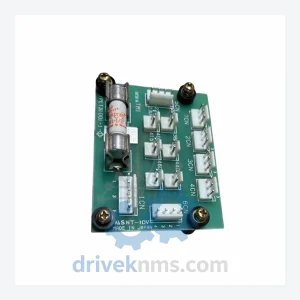
YASKAWA YPET31001-1-0 Interface Board – Sigma Series
Yaskawa YPET31001-1-0 is listed for Sigma Series RFQ review. Confirm quantity, condition and destination before quotation.
RFQ-ready industrial model
Model: DX100 JARCR-YPC01-1
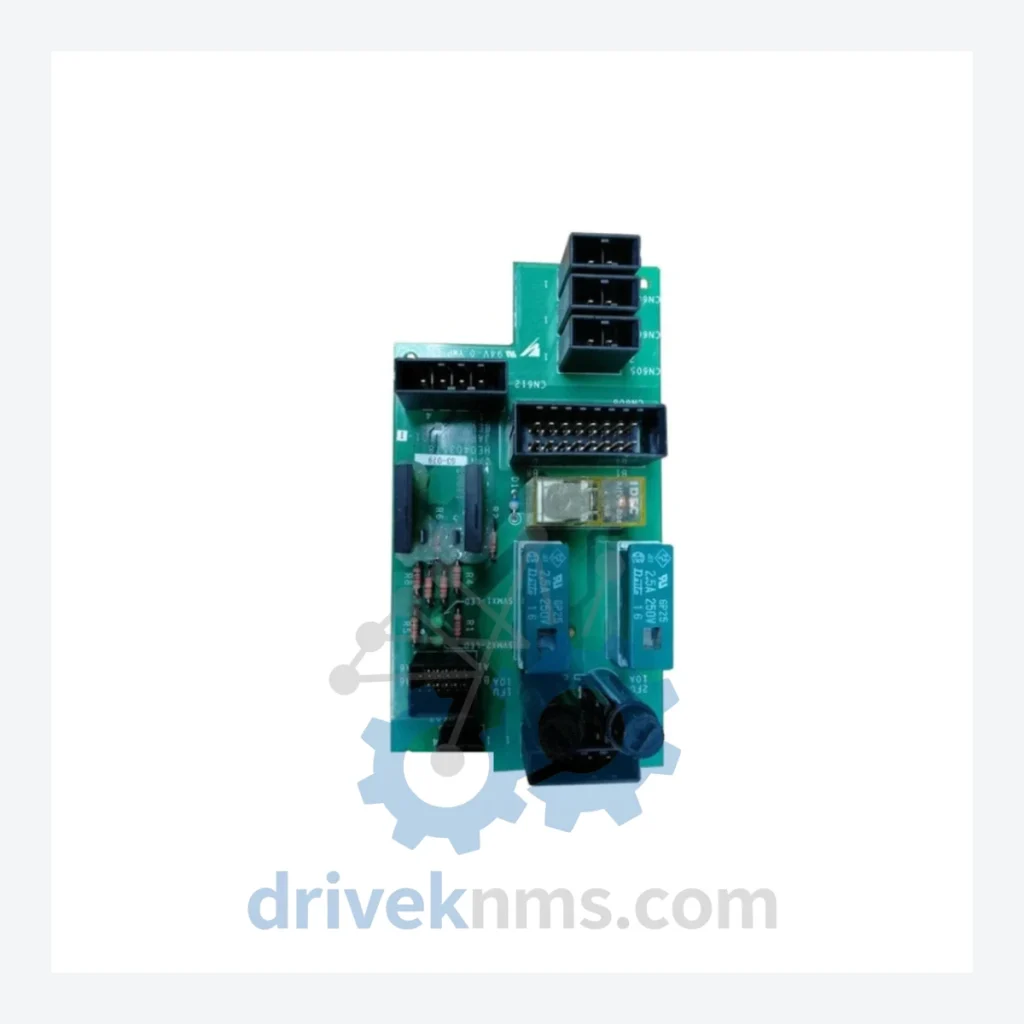
Product Overview
Commercial availability is handled through direct RFQ, model verification and export-oriented follow-up rather than public cart checkout.
Datasheet Preview
Use attached product manuals when available. If the manual is not public yet, request the full file directly through RFQ.
Commercial Path
Product pages on DRIVEKNMS are designed to verify model, brand and series first, then move the buyer into one clean quotation path.
Technical Dossier
The DX100 controller architecture is built around a VME-bus-derived backplane with proprietary YASKAWA communication protocols (MECHATROLINK-II and Ethernet/IP options). It replaced the NX100's older CPU board design with a more integrated main processing unit, consolidating robot language processing (INFORM III), safety monitoring, and I/O management onto fewer boards. Key architectural milestones:
NX100 → DX100 transition (c. 2008): Introduced 32-bit processing architecture, expanded axis count support, and USB-based programming pendant interface. Backward compatibility with NX100 teach pendant programs required conversion utilities.
DX100 mid-cycle revision (c. 2012): Firmware updates introduced expanded Ethernet connectivity options and enhanced functional safety (FSU) module integration, enabling compliance with ISO 10218-1 safety standards without external safety relays in many configurations.
For facilities operating DX100 controllers beyond the OEM support window, third-party lifecycle extension services — including board-level repair, functional testing, and certified refurbished module supply — represent the primary maintenance pathway.
The following SKUs represent verified components within the YASKAWA DX100 controller ecosystem, organized by functional category. Each entry reflects a discrete board or module with a defined role in the controller architecture.
Connection & Communication Units
JARCR-YPC01-1: Main connection unit board; primary backplane interface for DX100 controller internal bus routing.
JARCR-YPC02: Secondary connection board; supports expanded I/O backplane communication in multi-axis configurations.
JANCD-YCP01-E: CPU board; central processing unit for robot motion calculation and INFORM III language execution.
JANCD-YCP02-E: Sub-CPU board; handles coordinated multi-robot (MRC) processing and inter-controller communication.
I/O Modules
JANCD-YIO01-E: General-purpose digital I/O board; 32 DI / 32 DO, 24VDC, used for external signal interfacing.
JANCD-YIO02-E: Expanded I/O board; supports additional discrete I/O channels for complex cell integration.
JARCR-YIO21-1: Isolated digital input module; used in high-noise industrial environments requiring signal isolation.
JARCR-YIO22-1: Isolated digital output module; relay-driven outputs for safety-critical actuator control.
Power Supply Units
JZNC-YPS01-E: Main power supply board; converts AC input to regulated DC rails for controller internal distribution.
JZNC-YPS02-E: Auxiliary power supply; provides secondary DC rail for I/O and communication subsystems.
JARCR-YPU01-1: Power unit assembly; integrated power conditioning module for DX100 base cabinet.
Safety & Servo Control
JANCD-YSF21-E: Functional safety unit (FSU); implements dual-channel safety monitoring per ISO 13849 PLd requirements.
JANCD-YSF01-E: Safety I/O board; interfaces external safety devices (E-stop, light curtains, safety mats) to FSU logic.
SGDR-AXA01A: Servo amplifier board; axis drive control for Motoman robot joint servo motors.
JANCD-YSV01-E: Servo control interface board; bridges CPU motion commands to individual axis amplifier modules.
Communication Adapters
JANCD-YEW01-E: Ethernet/IP communication board; enables integration with Allen-Bradley PLC networks and SCADA systems.
JANCD-YDP01-E: DeviceNet master board; supports legacy DeviceNet field bus topologies common in pre-2015 automotive cells.
JANCD-YPP01-E: PROFIBUS-DP interface board; used in European automotive and process industry installations.
DX100 modules present specific test challenges due to their proprietary backplane bus architecture and integrated safety logic. DriveKNMS applies the following verification procedures to all DX100 inventory prior to dispatch:
Backplane bus integrity test: Each board is seated in a DX100-compatible test rack and subjected to full MECHATROLINK-II communication cycle verification to confirm bus arbitration and data integrity.
CPU board functional test: JANCD-YCP01-E and YCP02-E boards are tested under live controller power-up sequences, including INFORM III interpreter initialization and axis parameter load verification.
I/O channel verification: All digital I/O boards are tested channel-by-channel at rated voltage (24VDC) with load simulation to confirm switching response and isolation resistance.
Power supply load test: JZNC-YPS01-E and auxiliary power boards are tested under rated load conditions across all DC output rails, with ripple and regulation measurements recorded.
Safety module validation: FSU boards (JANCD-YSF21-E, YSF01-E) are tested against dual-channel input/output logic tables to confirm safety function integrity prior to release.
Continue The Model Path
Move from this exact model into the matching system hub, brand archive, model-family archive or lifecycle sourcing route before sending a final RFQ list.
Related Paths
Yaskawa YPET31001-1-0 is listed for Sigma Series RFQ review. Confirm quantity, condition and destination before quotation.
Yaskawa JAMSC-120CRR11200 is listed for Controller Cards RFQ review. Confirm quantity, condition and destination before quotation.
Yaskawa YRC1000 CSRA-CV05D01A is listed for Robot Controller Board RFQ review. Confirm quantity, condition and destination before quotation.