
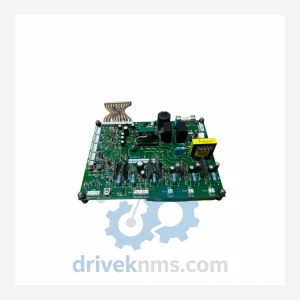
Yaskawa YPCT11065-1-3 Circuit Board – Obsolete Varispeed Series Spare Part
Yaskawa YPCT11065-1-3 is listed for Servo Drives RFQ review. Confirm quantity, condition and destination before quotation.
RFQ-ready industrial model
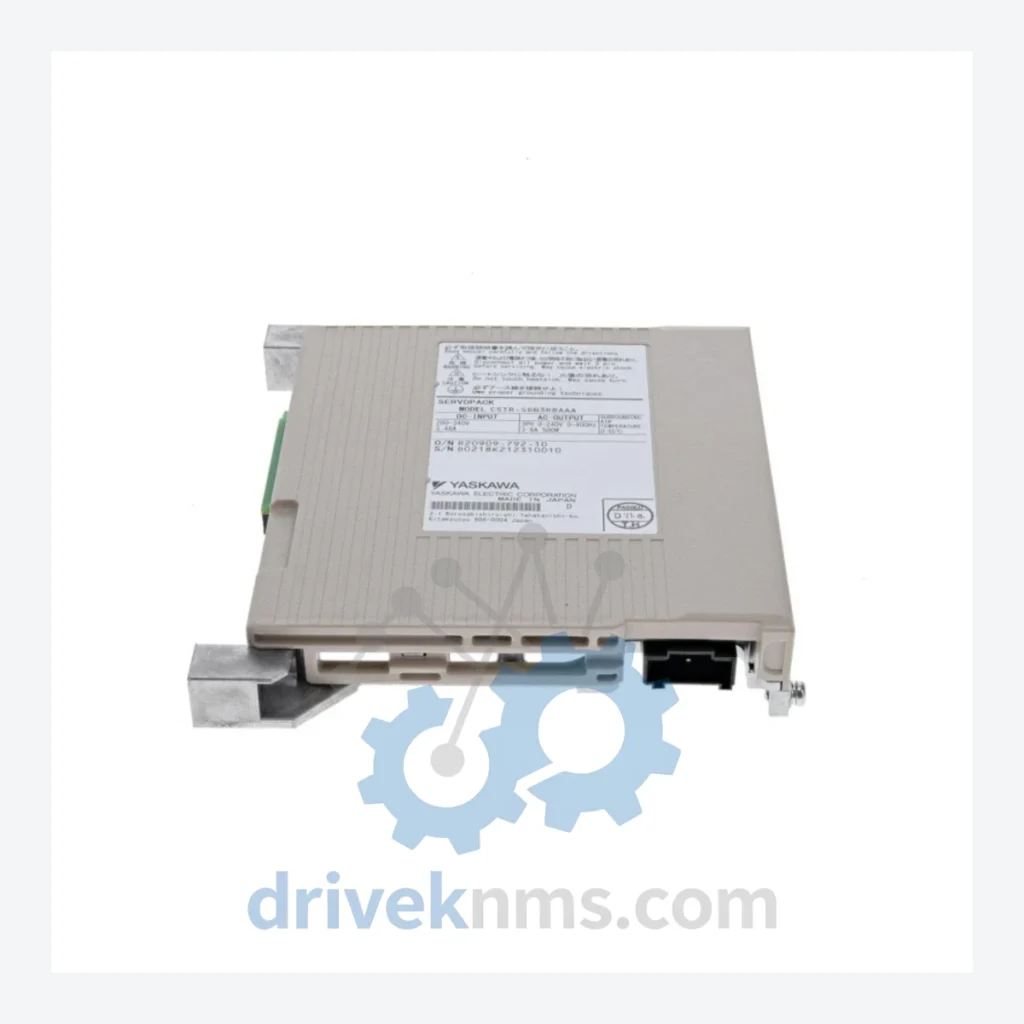
Model: FS100 CSTR-IFBM3LB CSTR-SDB3R8AAA
Product Overview
Commercial availability is handled through direct RFQ, model verification and export-oriented follow-up rather than public cart checkout.
Datasheet Preview
Use attached product manuals when available. If the manual is not public yet, request the full file directly through RFQ.
Commercial Path
Product pages on DRIVEKNMS are designed to verify model, brand and series first, then move the buyer into one clean quotation path.
Technical Dossier
DriveKNMS holds RFQ-reviewed sourcing status of the CSTR-IFBM3LB interface board and CSTR-SDB3R8AAA servo driver board for the Yaskawa FS100 controller. These are the components that keep your existing robotic assets operational — without triggering a capital expenditure cycle your budget was not prepared for.
RFQ support for obsolete parts: Send the model number, required quantity and destination so DriveKNMS can confirm sourcing options before quotation.
Note: Electrical parameters such as voltage ratings and current capacity are board-specific and vary by robot axis configuration. Confirmed specifications are provided upon request with your robot serial number and axis data.
The Yaskawa FS100 controller was a workhorse platform deployed extensively in automotive, metal fabrication, and general manufacturing from the mid-2000s through the 2010s. Thousands of these controllers remain in active service globally. Yaskawa has since transitioned its product roadmap to the DX200 and YRC1000 platforms, and FS100 spare parts — particularly internal servo amplifier boards — have exited the standard distribution channel.
The CSTR-IFBM3LB and CSTR-SDB3R8AAA boards sit at the core of the FS100's servo control architecture. The interface board manages communication between the controller CPU and the servo amplifier stages; the servo driver board directly governs motor torque and velocity output. Failure of either component results in axis faults, E-stop conditions, or complete controller lockout. There is no software workaround. There is no firmware patch. The board must be replaced.
For plant managers operating FS100-based cells, the strategic calculus is straightforward: a replacement board sourced today costs a fraction of one day of lost production. Holding one or two verified spare boards in your maintenance inventory is not a luxury — it is a risk management decision with a calculable return.
Facilities that have successfully maintained FS100 systems beyond their nominal service life share a consistent set of practices. These are not theoretical recommendations — they reflect the operational reality of plants that have deferred multi-million-dollar robot replacement programs through disciplined maintenance:
2. Electrolytic Capacitor Monitoring: Capacitor degradation is the primary failure mode in aging servo electronics. Boards manufactured in the 2005–2015 window are now entering the high-risk phase of capacitor lifespan. Scheduled inspection and proactive replacement of electrolytic capacitors on servo boards can prevent the cascade failures that destroy otherwise functional hardware.
3. Firmware Version Control: Document and lock the firmware versions running on your FS100 controllers. Unauthorized or mismatched firmware updates on aging hardware can introduce incompatibilities that are difficult to diagnose and impossible to reverse without original firmware images.
4. Environmental Controls: FS100 controllers operating in environments with elevated particulate contamination, humidity, or temperature cycling degrade faster. Sealing cabinet penetrations, maintaining positive pressure with filtered air, and monitoring internal temperatures extends board life measurably.
5. Structured Maintenance Intervals: Establish annual internal inspections of servo boards — cleaning, connector re-seating, and visual inspection for corrosion or heat damage. This is low-cost work that catches developing failures before they become production events.
A plant running ten FS100-based robot cells, each representing an original capital investment of USD 80,000–120,000, has USD 800,000 to USD 1.2 million in automation assets at stake. A structured spare parts program costing USD 20,000–40,000 over five years is a defensible maintenance budget against that asset base.
Sourcing discontinued servo electronics from the secondary market carries legitimate risk. DriveKNMS applies a five-stage quality process to every FS100 board before it is offered for sale:
Stage 1 – Visual and Physical Inspection: Full board examination for mechanical damage, burnt components, cracked solder joints, and connector pin integrity. Boards with physical damage that cannot be remediated are rejected at this stage.
Stage 2 – Electrolytic Capacitor Assessment: Capacitors are individually tested for capacitance value, ESR (equivalent series resistance), and leakage. Capacitors showing degradation beyond acceptable tolerance are replaced with specification-matched components.
Stage 3 – Connector and Pin Corrosion Check: All edge connectors and board-to-board connectors are inspected under magnification for oxidation, corrosion, and pin deformation. Affected connectors are cleaned or replaced as required.
Stage 4 – Firmware Version Verification: Where applicable, onboard firmware is read and version-confirmed against known FS100 compatibility matrices. Boards with unverifiable or mismatched firmware are flagged and disclosed.
Stage 5 – Functional Bench Test: Boards are powered and tested in a controlled bench environment to verify basic operational response prior to shipment.
The CSTR-IFBM3LB and CSTR-SDB3R8AAA are direct board-level replacements for the original components installed in the FS100 controller. Installation does not require robot program re-teaching, safety zone reconfiguration, or controller re-commissioning beyond standard parameter backup and restore procedures. There is no engineering redesign. There is no system integration project. The board is installed; the system returns to service.
This drop-in replacement characteristic is the defining economic argument for sourcing original spare boards rather than pursuing controller migration. Engineering labor for a controller migration on a single robot cell typically runs 40–80 hours at specialist rates. A board replacement is a maintenance task measured in hours, not weeks.
Q: Should I purchase more than one board as a long-term reserve?
A: For facilities operating multiple FS100 controllers, holding a minimum of one spare per board type per three controllers is a standard maintenance practice. Given the declining availability of FS100 components in the secondary market, procurement decisions made today will be more cost-effective than those made under emergency conditions in 12–24 months.
Q: Can you confirm compatibility with my specific robot model and axis configuration?
A: Yes. Provide your robot serial number, controller serial number, and axis configuration, and DriveKNMS will confirm compatibility before order processing.
Continue The Model Path
Move from this exact model into the matching system hub, brand archive, model-family archive or lifecycle sourcing route before sending a final RFQ list.
Related Paths
Yaskawa YPCT11065-1-3 is listed for Servo Drives RFQ review. Confirm quantity, condition and destination before quotation.
Yaskawa YPHT11014-1A is listed for Servo Drives RFQ review. Confirm quantity, condition and destination before quotation.
Yaskawa YPHT31033-1-1 73600-A0101 is listed for Servo Drives RFQ review. Confirm quantity, condition and destination before quotation.