
Yaskawa YPCT11065-1-3 Circuit Board – Obsolete Varispeed Series Spare Part
Yaskawa YPCT11065-1-3 Circuit Board – Obsolete Varispeed Series Spare Part When a circuit board like the YPCT11065-1-3 fails inside a…
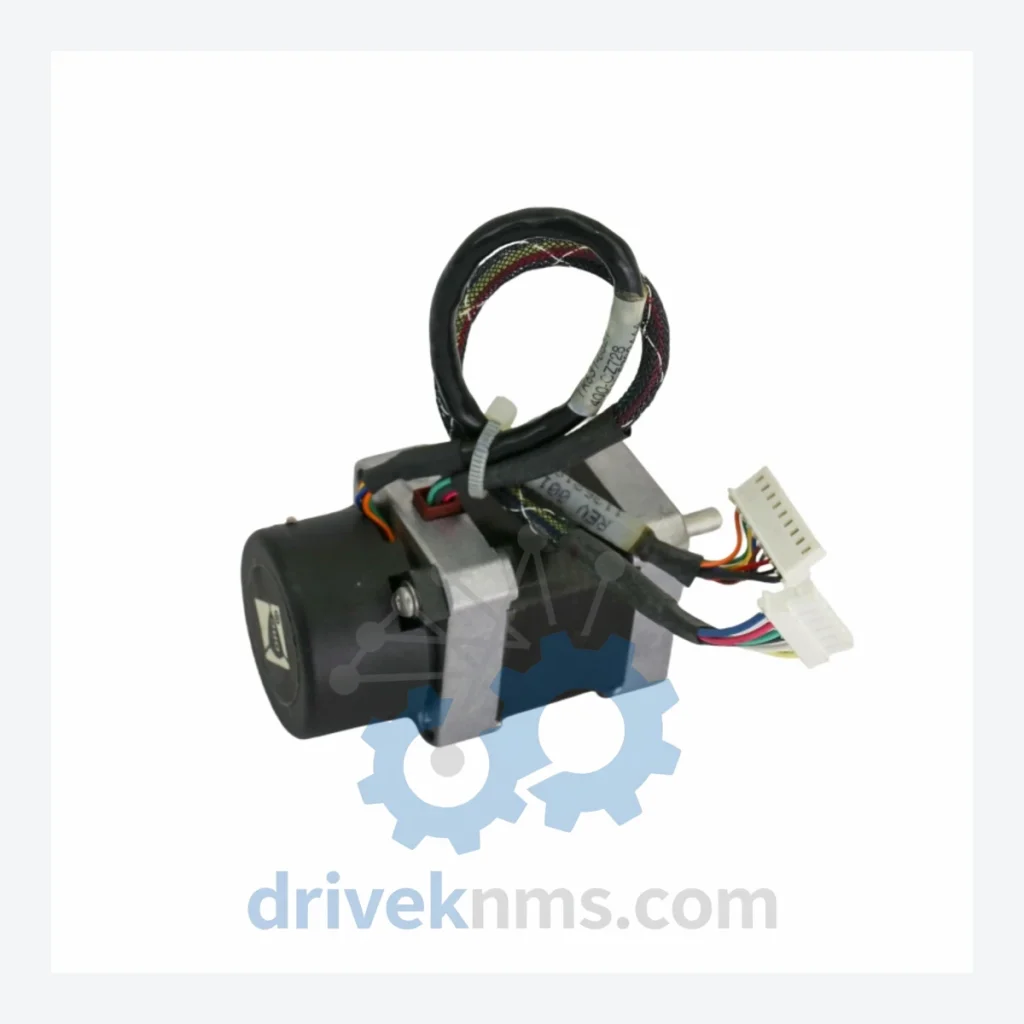
Model: SGMPH-04AAAP20 802-5794C, 199014 N-2304-1-K00AA SI 716-082039-339
Product Overview
Commercial availability is handled through direct RFQ, model verification and export-oriented follow-up rather than public cart checkout.
Datasheet Preview
Use attached product manuals when available. If the manual is not public yet, request the full file directly through RFQ.
Commercial Path
Product pages on DRIVEKNMS are designed to verify model, brand and series first, then move the buyer into one clean quotation path.
Technical Dossier
When a Yaskawa SGMPH-04AAAP20 servo motor fails on your production line, the clock starts immediately. This motor belongs to the Sigma-II series — a platform that Yaskawa has long since superseded with Sigma-V and Sigma-7. Replacement units are no longer manufactured. The path of least resistance — a full drive system upgrade — carries a price tag that routinely exceeds $200,000 USD once engineering labor, re-commissioning, downtime, and retraining costs are factored in. DriveKNMS maintains verified stock of this unit specifically to close that gap. One motor. Weeks of production protected.
| Parameter | Value |
|---|---|
| Manufacturer | Yaskawa Electric Corporation |
| Model Number | SGMPH-04AAAP20 |
| Series | Sigma-II (SGMPH) |
| Rated Output | 400 W |
| Motor Type | AC Servo Motor (Permanent Magnet Synchronous) |
| Encoder Type | Incremental encoder (17-bit) |
| Shaft Configuration | Straight shaft without key |
| Mounting | Flange mount |
| Country of Origin | Japan |
| Production Status | Discontinued / Obsolete – No longer manufactured |
| Compatible Servo Drive | Yaskawa SGDH series (Sigma-II) |
| Typical Legacy Systems | Yaskawa Sigma-II motion control platforms; older CNC and robotic workcells built on SGDH drives |
Note: Electrical parameters are listed based on verified published specifications. Parameters not confirmed by documentation are intentionally omitted to protect equipment safety.
The Sigma-II SGMPH series was engineered for precision motion in applications where positioning repeatability and torque density were non-negotiable — semiconductor handling, packaging machinery, and multi-axis CNC systems. These machines were built to run for 20 to 30 years. The servo motor was not.
When Yaskawa discontinued the Sigma-II platform, it created a structural problem for plant managers: the mechanical infrastructure surrounding these drives — gearboxes, tooling, fixtures, safety interlocks — was designed around Sigma-II form factors and communication protocols. Migrating to Sigma-V or Sigma-7 is not a drop-in exercise. It requires new cabling, new parameter tuning, updated PLC logic, and in many cases, mechanical adapter plates. The engineering cost alone can justify keeping the original hardware running for another decade — provided the spare parts exist.
That is the precise function this unit serves. A single SGMPH-04AAAP20 in your maintenance inventory eliminates the single-point-of-failure risk that would otherwise force an unplanned capital expenditure.
For factories operating legacy Yaskawa Sigma-II systems, the decision to upgrade versus maintain is rarely straightforward. The following framework is used by maintenance engineers who have successfully deferred system retirement by 5 to 10 years without compromising production reliability:
1. Conduct a criticality audit. Map every servo axis on the line. Identify which axes, if failed, would halt the entire cell versus which would allow partial production. Prioritize spare procurement for Tier-1 critical axes first. The SGMPH-04AAAP20 is commonly found in Tier-1 positions in pick-and-place and conveyor indexing applications.
2. Establish a minimum viable spare inventory. For a motor of this class, industry practice among maintenance-focused facilities is to hold one cold spare per three to five installed units. For a single installed unit, one spare is the minimum defensible position. The cost of one spare motor is a fraction of one hour of unplanned downtime in most automated facilities.
3. Implement a proactive encoder inspection cycle. The incremental encoder on the SGMPH series is the component most likely to degrade before the motor windings. Vibration, thermal cycling, and contamination accelerate encoder failure. A quarterly inspection protocol — checking for alarm history on the SGDH drive, monitoring position deviation at rest, and verifying encoder cable integrity — can provide 6 to 12 months of advance warning before a hard failure.
4. Manage the drive-motor pair as a system. The SGMPH-04AAAP20 is matched to the SGDH-04AE (or equivalent) servo drive. If the motor is replaced, verify that the drive's auto-tuning parameters are re-established. Mismatched inertia ratios after a motor swap are a common source of post-maintenance instability.
5. Document firmware and parameter files. Before any maintenance event, back up the SGDH drive parameters. Yaskawa's SigmaWin+ software supports parameter file export. A lost parameter file on a discontinued drive can add days to a recovery timeline.
This approach does not require capital approval. It requires a maintenance budget line and a reliable source for obsolete parts. DriveKNMS exists to be that source.
Sourcing a discontinued servo motor from the secondary market carries legitimate risk. Our QA process is structured to address the failure modes specific to aged electromechanical components:
Step 1 – Visual and mechanical inspection. Shaft runout measurement, bearing play assessment, housing inspection for impact damage or corrosion. Units with compromised mechanical integrity are rejected at this stage.
Step 2 – Electrolytic capacitor assessment. Where applicable on associated drive components, capacitor ESR is measured. Aged capacitors with elevated ESR are flagged. For motors, winding insulation resistance is tested with a megohmmeter (minimum 100 MΩ at 500 VDC).
Step 3 – Encoder verification. The encoder is powered and signal output verified across all channels (A, B, Z). Signal integrity is confirmed before the unit is cleared.
Step 4 – Pin and connector inspection. All connector pins are inspected under magnification for oxidation, fretting corrosion, and mechanical deformation. Affected contacts are treated or the unit is rejected.
Step 5 – Firmware and label verification. The motor nameplate data is cross-referenced against the order specification. No unit ships without confirmed model number match.
Units are shipped in anti-static packaging with desiccant. Condition is disclosed accurately — new old stock (NOS), refurbished, or tested used — prior to order confirmation.
Q: What warranty applies to an obsolete part like the SGMPH-04AAAP20?
A: DriveKNMS provides a 90-day functional warranty on tested and refurbished units. New old stock units carry a 180-day warranty. Warranty terms are confirmed in writing prior to shipment.
Q: How do I know the unit is genuine and not a counterfeit?
A: All units are inspected against Yaskawa's published nameplate specifications. We do not source from unverified channels. Customers may request inspection photos and serial number documentation before payment.
Q: Can I order multiple units for long-term spare inventory?
A: Yes. We recommend discussing your installed base quantity with our team so we can advise on stock availability and reserve units against future requirements. Contact us before stock is depleted.
Q: What if my SGDH drive is also faulty?
A: DriveKNMS also sources Yaskawa SGDH series servo drives. Contact us with your full drive model number for availability.
Related Paths
Yaskawa YPCT11065-1-3 Circuit Board – Obsolete Varispeed Series Spare Part When a circuit board like the YPCT11065-1-3 fails inside a…
Yaskawa YPHT11014-1A Circuit Board – Obsolete Drive Control Spare Part When a Yaskawa YPHT11014-1A circuit board fails in a production…
Yaskawa SGMG Series: Comprehensive Module Range and Technical Overview The Yaskawa SGMG series represents one of the most widely deployed…