
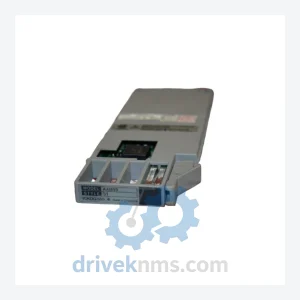
YOKOGAWA STARDOM / CENTUM Series Analog Input Modules: AAM10
Yokogawa AAM10 is listed for STARDOM RFQ review. Confirm quantity, condition and destination before quotation.
RFQ-ready industrial model
Model: AAI543-S53 S1
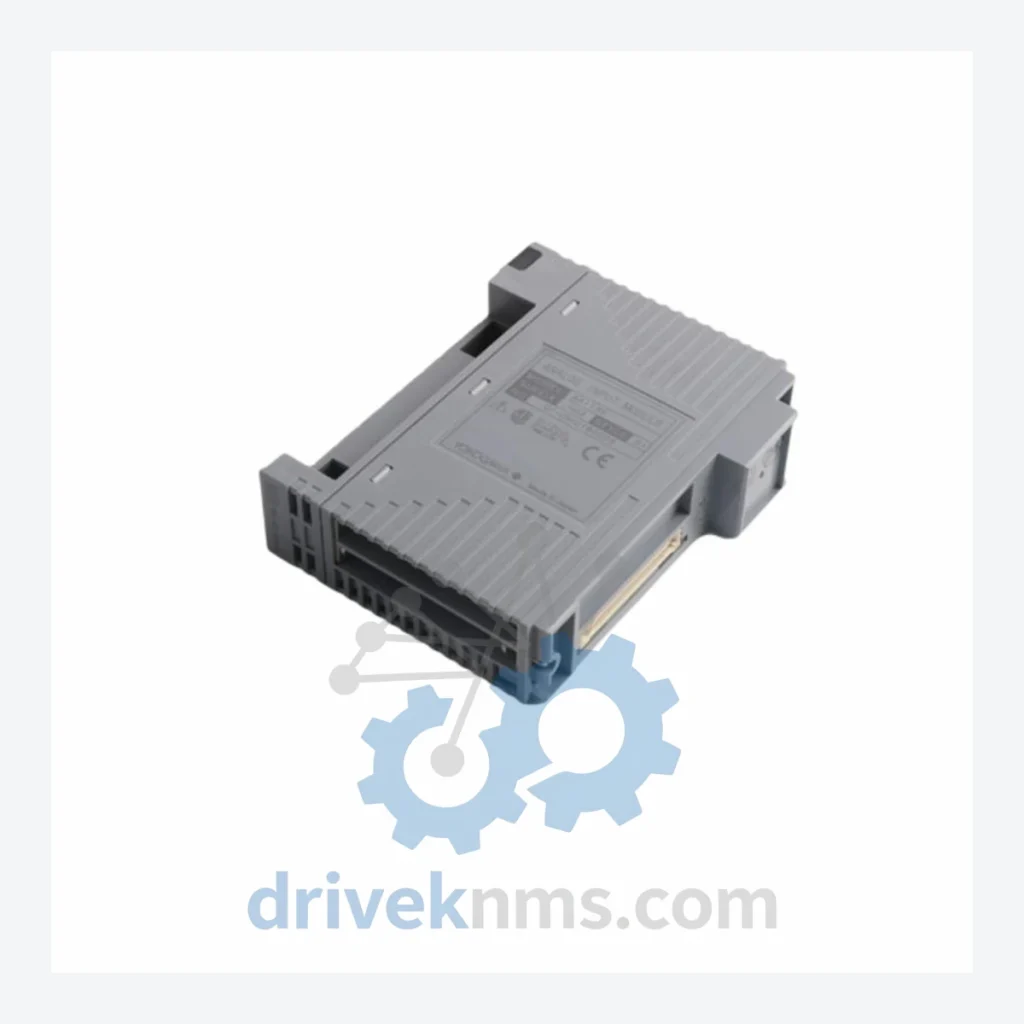
Product Overview
Commercial availability is handled through direct RFQ, model verification and export-oriented follow-up rather than public cart checkout.
Datasheet Preview
Use attached product manuals when available. If the manual is not public yet, request the full file directly through RFQ.
Commercial Path
Product pages on DRIVEKNMS are designed to verify model, brand and series first, then move the buyer into one clean quotation path.
Technical Dossier
DriveKNMS maintains RFQ-reviewed sourcing status of the AAI543-S53 S1. This is not a catalog listing. Availability is limited and allocated on a first-confirmed basis.
RFQ support for obsolete parts: Send the model number, required quantity and destination so DriveKNMS can confirm sourcing options before quotation.
| Parameter | Detail |
|---|---|
| Manufacturer | Yokogawa Electric Corporation |
| Part Number | AAI543-S53 S1 |
| Module Type | Analog Output Module |
| Compatible Platform | Yokogawa CENTUM VP / CENTUM CS 3000 DCS |
| Country of Origin | Japan |
| Product Status | Discontinued / Obsolete – No longer manufactured by Yokogawa |
| Output Signal | 4–20 mA DC (standard HART-compatible field signal) |
| Isolation | Channel-to-channel isolation (refer to original Yokogawa datasheet for exact spec) |
| Mounting | CENTUM I/O nest / field control station (FCS) backplane |
| Condition Available | New surplus / Professionally refurbished |
Note: Electrical parameters are referenced from publicly available Yokogawa documentation. Parameters not independently verified by DriveKNMS are omitted to preserve accuracy. Do not substitute specifications from third-party sources without cross-referencing the original Yokogawa engineering manual.
The Yokogawa CENTUM platform — spanning CENTUM CS, CENTUM CS 3000, and CENTUM VP — represents one of the most widely deployed DCS architectures in process industries across Asia, the Middle East, and Europe. Facilities that commissioned these systems in the 1990s and 2000s are now confronting a hard operational reality: Yokogawa has progressively discontinued I/O modules, field control station cards, and associated hardware as the product line has evolved toward CENTUM VP R6 and the Synaptic Business Automation framework.
Extending the operational life of a CENTUM-based DCS by 5 to 10 years through targeted spare parts management is not a workaround — it is a recognized asset management discipline. The IEC 62264 and ISA-95 frameworks both acknowledge the role of lifecycle extension strategies in deferring capital expenditure on control system replacement. For facilities where a full DCS migration would require a planned shutdown of 4–8 weeks, the business case for maintaining a curated spare parts inventory is not difficult to construct.
DriveKNMS specializes in sourcing exactly these components — the cards, modules, and sub-assemblies that OEMs have discontinued but that operating plants cannot yet afford to engineer around.
Sourcing an obsolete I/O module from the secondary market carries inherent risk. DriveKNMS applies a structured 5-step quality assurance process to every unit before it is offered for sale or dispatch:
Step 1 – Visual and Physical Inspection: Each board is examined under magnification for mechanical damage, solder joint integrity, and evidence of prior field failure modes including burn marks, flux residue, and physical impact.
Step 2 – Electrolytic Capacitor Assessment: Aging electrolytic capacitors are the primary failure vector in legacy I/O hardware. Every unit is assessed for capacitor bulging, leakage, and ESR deviation. Units with degraded capacitors are either recapped with equivalent-spec components or quarantined.
Step 3 – Firmware and Revision Verification: Where accessible, firmware revision and hardware revision markings are cross-referenced against Yokogawa's published compatibility matrices to confirm the unit is appropriate for the target CENTUM system revision.
Step 4 – Pin and Connector Inspection: Backplane connector pins are inspected for corrosion, deformation, and contact resistance. Corroded contacts are treated and re-tested. Units with structurally compromised connectors are not offered for sale.
Step 5 – Functional Verification: Where test infrastructure permits, modules are powered and output signal integrity is verified against the 4–20 mA specification range.
Units that do not pass all five stages are not listed. Condition grade (new surplus or refurbished) is disclosed at point of inquiry.
Q: How do I confirm whether the unit is new surplus or refurbished?
A: Condition is disclosed at the point of inquiry and confirmed in writing before any order is placed. We do not mix condition grades within a single shipment without explicit customer acknowledgment.
Q: Do you provide documentation or test records with the unit?
A: Where available, inspection records are provided. Original Yokogawa documentation is not reproduced, but we can direct customers to publicly available Yokogawa technical resources.
Continue The Model Path
Move from this exact model into the matching system hub, brand archive, model-family archive or lifecycle sourcing route before sending a final RFQ list.
Related Paths
Yokogawa AAM10 is listed for STARDOM RFQ review. Confirm quantity, condition and destination before quotation.
Yokogawa AAM50 is listed for CENTUM VP RFQ review. Confirm quantity, condition and destination before quotation.
Yokogawa AAI141-S00 is listed for CENTUM VP RFQ review. Confirm quantity, condition and destination before quotation.