
YOKOGAWA STARDOM / CENTUM Series Analog Input Modules: AAM10
Yokogawa AAM10 is listed for STARDOM RFQ review. Confirm quantity, condition and destination before quotation.
RFQ-ready industrial model
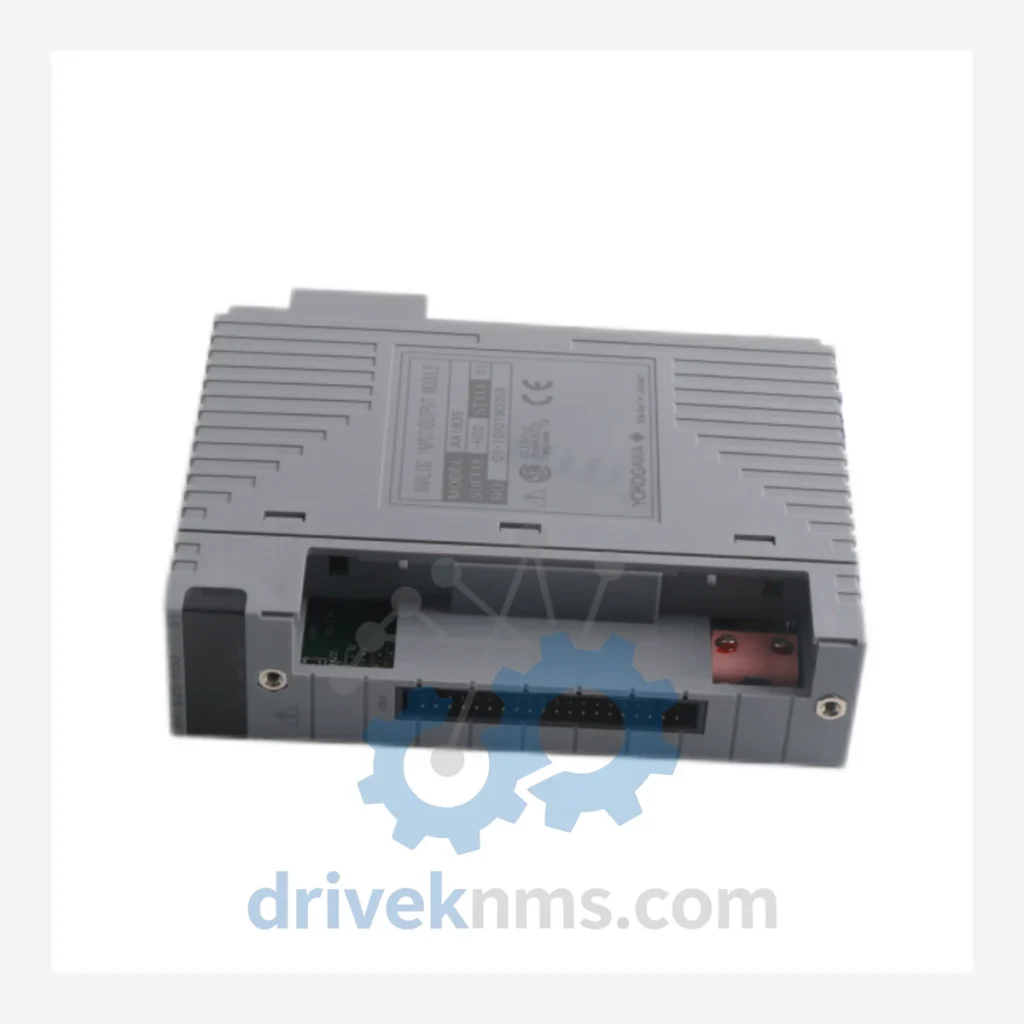
Model: AAI835-H00 S1
Product Overview
Commercial availability is handled through direct RFQ, model verification and export-oriented follow-up rather than public cart checkout.
Datasheet Preview
Use attached product manuals when available. If the manual is not public yet, request the full file directly through RFQ.
Commercial Path
Product pages on DRIVEKNMS are designed to verify model, brand and series first, then move the buyer into one clean quotation path.
Technical Dossier
The Yokogawa AAI835 is a high-density analog input module belonging to the Field Input/Output (FIO) subsystem of the CENTUM VP and CENTUM CS 3000 Distributed Control Systems (DCS). These platforms are installed across the most demanding continuous-process industries globally, including petrochemical complexes, nuclear power generation facilities, LNG terminals, offshore platforms, and crude oil refineries.
The AAI835 series provides 16-channel analog current input (4–20 mA) with HART communication capability, enabling simultaneous process control and field device diagnostics over a single wire pair. Its role in safety-critical and high-availability environments has made it one of the most widely deployed FIO modules in Yokogawa's installed base, with operational lifespans routinely exceeding 15–20 years at major industrial sites.
The AAI835 module was introduced as part of Yokogawa's transition from the earlier CENTUM XL and CENTUM CS 1000 architectures toward the fully redundant, high-speed FIO bus topology of CENTUM CS 3000 (released 1998) and its successor CENTUM VP (released 2008). The FIO architecture replaced the older RIO (Remote I/O) bus with a higher-bandwidth, fiber-optic-capable ESB (Extended Serial Bus) and ER Bus, enabling longer cable runs and improved noise immunity in electrically harsh environments.
The AAI835 module family spans multiple hardware suffix variants (H00, H01, S1, S2, S50) reflecting incremental revisions to backplane connector standards, firmware compatibility, and CE/ATEX certification levels. Compatibility between suffix variants must be verified against the specific FCU (Field Control Unit) firmware version and ESB bus generation in use. Mixing incompatible suffix variants within the same node can result in bus communication faults.
As CENTUM CS 3000 has entered its end-of-active-development phase and CENTUM VP continues to receive support, many AAI835 variants are now classified as mature or legacy components. Yokogawa's official lifecycle policy recommends migration planning; however, the installed base remains vast, and long-term spare parts availability is a primary operational concern for asset owners. DriveKNMS provides lifecycle extension support for all suffix variants, including those no longer listed in Yokogawa's active catalog.
The following SKUs represent confirmed models within the Yokogawa AAI835 and closely related AAI/AAO FIO analog module family. Each entry reflects a distinct hardware or certification variant:
AAI835-H00: 16-ch analog input, 4–20 mA, HART, standard backplane, CENTUM CS 3000 / VP compatible
AAI835-H00 S1: 16-ch analog input, 4–20 mA, HART, S1 CE-marked revision for EU regulatory compliance
AAI835-H00 S2: 16-ch analog input, HART, S2 hardware revision with updated EMC shielding specification
AAI835-H01: 16-ch analog input, 4–20 mA, HART, revised connector locking mechanism, CENTUM VP-optimized
AAI835-H01 S1: H01 hardware with S1 CE certification suffix, standard FIO node deployment
AAI835-H01 S2: H01 connector variant with S2 EMC revision, CENTUM VP R6 firmware compatible
AAI835-S50: 16-ch analog input, SIL-rated variant for use in safety instrumented systems (SIS)
AAI841-H00: 8-ch analog input, 4–20 mA, HART, high-isolation variant for hazardous area proximity
AAI841-S50: 8-ch analog input, SIL-certified, for SIS integration within CENTUM VP architecture
AAI843-H00: 16-ch analog input, non-HART, 4–20 mA, cost-optimized for non-diagnostic control loops
AAI143-H00: 16-ch analog input, 1–5 V / 4–20 mA selectable, legacy CENTUM CS 3000 FIO node
AAI135-H00: 8-ch analog input, 4–20 mA, HART, compact FIO node for space-constrained marshalling cabinets
AAO145-H00: 8-ch analog output, 4–20 mA, HART, standard paired output module for AAI835 control loops
AAO145-S50: 8-ch analog output, SIL-rated, for safety loop output in CENTUM VP SIS configurations
AAT141-H00: 16-ch thermocouple/RTD input, FIO bus, multi-sensor type selectable per channel
AAT141-S50: 16-ch thermocouple/RTD input, SIL-certified variant for temperature safety instrumented loops
AAI835-H00 S3: 16-ch analog input, HART, S3 revision with RoHS compliance and updated conformal coating
Analog input modules in the AAI835 family require functional validation beyond basic power-on testing due to the complexity of their HART modem circuitry, 16-channel multiplexed ADC architecture, and FIO backplane bus interface logic. DriveKNMS applies the following test protocol to all AAI835 units prior to shipment:
Backplane Bus Communication Test: Module is seated in a live CENTUM VP or CS 3000 test node. ESB bus enumeration and module recognition are confirmed via the HIS (Human Interface Station) engineering console.
Per-Channel Analog Accuracy Verification: Each of the 16 input channels is stimulated with a calibrated 4–20 mA source at 4 mA, 12 mA, and 20 mA. Output values are logged and compared against Yokogawa's published accuracy specification (±0.1% of span).
HART Communication Validation: A HART-capable field device simulator is connected to selected channels. HART command 0 (read device identity) and command 3 (read dynamic variables) are executed to confirm modem functionality.
Isolation Resistance Check: Channel-to-channel and channel-to-backplane isolation is measured at 500 VDC to confirm dielectric integrity.
Firmware Version Logging: Internal firmware revision is read and recorded. Units with firmware versions incompatible with current CENTUM VP releases are flagged and disclosed prior to sale.
Continue The Model Path
Move from this exact model into the matching system hub, brand archive, model-family archive or lifecycle sourcing route before sending a final RFQ list.
Related Paths
Yokogawa AAM10 is listed for STARDOM RFQ review. Confirm quantity, condition and destination before quotation.
Yokogawa AAI141-S00 is listed for CENTUM VP RFQ review. Confirm quantity, condition and destination before quotation.
Yokogawa AAM50 is listed for CENTUM VP RFQ review. Confirm quantity, condition and destination before quotation.