
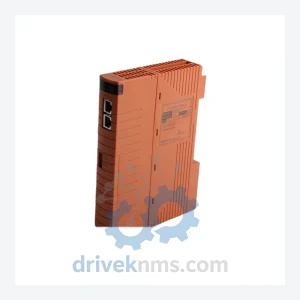
Yokogawa SCP461-11 Signal Conditioning Panel – Obsolete CENTUM CS3000 Spare Part
Yokogawa SCP461-11 is listed for CENTUM CS3000 RFQ review. Confirm quantity, condition and destination before quotation.
RFQ-ready industrial model
Model: AAT141-S50 S2
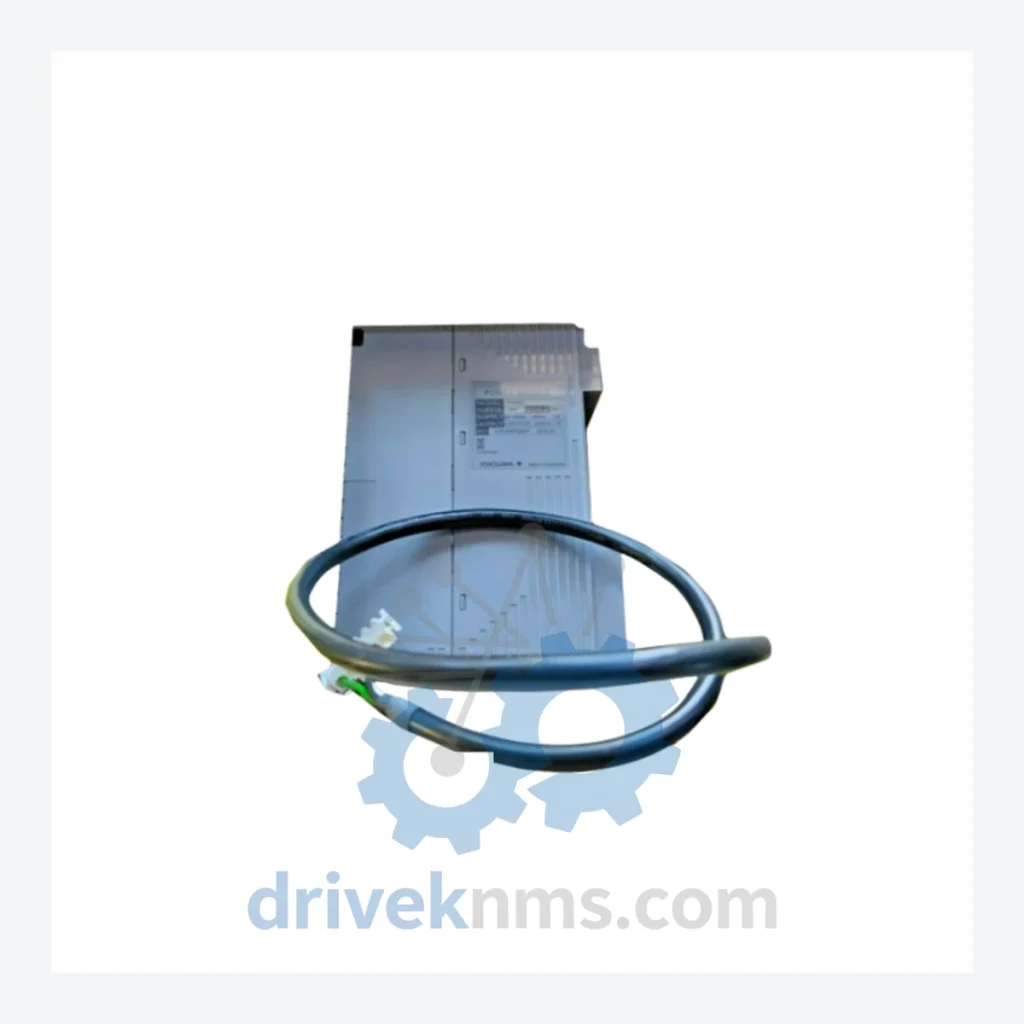
Product Overview
Commercial availability is handled through direct RFQ, model verification and export-oriented follow-up rather than public cart checkout.
Datasheet Preview
Use attached product manuals when available. If the manual is not public yet, request the full file directly through RFQ.
Commercial Path
Product pages on DRIVEKNMS are designed to verify model, brand and series first, then move the buyer into one clean quotation path.
Technical Dossier
The Yokogawa CENTUM CS3000 is one of the most widely deployed Distributed Control Systems (DCS) in global heavy industry. Installed across petrochemical complexes, nuclear power facilities, LNG terminals, crude oil refineries, and large-scale chemical plants, the CS3000 platform established Yokogawa's position as a tier-1 DCS supplier throughout Asia-Pacific, the Middle East, and Europe. The AAT141-S50 S2 is a current input (AI) module within this architecture, designed for high-density analog signal acquisition from field transmitters operating on 4–20 mA loops. Its role in process variable monitoring makes it a critical spare for any facility running CS3000 field control stations (FCS).
Yokogawa's CENTUM platform spans four decades of continuous development. The original CENTUM (1975) introduced distributed control to process industries. CENTUM-XL (1984) expanded I/O density and introduced redundant communication buses. CENTUM CS (1993) transitioned to a Windows-based HIS (Human Interface Station) and introduced the Vnet fieldbus backbone. CENTUM CS3000 (1998) represented a full architectural redesign: 100 Mbps Vnet/IP Ethernet backbone, modular FCS (Field Control Station) hardware, and a standardized I/O module form factor that remains backward-compatible across the CS3000 R3 revision family.
The CS3000 R3 revision (introduced circa 2005) added enhanced diagnostics, IEC 61508 SIL-2 compliance for safety-instrumented variants, and expanded the I/O module catalog to over 80 distinct part numbers. The platform entered its mature/end-of-active-development phase around 2015 with the introduction of CENTUM VP, though CS3000 installations remain operational at thousands of sites globally. Yokogawa officially extended lifecycle support commitments, but spare part availability from OEM channels has progressively tightened, making third-party sourcing essential for long-term plant maintenance.
Key compatibility constraints: CS3000 I/O modules are slot-specific within the Node Unit (NU) and are not interchangeable with CENTUM VP's FIO (Field I/O) modules without hardware and software migration. The S50 suffix on the AAT141-S50 S2 denotes a 50-channel node configuration variant.
Analog Input (AI) Modules
Analog Output (AO) Modules
Digital Input (DI) Modules
Digital Output (DO) Modules
Communication & CPU Modules
CS3000 I/O modules present specific test challenges due to their proprietary Vnet backplane communication protocol and node-address-dependent initialization sequence. DriveKNMS applies a structured test protocol for all CS3000 modules prior to dispatch:
Continue The Model Path
Move from this exact model into the matching system hub, brand archive, model-family archive or lifecycle sourcing route before sending a final RFQ list.
Related Paths
Yokogawa SCP461-11 is listed for CENTUM CS3000 RFQ review. Confirm quantity, condition and destination before quotation.
Yokogawa SAI143-H63 S3 is listed for CENTUM CS3000 RFQ review. Confirm quantity, condition and destination before quotation.
Yokogawa NFPW442-50 S2 is listed for CENTUM CS3000 RFQ review. Confirm quantity, condition and destination before quotation.