
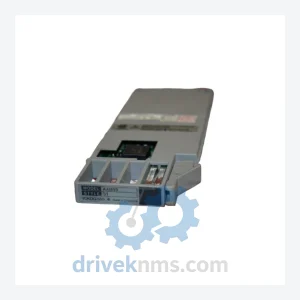
YOKOGAWA STARDOM / CENTUM Series Analog Input Modules: AAM10
Yokogawa AAM10 is listed for STARDOM RFQ review. Confirm quantity, condition and destination before quotation.
RFQ-ready industrial model
Model: ADM12C S2
Product Overview
Commercial availability is handled through direct RFQ, model verification and export-oriented follow-up rather than public cart checkout.
Datasheet Preview
Use attached product manuals when available. If the manual is not public yet, request the full file directly through RFQ.
Commercial Path
Product pages on DRIVEKNMS are designed to verify model, brand and series first, then move the buyer into one clean quotation path.
Technical Dossier
The Yokogawa CENTUM distributed control system (DCS) platform is one of the most widely deployed process automation architectures in global heavy industry. Installed across petrochemical complexes, nuclear power stations, LNG terminals, crude oil refineries, and large-scale chemical plants, the CENTUM series — spanning CENTUM V, CENTUM-XL, CENTUM CS, CENTUM CS 1000, CENTUM CS 3000, and CENTUM VP — represents decades of field-proven reliability in continuous process environments. The ADM12C S2 is a Contact Input Module within this ecosystem, designed for discrete signal acquisition from field devices such as limit switches, relay contacts, and pushbutton stations. Its 12-channel architecture and S2 revision designation indicate a second-generation hardware revision with enhanced noise immunity and backplane compatibility improvements over the original ADM12C.
The CENTUM platform was introduced by Yokogawa in 1975 as one of the world's first commercially deployed DCS architectures. Its evolution can be segmented into four distinct generations:
Generation 1 — CENTUM V & CENTUM-XL (1975–1993): Proprietary backplane bus, parallel I/O wiring, limited inter-node communication. Modules from this era are fully obsolete with no manufacturer support. Field units remain operational in legacy plants with extended maintenance contracts.
Generation 2 — CENTUM CS & CENTUM CS 1000 (1993–2001): Introduction of the Vnet token-ring communication bus. Modular I/O architecture with standardized card form factors. The ADM series (including ADM12C) originates in this generation. Cross-compatibility with CS 3000 hardware is partial and revision-dependent.
Generation 3 — CENTUM CS 3000 (1998–2008): Expanded Vnet/IP dual-redundancy support, enhanced FCS (Field Control Station) processing capacity, and broader I/O module range. The ADM12C S2 is fully compatible with CS 3000 FCS cabinets. This generation remains the dominant installed base in operating plants globally.
Generation 4 — CENTUM VP (2008–present): Ethernet-based Vnet/IP, OPC-UA integration, virtualized HIS (Human Interface Station), and expanded safety system integration via ProSafe-RS. Many CS 3000 I/O modules including the ADM12C S2 retain physical and electrical compatibility with VP field control stations, making them critical spare parts for VP-era plants running mixed hardware.
The following SKUs represent verified modules within the Yokogawa CENTUM CS / CS 3000 / VP hardware ecosystem. Modules are classified by functional category.
Contact & Digital Input Modules
ADM12C S2: 12-ch contact input module, S2 revision, CS/CS3000 compatible
ADM12D: 12-ch digital input module, 24VDC field voltage, isolated inputs
ADM51B: 32-ch digital input module, high-density, non-isolated
ADM52B: 32-ch digital input module, isolated, marshalling cabinet mount
Digital Output Modules
ADO55B: 32-ch digital output module, transistor sink type, 24VDC
ADO12C: 12-ch relay output module, SPDT contacts, 250VAC/2A rated
ADO12D: 12-ch digital output module, sourcing type, field-powered
Analog Input Modules
AAI141-S: 16-ch analog input, 4–20mA, HART-enabled, single-ended
AAI143-S: 8-ch analog input, differential, HART pass-through
AAI135-H: 8-ch analog input, high-speed, 4–20mA, non-HART
AAI841-S: 16-ch analog input, FOUNDATION Fieldbus H1 interface
Analog Output Modules
AAO141-S: 8-ch analog output, 4–20mA, HART-enabled
AAO145-S: 4-ch analog output, high-accuracy, 16-bit resolution
Communication & CPU Modules
CP451-10: Field Control Station CPU, dual-redundant, CS 3000 primary processor
CP461-50: Enhanced FCS CPU, CENTUM VP, Vnet/IP dual-port
ESB401: Enhanced SB bus coupler, I/O node expansion, CS 3000 / VP compatible
ALR111: Alarm & event logger module, 64-channel, RS-232C output
SCP451: Safety CPU module, ProSafe-RS integration, SIL2 rated
CENTUM-series modules — particularly backplane-mounted I/O cards such as the ADM12C S2 — require specialized test procedures due to their proprietary bus interface and multi-layer PCB architecture. DriveKNMS applies the following verification protocol to all CENTUM modules prior to dispatch:
Visual & Physical Inspection: Component-level inspection for capacitor degradation, relay contact wear, connector pin integrity, and conformal coating condition. ADM12C S2 units are checked for S2-revision-specific PCB markings to confirm hardware revision authenticity.
Backplane Bus Communication Test: Each module is seated in a CENTUM-compatible test rack and subjected to Vnet/IP or SB bus enumeration to confirm correct node addressing and data exchange with a reference FCS CPU.
Channel-Level Functional Test: All 12 contact input channels on the ADM12C S2 are individually stimulated with dry-contact closure signals. Input state registration, scan cycle response time, and diagnostic bit reporting are verified against Yokogawa's published specifications.
Isolation & Dielectric Test: Channel-to-channel and channel-to-backplane isolation resistance is measured at 500VDC. Minimum acceptable isolation: 100MΩ per Yokogawa field maintenance standard.
Burn-In Cycle: Units are powered continuously for 48 hours at ambient temperature prior to final packaging to screen for early-life component failures.
Continue The Model Path
Move from this exact model into the matching system hub, brand archive, model-family archive or lifecycle sourcing route before sending a final RFQ list.
Related Paths
Yokogawa AAM10 is listed for STARDOM RFQ review. Confirm quantity, condition and destination before quotation.
Yokogawa AAM50 is listed for CENTUM VP RFQ review. Confirm quantity, condition and destination before quotation.
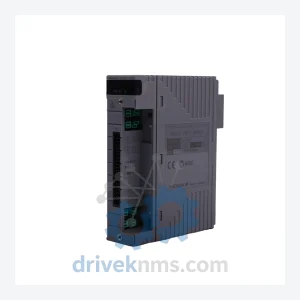
Yokogawa AAI141-S00 is listed for CENTUM VP RFQ review. Confirm quantity, condition and destination before quotation.