
YOKOGAWA STARDOM / CENTUM Series Analog Input Modules: AAM10
Yokogawa AAM10 is listed for STARDOM RFQ review. Confirm quantity, condition and destination before quotation.
RFQ-ready industrial model
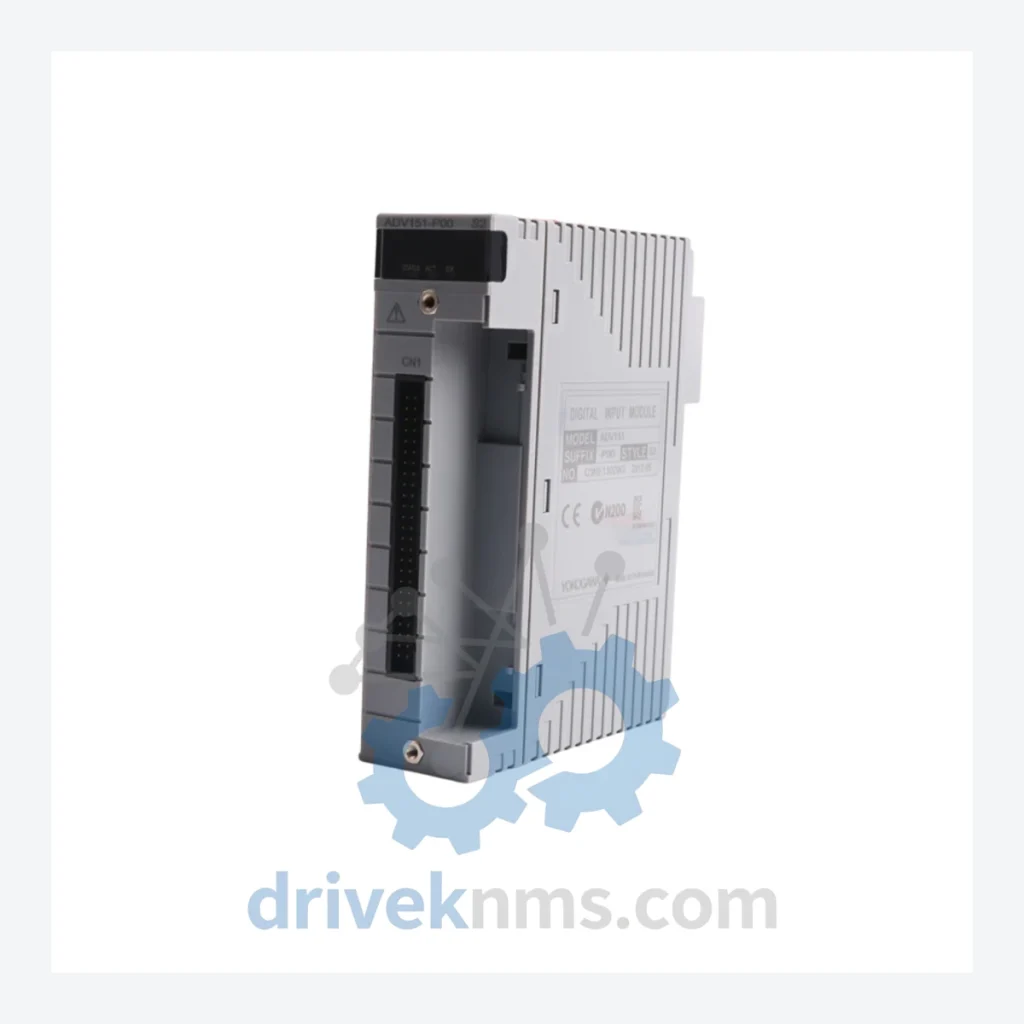
Model: ADV151-P00 S2
Product Overview
Commercial availability is handled through direct RFQ, model verification and export-oriented follow-up rather than public cart checkout.
Datasheet Preview
Use attached product manuals when available. If the manual is not public yet, request the full file directly through RFQ.
Commercial Path
Product pages on DRIVEKNMS are designed to verify model, brand and series first, then move the buyer into one clean quotation path.
Technical Dossier
The ADV151 lineage originates from YOKOGAWA's CENTUM CS 3000 platform, introduced in the late 1990s as a successor to the CENTUM-XL and CENTUM CS systems. Early ADV151 variants were designed for the ESB (Extended Serial Bus) backplane and operated under the CS 3000 Field Control Station (FCS) architecture. With the transition to CENTUM VP (circa 2008), YOKOGAWA maintained backward hardware compatibility for the ADV151 form factor, allowing existing modules to operate within VP-generation FCS cabinets — a deliberate design decision to protect long-term plant investment.
The suffix structure encodes hardware revision and I/O channel density: the -P00 suffix denotes a standard 32-channel configuration with non-isolated inputs, while the S2 revision marker indicates a second-generation PCB revision with improved noise immunity on the input signal conditioning stage. Later revisions introduced conformal coating options for high-humidity environments (offshore, coastal chemical plants). As CENTUM VP R6 became the current shipping baseline, ADV151 modules entered a mature/sustaining lifecycle phase — YOKOGAWA continues to supply them as spare parts but no new architectural revisions are planned. Plants operating CS 3000 FCS hardware should note that YOKOGAWA's official end-of-support timeline for CS 3000 hardware requires proactive spare parts stockpiling.
The following SKUs represent verified members of the YOKOGAWA ADV151 Digital Input module family, organized by configuration and channel density. Each entry reflects a distinct hardware variant with specific backplane and signal compatibility.
ADV151-P00 S2: 32-ch DI module, non-isolated, CENTUM VP/CS3000 FCS, standard density.
ADV151-P00 S3: 32-ch DI module, rev S3 PCB, enhanced EMC filtering, VP R4+ compatible.
ADV151-P01 S2: 32-ch DI module, isolated inputs, 24VDC field signal, CS3000/VP dual-use.
ADV151-P01 S3: 32-ch DI isolated, S3 revision, conformal coat option, offshore-rated.
ADV151-P02 S2: 16-ch DI module, high-density isolated, dual-redundant backplane support.
ADV151-P02 S3: 16-ch DI, S3 revision, improved input threshold tolerance, VP R5+ baseline.
ADV151-P03 S2: 32-ch DI, NAMUR sensor compatible, intrinsically safe barrier interface.
ADV151-P03 S3: 32-ch DI NAMUR, S3 revision, SIL2-capable configuration with FCS redundancy.
ADV151-P04 S2: 32-ch DI, 120VAC field input compatible, power plant and utility applications.
ADV151-P04 S3: 32-ch DI 120VAC, S3 revision, improved zero-crossing detection circuit.
ADV151-P05 S2: 32-ch DI, 240VAC field input, high-voltage process interface, refinery use.
ADV151-P06 S2: 64-ch DI module, high-density non-isolated, large FCS cabinet configurations.
ADV151-P06 S3: 64-ch DI, S3 revision, reduced power consumption, VP R6 optimized.
ADV151-P07 S2: 32-ch DI, wet contact input, 24VDC loop-powered, general process DI.
ADV151-P08 S2: 32-ch DI, dry contact input, internal pull-up, motor control center interface.
ADV151-P09 S2: 32-ch DI, SOE (Sequence of Events) capable, 1ms timestamp resolution, power gen.
ADV151-P10 S2: 32-ch DI SOE, S2 revision, GPS time-sync input, substation automation.
ADV151-P11 S2: 16-ch DI, high-isolation 500VAC, chemical reactor safety interlock interface.
Continue The Model Path
Move from this exact model into the matching system hub, brand archive, model-family archive or lifecycle sourcing route before sending a final RFQ list.
Related Paths
Yokogawa AAM10 is listed for STARDOM RFQ review. Confirm quantity, condition and destination before quotation.
Yokogawa AAM50 is listed for CENTUM VP RFQ review. Confirm quantity, condition and destination before quotation.
Yokogawa AAI141-S00 is listed for CENTUM VP RFQ review. Confirm quantity, condition and destination before quotation.