
YOKOGAWA STARDOM / CENTUM Series Analog Input Modules: AAM10
Yokogawa AAM10 is listed for STARDOM RFQ review. Confirm quantity, condition and destination before quotation.
RFQ-ready industrial model
Model: ADV551-P13 S2
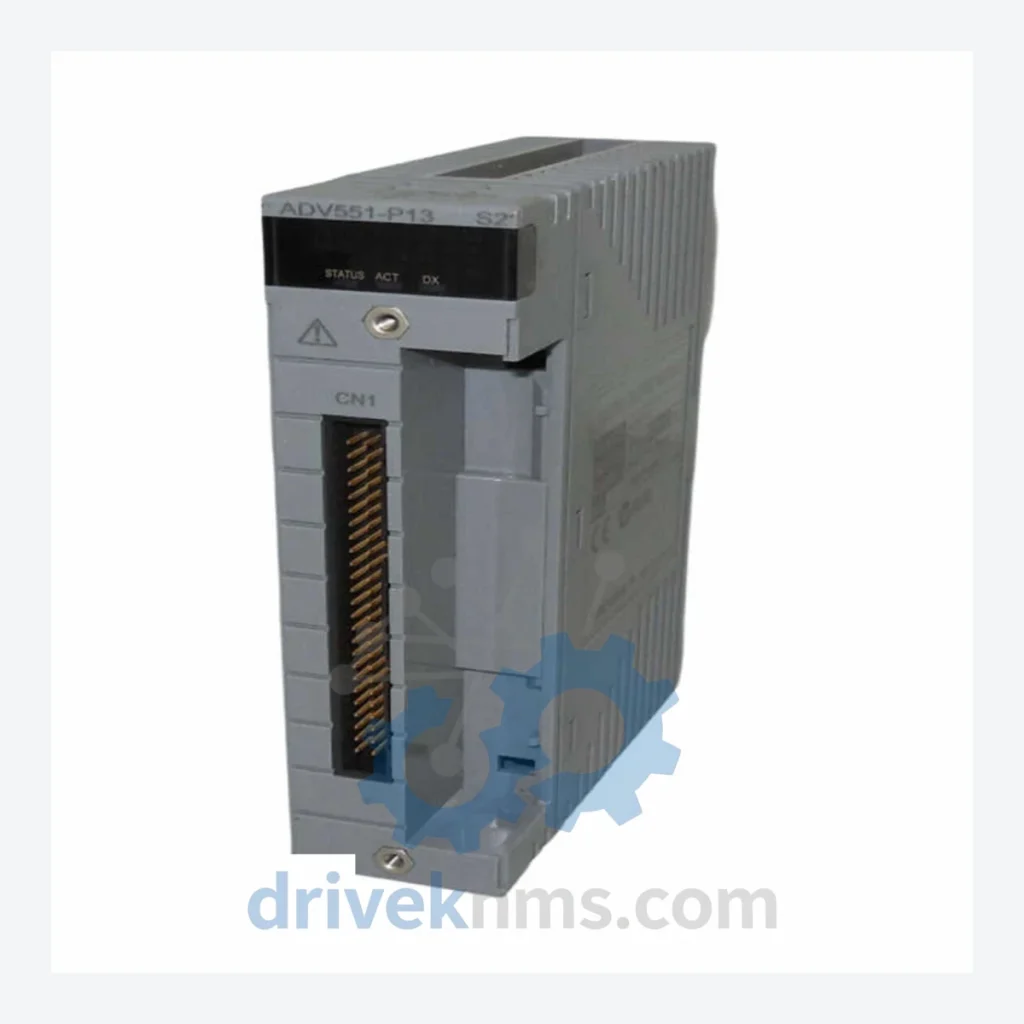
Product Overview
Commercial availability is handled through direct RFQ, model verification and export-oriented follow-up rather than public cart checkout.
Datasheet Preview
Use attached product manuals when available. If the manual is not public yet, request the full file directly through RFQ.
Commercial Path
Product pages on DRIVEKNMS are designed to verify model, brand and series first, then move the buyer into one clean quotation path.
Technical Dossier
RFQ support for obsolete parts: Send the model number, required quantity and destination so DriveKNMS can confirm sourcing options before quotation.
| Parameter | Detail |
|---|---|
| Manufacturer | Yokogawa Electric Corporation |
| Part Number | ADV551-P13 S2 |
| Product Family | EJA/EJX Series Smart Transmitter |
| Discontinuation Status | Obsolete / End-of-Life (EOL) – no longer manufactured |
| Communication Protocol | HART (Highway Addressable Remote Transducer) |
| Country of Origin | Japan |
| Typical System Compatibility | Yokogawa CENTUM CS 3000, CENTUM VP, legacy HART field networks |
| Condition Available | New surplus / Professionally refurbished (see QA section) |
Note: Electrical parameters not confirmed from official documentation are intentionally omitted. Contact us for verified datasheet support.
The ADV551-P13 S2 belongs to a generation of Yokogawa smart transmitters that became deeply embedded in process industries — petrochemical, power generation, pulp and paper, and pharmaceutical — during the 1990s and 2000s. These units were specified into plant designs with 20- to 30-year operational horizons. Yokogawa's decision to discontinue this product line did not retire the installed base; it simply removed the safety net.
Plants running CENTUM CS 3000 or early CENTUM VP configurations face a specific constraint: the field device database (FDD) and HART device description (DD) files are already validated for the ADV551 family. Introducing a different transmitter model — even a current Yokogawa product — requires re-validation of the DD file, potential firmware updates to the field control station (FCS), and re-commissioning of the affected loops. In a continuous process environment, that work cannot be done without a planned shutdown. The cost of that shutdown, measured in lost production, engineering labor, and regulatory re-certification where applicable, consistently exceeds the cost of maintaining a strategic spare inventory by an order of magnitude.
Sourcing a genuine ADV551-P13 S2 from DriveKNMS allows maintenance teams to execute a direct swap, restore the loop to its validated state, and defer the system migration decision to a planned capital cycle — on the plant's schedule, not the failure's.
Obsolete transmitters sourced from secondary markets carry real risk. Age-related failure modes in this product class are well-documented, and DriveKNMS applies a structured 5-step inspection protocol before any unit is offered for sale:
How do I know the unit is genuine and not counterfeit?
All units are inspected for correct Yokogawa labeling, serial number format, and internal construction consistent with factory production. Units that fail authenticity checks are not offered for sale. We do not sell units of uncertain provenance.
Should I buy more than one unit?
For any measurement loop classified as critical or safety-related, a minimum of two spare units is the standard industry recommendation. As the ADV551-P13 S2 becomes increasingly scarce, the cost of sourcing a second unit in an emergency will be substantially higher than securing it now. Long-term spare holding is a documented cost-reduction strategy for legacy system maintenance programs.
Continue The Model Path
Move from this exact model into the matching system hub, brand archive, model-family archive or lifecycle sourcing route before sending a final RFQ list.
Related Paths
Yokogawa AAM10 is listed for STARDOM RFQ review. Confirm quantity, condition and destination before quotation.
Yokogawa AAM50 is listed for CENTUM VP RFQ review. Confirm quantity, condition and destination before quotation.
Yokogawa AAI141-S00 is listed for CENTUM VP RFQ review. Confirm quantity, condition and destination before quotation.