
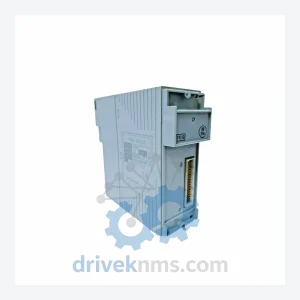
YOKOGAWA PW442-50 Power Supply Module – CENTUM Series
Yokogawa PW442-50 is listed for CENTUM Series RFQ review. Confirm quantity, condition and destination before quotation.
RFQ-ready industrial model
Model: pw702
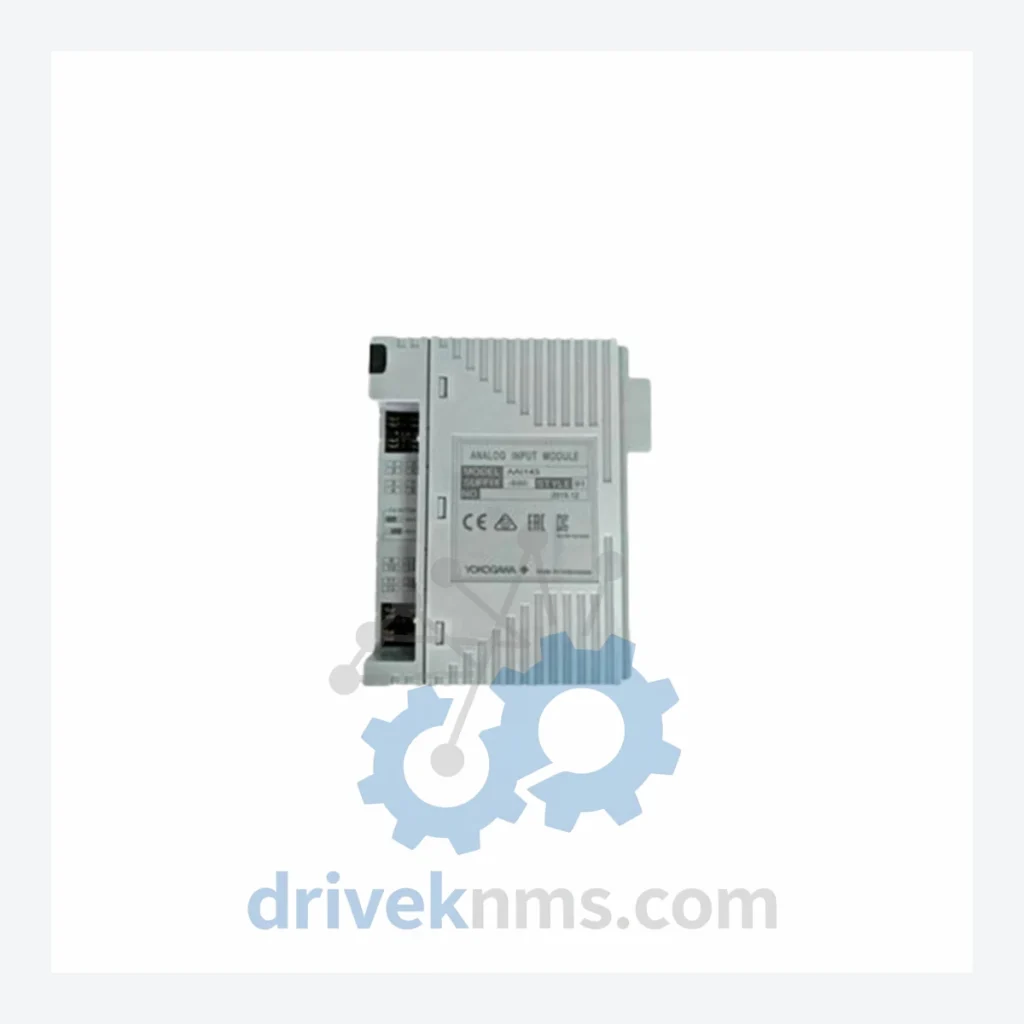
Product Overview
Commercial availability is handled through direct RFQ, model verification and export-oriented follow-up rather than public cart checkout.
Datasheet Preview
Use attached product manuals when available. If the manual is not public yet, request the full file directly through RFQ.
Commercial Path
Product pages on DRIVEKNMS are designed to verify model, brand and series first, then move the buyer into one clean quotation path.
Technical Dossier
The Yokogawa PW702 is a power supply unit originally designed for use within Yokogawa's CENTUM distributed control system (DCS) architecture. As Yokogawa has progressively phased out the CENTUM CS/CS3000 product lines in favor of CENTUM VP, the PW702 has transitioned into end-of-life status, making verified replacement units increasingly scarce on the open market.
DriveKNMS maintains limited RFQ-reviewed sourcing status of the Yokogawa PW702. Availability is not guaranteed beyond current inventory.
RFQ support for obsolete parts: Send the model number, required quantity and destination so DriveKNMS can confirm sourcing options before quotation.
Note: Specific electrical parameters (input voltage range, output ratings, power capacity) are not published here to prevent inaccurate data from being used in safety-critical applications. Please contact our technical team for verified datasheet confirmation prior to procurement.
The Yokogawa CENTUM CS and CS3000 platforms were deployed extensively across refining, petrochemical, power generation, and pharmaceutical facilities throughout the 1990s and 2000s. Many of these installations remain operational today, underpinning processes where control system continuity is non-negotiable.
The PW702 power supply unit sits at the foundation of these systems. Without stable, correctly-rated power delivery, field controllers, I/O modules, and communication buses cannot function reliably. Unlike software-defined components, the PW702 cannot be emulated or substituted with a generic industrial power supply without risking compatibility failures, ground loop issues, or communication faults within the CENTUM backplane.
DriveKNMS sources PW702 units through controlled channels, applies a structured QA process before dispatch, and provides documentation to support your internal maintenance records.
The decision to retire a legacy DCS is rarely driven by the system's inability to perform its control function. It is almost always driven by the inability to source replacement hardware when critical modules fail. This is a procurement problem, not an engineering problem — and it is solvable.
For plant management facing pressure to justify continued operation of CENTUM CS or CS3000 infrastructure, the following approach has been applied successfully across multiple facilities to extend operational life by five to ten years without a full migration:
3. Condition-Based Monitoring: Implement periodic electrical testing of installed PW702 units — output voltage stability, ripple measurement, and thermal performance — to identify degradation before failure occurs. This converts reactive replacement into planned maintenance.
4. Firmware and Configuration Archiving: Ensure all CENTUM CS3000 station configurations, control drawings, and firmware versions are archived offline. This eliminates the risk of configuration loss during an emergency hardware swap.
5. Vendor Qualification for Secondary Market Sourcing: Not all secondary market suppliers apply equivalent quality controls. Establish a qualified vendor list for obsolete Yokogawa hardware that includes documented testing protocols and traceable sourcing. This protects your procurement process and provides defensible records for internal audits.
The capital cost of this approach — spare procurement, storage, and periodic testing — is typically less than 1% of the cost of an unplanned DCS migration triggered by an unresolvable hardware failure.
DriveKNMS applies a five-step quality assurance process to all PW702 units prior to dispatch:
Step 1 – Visual and Physical Inspection: Full external inspection for mechanical damage, connector pin corrosion, PCB contamination, and evidence of prior field repairs or unauthorized modifications.
Step 3 – Firmware Version Verification: Where applicable, firmware or embedded configuration is verified against known CENTUM CS/CS3000 compatibility requirements to confirm the unit will initialize correctly within the target system.
Step 4 – Functional Power-On Test: Each unit undergoes a controlled power-on test under load conditions to verify output stability, protection circuit function, and absence of fault indicators.
Continue The Model Path
Move from this exact model into the matching system hub, brand archive, model-family archive or lifecycle sourcing route before sending a final RFQ list.
Related Paths
Yokogawa PW442-50 is listed for CENTUM Series RFQ review. Confirm quantity, condition and destination before quotation.
Yokogawa ANT512-10 is listed for CENTUM Series RFQ review. Confirm quantity, condition and destination before quotation.
Yokogawa SNT511-5F is listed for CENTUM Series RFQ review. Confirm quantity, condition and destination before quotation.