
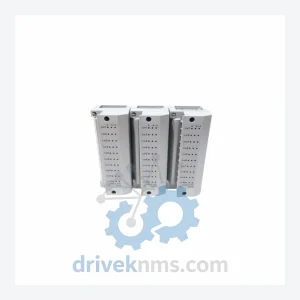
YOKOGAWA DU200-31 DCV/TC/DI Input Module – CENTUM Series
Yokogawa DU200-31 is listed for CENTUM Series RFQ review. Confirm quantity, condition and destination before quotation.
RFQ-ready industrial model
Model: RB301 S2
Product Overview
Commercial availability is handled through direct RFQ, model verification and export-oriented follow-up rather than public cart checkout.
Datasheet Preview
Use attached product manuals when available. If the manual is not public yet, request the full file directly through RFQ.
Commercial Path
Product pages on DRIVEKNMS are designed to verify model, brand and series first, then move the buyer into one clean quotation path.
Technical Dossier
RFQ support for obsolete parts: Send the model number, required quantity and destination so DriveKNMS can confirm sourcing options before quotation.
| Parameter | Detail |
|---|---|
| Manufacturer | Yokogawa Electric Corporation |
| Part Number | RB301 S2 |
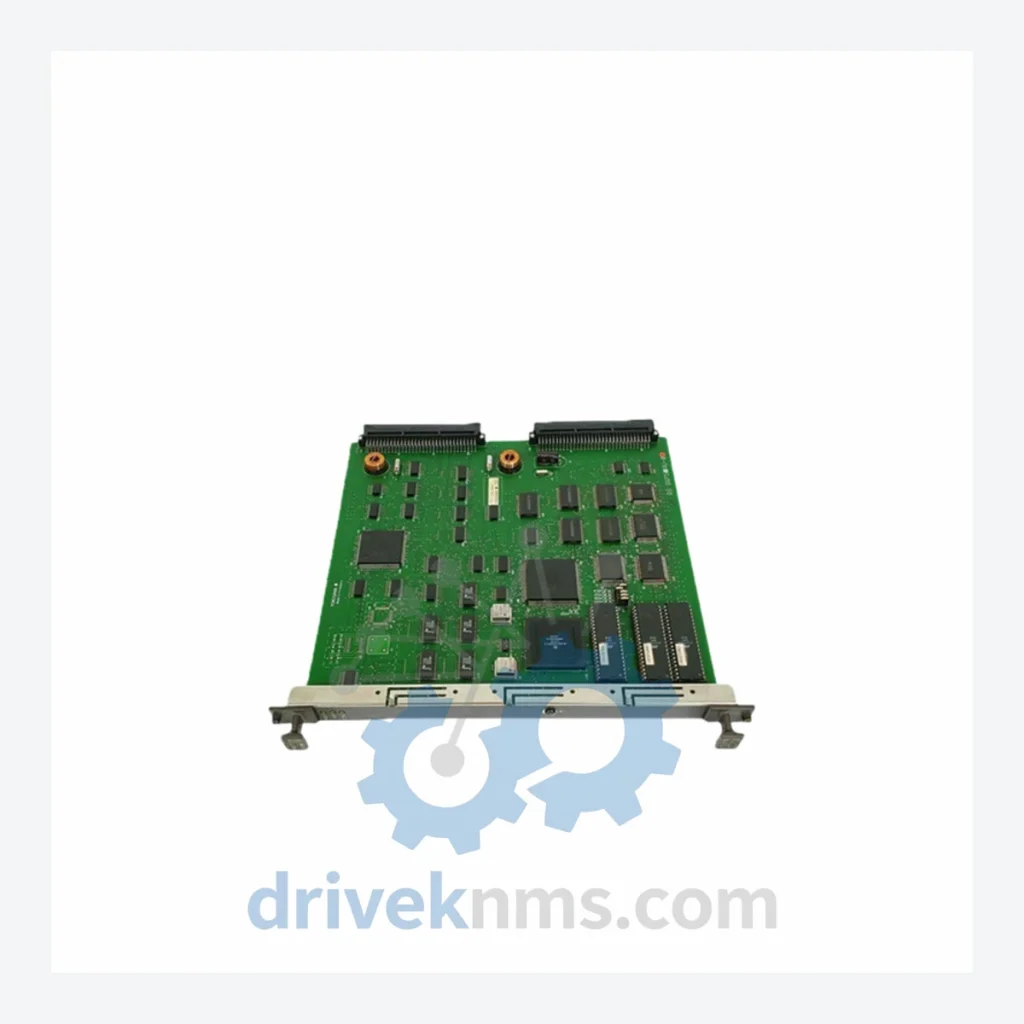
| Module Type | RIO Bus Interface Master Card |
| Compatible Series | CENTUM CS, CENTUM CS 3000, CENTUM V |
| Function | Master communication interface between Field Control Station (FCS) and Remote I/O (RIO) nodes via RIO bus |
| Country of Origin | Japan |
| Discontinuation Status | Confirmed Obsolete – No longer manufactured or supported by Yokogawa |
| Condition Available | New surplus / Professionally refurbished (documented) |
Note: Electrical parameters not independently verified by DriveKNMS. Specifications above are based on published Yokogawa CENTUM system documentation. Buyers are advised to cross-reference against their system engineering drawings prior to installation.
The Yokogawa CENTUM CS and CS 3000 platforms were deployed extensively across refining, petrochemical, power generation, and pharmaceutical facilities throughout the 1990s and 2000s. Many of these installations remain in active production service today — not because operators are unaware of the hardware age, but because the process knowledge embedded in the control logic, the tuning parameters, and the operator interface represents decades of accumulated engineering investment that cannot be transferred to a new platform without significant risk and cost.
The RB301 S2 sits at a critical junction in this architecture. As the RIO bus master, it manages the deterministic polling of all remote I/O racks connected to a given FCS. There is no software workaround for its absence. When this card fails and no replacement is available, the affected FCS must be taken offline. Depending on plant topology, this can mean a partial or full unit shutdown.
Facilities that have extended CENTUM CS 3000 operations beyond the original design life of 10–15 years face a specific procurement challenge: Yokogawa's own spare parts program for these platforms has wound down, and the secondary market supply of verified, functional units is finite and diminishing. Each year that passes, the pool of available RB301 S2 cards shrinks as units are consumed by failures across the global installed base.
The practical strategy for plant asset managers is not to wait for failure. Holding one or two verified spare RB301 S2 units — properly stored in anti-static packaging in a climate-controlled environment — provides the operational buffer needed to sustain production continuity for an additional 5 to 10 years without committing to a full DCS migration. The cost differential between a proactive spare procurement and an emergency shutdown-driven migration is not marginal. It is structural.
DriveKNMS applies a documented 5-step inspection protocol to all obsolete DCS modules prior to dispatch:
Step 1 – Visual and Mechanical Inspection: Full board examination for physical damage, burn marks, cracked solder joints, and connector pin integrity. Corroded or bent pins are flagged and documented.
Step 2 – Electrolytic Capacitor Assessment: Aging electrolytic capacitors are the primary failure mode in boards of this generation. Each capacitor is checked for bulging, leakage, and ESR deviation. Units with degraded capacitors are either recapped with equivalent-spec components or quarantined from sale.
Step 3 – Firmware Version Verification: Where accessible, firmware revision is read and documented. Compatibility with the target CENTUM system revision is confirmed against known version matrices.
Step 4 – Pin and Connector Corrosion Check: Backplane connector pins are inspected under magnification. Oxidation is treated with appropriate contact cleaner. Severely corroded connectors are flagged as non-saleable.
Step 5 – Functional Bench Test (where applicable): Units are powered and tested on compatible test rigs where available. Test results are recorded and accompany the shipment documentation.
Units that do not pass all five steps are not offered for sale. Condition grade (New Surplus / Refurbished / Tested Used) is disclosed explicitly in the order confirmation.
The RB301 S2 is a direct hardware replacement for the same part number within the CENTUM CS and CS 3000 FCS architecture. Installation does not require reprogramming of the control database, re-engineering of the RIO bus topology, or modification of the operator station configuration. The replacement procedure follows the standard Yokogawa FCS maintenance sequence: controlled shutdown of the affected FCS, physical card swap, and controlled restart with automatic re-synchronization to the RIO bus.
This drop-in replacement characteristic is the defining economic argument for spare-based maintenance over system migration. A migration project requires engineering scoping, hardware procurement, factory acceptance testing, site acceptance testing, operator retraining, and a planned production outage — a process that typically spans 12 to 36 months and consumes capital budget that most facilities cannot absorb outside of a scheduled turnaround cycle. A verified spare RB301 S2 resolves the same failure event in hours, not months, and at a fraction of the cost.
Q: Can DriveKNMS source other Yokogawa CENTUM obsolete parts?
A: Yes. DriveKNMS specializes in hard-to-find and obsolete components across major DCS and PLC platforms. Inquiries for related CENTUM CS / CS 3000 modules are welcome.
Continue The Model Path
Move from this exact model into the matching system hub, brand archive, model-family archive or lifecycle sourcing route before sending a final RFQ list.
Related Paths
Yokogawa DU200-31 is listed for CENTUM Series RFQ review. Confirm quantity, condition and destination before quotation.
Yokogawa spw484-50 is listed for CENTUM Series RFQ review. Confirm quantity, condition and destination before quotation.
Yokogawa pw702 is listed for CENTUM Series RFQ review. Confirm quantity, condition and destination before quotation.