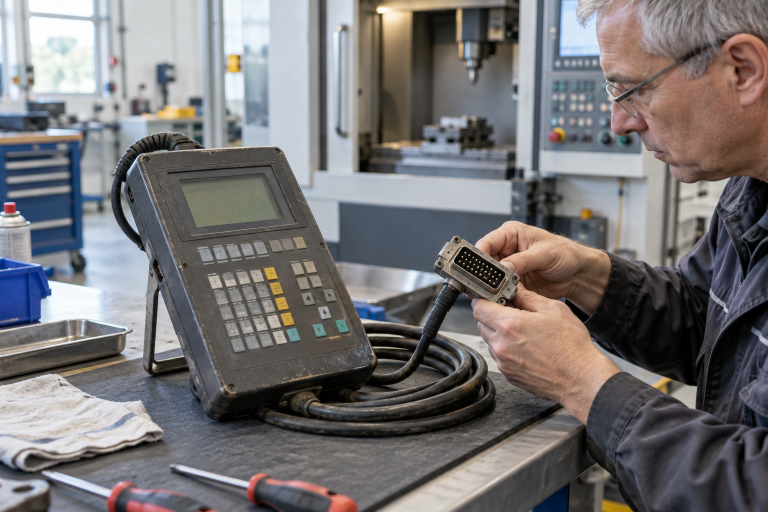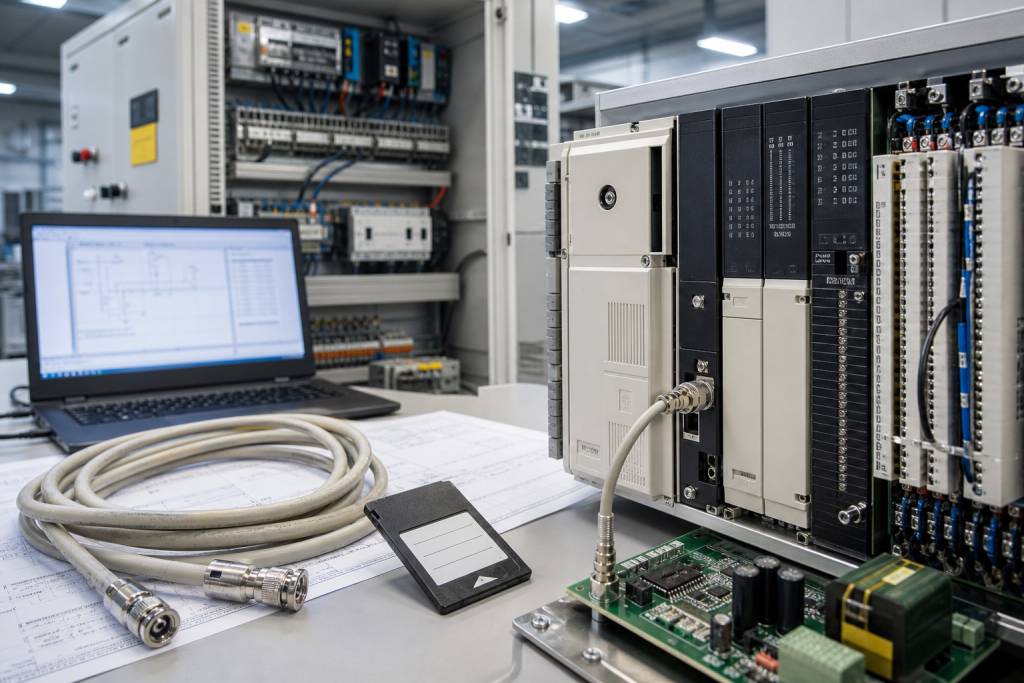
Schneider Quantum migration discussions often start years before the final cutover. In the meantime, a CPU fault, coaxial network issue, missing memory evidence, or old power board can still stop production. The practical spare plan should protect the current rack while building migration evidence.
DriveKNMS readers need a bridge between legacy PLC support and future modernization. A Quantum RFQ should not promise permanent life extension; it should make the installed processor, network media, project backup, and acceptance test clear enough to keep the plant running safely.
Protect The Processor Evidence
Record exact CPU model, firmware, memory, rack position, power supply, I/O ownership, project backup, battery or memory state, diagnostic fault, and the process area controlled by the rack.
The live Schneider Electric 140CPU31110 Quantum PLC CPU is the product match when controller identity drives the spare request.
Photograph the front label, side label, memory device, LEDs, communication ports, rack slot, and any Unity or legacy software diagnostic evidence.
Old Network Media Is Part Of The Risk
A processor replacement can pass local checks while the remote I/O or peer network remains unavailable because coaxial cable, connectors, or termination were not reviewed.
The related Modicon MA-0186-100 coaxial cable is relevant when the plant still depends on legacy Modicon communication media.
Ask suppliers to separate CPU, memory, cable, and substitute options, with condition, actual photos, test scope, and unresolved configuration risks.
Acceptance Should Support The Migration File
After replacement, verify CPU RUN status, project load, I/O health, network nodes, HMI communication, alarms, and the controlled process sequence.
If the rack remains unstable, review power quality, memory, firmware, coax termination, connector condition, network addressing, and project hardware configuration.
Store photos, backup status, cable notes, diagnostics, test results, and migration implications with the spare record.
What A Useful RFQ Should Prove
Send CPU labels, rack photos, memory evidence, coax cable photos, project-backup status, condition requirement, and migration window.
A Quantum RFQ should define whether the goal is emergency recovery, planned shutdown support, or a bridge to migration.
For substitutes, require review of firmware, memory, network media, project compatibility, and rollback plan.
The useful RFQ is not a shopping list. It is a small technical file that proves identity, installed function, accessory scope, condition expectation, and the field test that will decide whether the part is acceptable.
For legacy automation, family names are often too broad. Firmware, suffix, memory, terminal base, communication option, power rating, field wiring, and even the cable included in the original installation can change the risk profile of the spare.
Actual photos reduce that uncertainty. Front labels, side labels, connector faces, terminal screws, keying, handles, memory devices, and cabinet slot position often reveal details that a short product description misses.
Condition language should be plain. New surplus, factory sealed, refurbished, repaired exchange, tested used, and untested used items should not be compared as if they offered the same restart confidence.
Before ordering, define who owns configuration, firmware loading, field calibration, proof testing, and final production approval. A supplier may confirm hardware, but the plant must still decide the acceptance boundary.
Receiving inspection should repeat the RFQ evidence. Compare the approved photos with the received item, check connector damage, confirm accessory scope, and record whether the part is ready for stores, bench test, or immediate installation.
This documentation also helps migration planning. Scarce parts, weak test evidence, missing accessories, or repeated substitution requests are useful signals when engineering needs to justify a planned upgrade without exaggerating the facts.
Good purchasing habits do not slow the job down. They prevent vague follow-up questions, reduce wrong-part risk, and give maintenance a clearer path if the first replacement does not pass site acceptance.
When several similar systems exist in one plant, include the unit, machine, cabinet, rack, or loop tag in the request. A spare that works on one line may not be acceptable on another even if the model family looks familiar.
The final decision should weigh availability, condition, test evidence, accessory completeness, shipping route, and fallback path together. A fast shipment is only valuable when the part can survive the real maintenance test.
Keep the evidence with the spare after the work is complete. The next engineer should be able to see why the item was accepted, which limitations remain, and how the plant proved recovery.
For critical equipment, define a minimum evidence package before the buyer sends the inquiry: installed photos, nameplate photos, cabinet or rack position, accessory list, fault description, required condition, acceptable alternatives, and the planned acceptance test. This gives suppliers less room to guess and gives engineers a cleaner way to reject weak offers.
Do not ignore small accessories. A missing cable, terminal base, memory card, mounting bracket, key switch, connector hood, or power plug can turn a good module into an unusable delivery. List these items explicitly when the shutdown window is tight.
If the spare is bought for stores rather than immediate installation, still define how it will be inspected. A stored critical spare should have photos, condition notes, packaging notes, and a future test plan, otherwise the plant is only postponing the uncertainty.
FAQ
What must match on a Schneider Quantum CPU spare?
Match model, firmware, memory, rack role, power context, communication ports, project backup, and test method.
Why include Modicon coax cable evidence?
Because legacy network media can block remote I/O or peer communication even when the CPU is correct.
What should the RFQ include?
Send labels, rack photos, memory status, cable evidence, backup status, condition requirement, and deadline.
What proves recovery?
CPU RUN status, loaded project, healthy I/O, visible network nodes, working HMI, and approved process test.
Send DriveKNMS the Schneider Quantum labels, memory evidence, coax photos, backup status, condition requirement, and migration deadline. We can help prepare a controlled Quantum spare RFQ.
© 2026 DriveKNMS. All rights reserved. Official Website: https://driveknms.com Inquiry: sale@driveknms.com | WhatsApp/Tel: +86 18359293191