
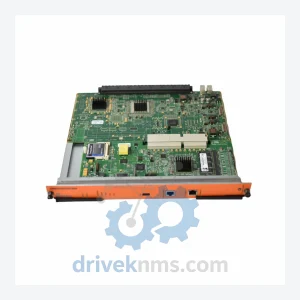
Alcatel OmniSwitch 9600/9700 Modules: OS9600/OS9700-CMM Chassis Management Module –
Alcatel OmniSwitch 9600/9700 Series: Comprehensive Module Range and Technical Overview The Alcatel-Lucent Enterprise (ALE) OmniSwitch 9600 and OmniSwitch 9700 are…
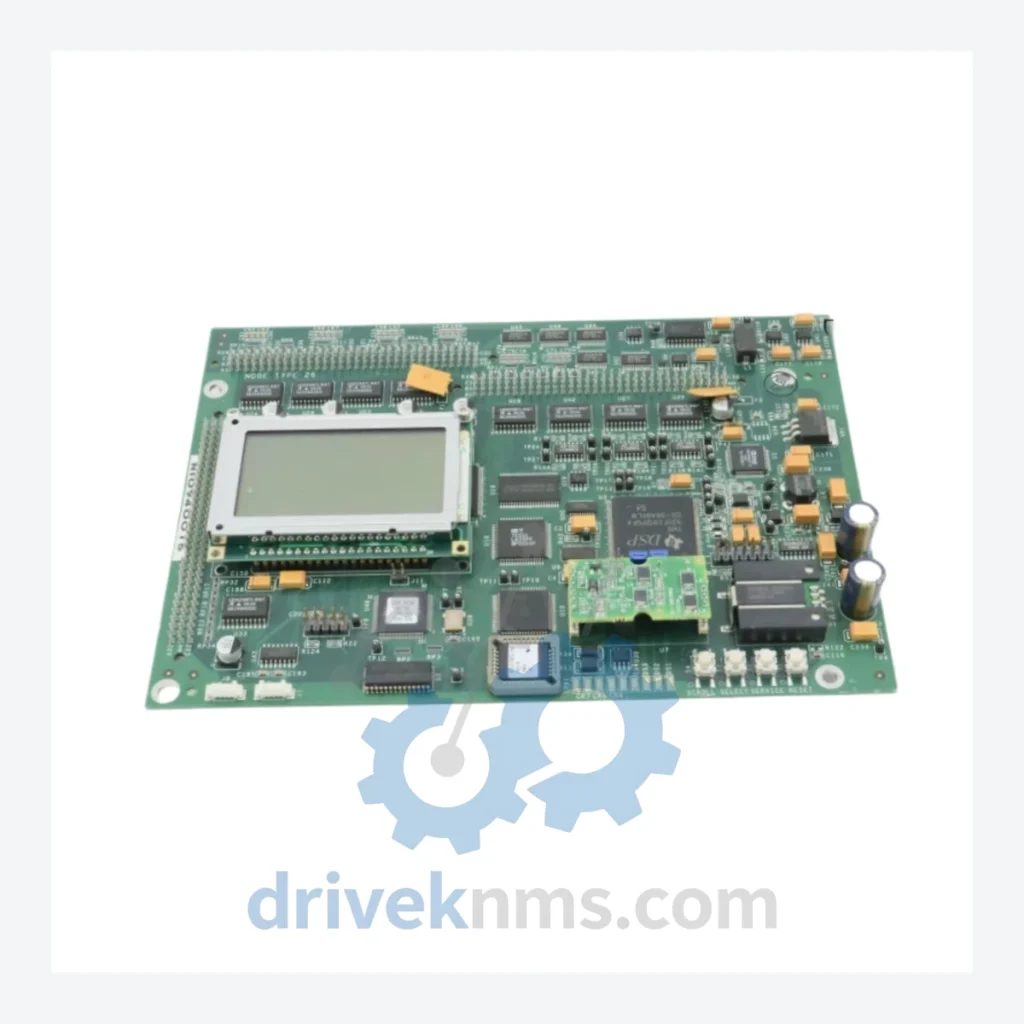
Model: TYPE 24, 855-057480-003 810-056663-007 45901171 945Y2NO/NCFSMFFA LF-40M-A-EVD1
Product Overview
Commercial availability is handled through direct RFQ, model verification and export-oriented follow-up rather than public cart checkout.
Datasheet Preview
Use attached product manuals when available. If the manual is not public yet, request the full file directly through RFQ.
Commercial Path
Product pages on DRIVEKNMS are designed to verify model, brand and series first, then move the buyer into one clean quotation path.
Technical Dossier
The Lam Research TYPE 24 Node Board is a critical control and communication module deployed within Lam Research etch and deposition platforms — systems that form the backbone of semiconductor fabrication lines in high-volume manufacturing environments including logic fabs, memory fabs, and advanced packaging facilities. Part numbers 855-057480-003, 810-056663-007, 45901171, and the assembly designation 945Y2NO/NCFSMFFA LF-40M-A-EVD1 all refer to revision-specific or sub-assembly variants of this node board architecture. These boards are embedded within the equipment controller hierarchy of Lam Research systems such as the Versys, Exelan, 2300, and TCP platforms, where they manage distributed I/O, inter-node communication, and real-time process data routing. Installed base of TYPE 24 architecture spans fabs across the United States, Taiwan, South Korea, Japan, and China, making long-term spare parts availability a critical operational concern for process engineers and equipment managers.
Lam Research's node board architecture evolved through successive generations of its equipment controller platform. Early Lam systems used centralized VME-based control architectures. The TYPE 24 generation represents a distributed node model, where individual boards handle localized process control tasks and communicate over a proprietary backplane bus. This architecture improved fault isolation and reduced single-point-of-failure risk across the system. The TYPE 24 board interfaces with the system's main controller via a defined communication protocol, and its firmware is tightly coupled to the specific software revision of the host platform. Compatibility between TYPE 24 revisions (e.g., -003 vs. earlier dash numbers) and the host system software must be verified before substitution. As Lam Research has transitioned newer platforms to more integrated SoC-based control architectures, the TYPE 24 series has entered a mature/end-of-life phase. OEM new stock is no longer available through standard distribution channels, making third-party sourcing and refurbished inventory the primary supply path for fabs still operating legacy equipment.
The following part numbers are associated with the Lam Research TYPE 24 node board ecosystem and related control board assemblies used across Lam Research etch and CVD platforms. Each entry reflects a distinct revision, sub-assembly, or functionally equivalent variant:
The TYPE 24 node board series is no longer manufactured by Lam Research and is not available through OEM new-buy channels. Fabs operating legacy Lam Research platforms face a constrained supply environment where unplanned board failures can result in extended tool downtime. DriveKNMS maintains a dedicated inventory of refurbished, tested, and serialized TYPE 24 node boards and related sub-assemblies sourced from decommissioned equipment, controlled teardowns, and long-term storage lots. All units are inspected, functionally tested, and documented with traceability records prior to shipment. DriveKNMS supports global logistics to semiconductor fabs in the US, EU, Taiwan, South Korea, Japan, Singapore, and China, with expedited shipping options available for critical downtime situations. For customers requiring long-term supply agreements or consignment stock arrangements for TYPE 24 boards, DriveKNMS offers structured MRO partnership programs.
TYPE 24 node boards present specific test challenges due to their proprietary backplane bus interface and firmware-dependent initialization sequence. DriveKNMS applies a multi-stage quality control process to all TYPE 24 units: (1) Visual inspection for physical damage, corrosion, and component integrity; (2) In-circuit test (ICT) for passive and active component verification; (3) Functional test using Lam Research-compatible backplane test fixtures that simulate the operational bus environment; (4) Firmware version verification and documentation; (5) Burn-in cycle under representative thermal and electrical load conditions; (6) Final inspection and serialization with test report issuance. Units that do not pass all stages are quarantined and not offered for sale. Test reports are available upon request for customers with specific quality documentation requirements.
Related Paths
Alcatel OmniSwitch 9600/9700 Series: Comprehensive Module Range and Technical Overview The Alcatel-Lucent Enterprise (ALE) OmniSwitch 9600 and OmniSwitch 9700 are…
AMETEK MPC-T2010 Series: Comprehensive Module Range and Technical Overview The AMETEK MPC-T2010 series is a modular process control platform engineered…
Fisher CL6821 Series: Comprehensive Module Range and Technical Overview The Fisher CL6821 series is a family of analog input/output interface…