
GE Multilin UR Series Modules: UR9GH UR 9GH CPU Module —
GE Multilin UR Series: Comprehensive Module Range and Technical Overview The GE Multilin Universal Relay (UR) Series represents one of…
Model: 745-W3-P511-G51-HI-R-E-H
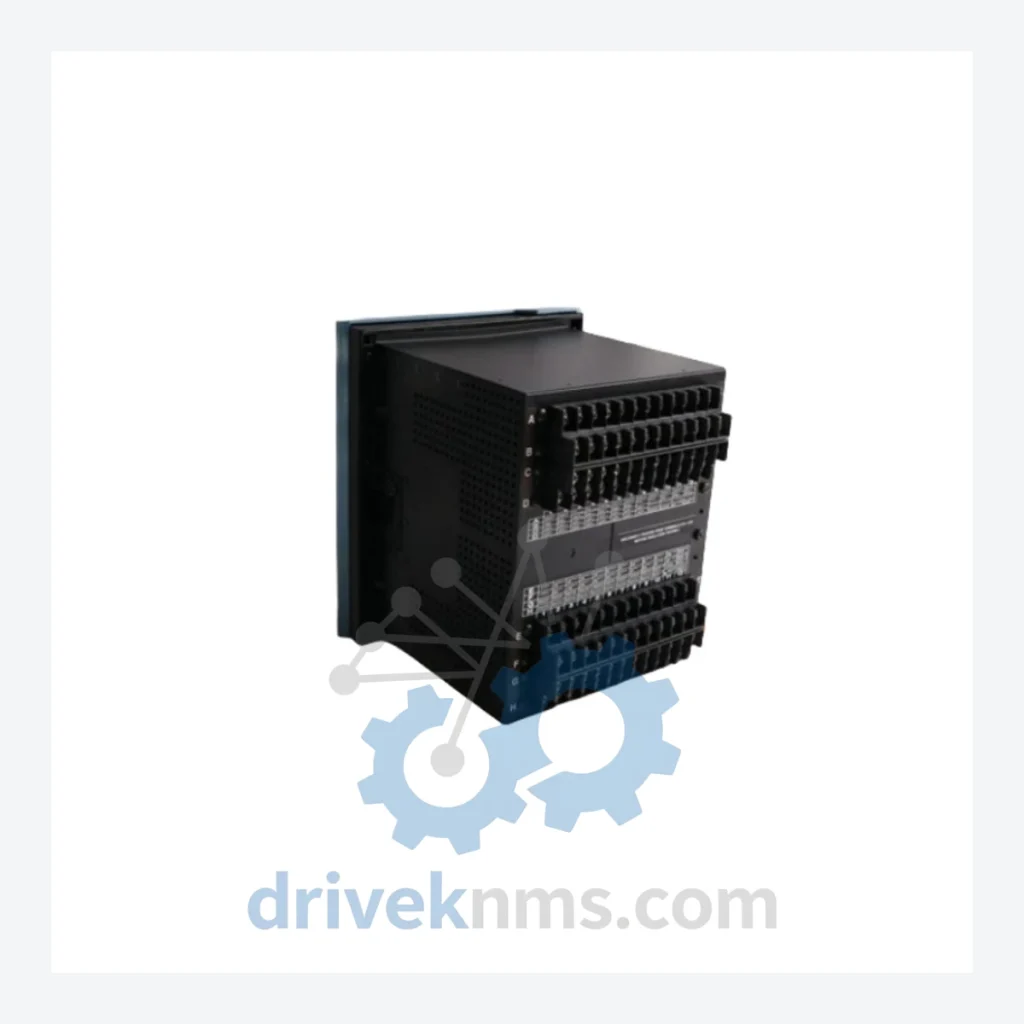
Product Overview
Commercial availability is handled through direct RFQ, model verification and export-oriented follow-up rather than public cart checkout.
Datasheet Preview
Use attached product manuals when available. If the manual is not public yet, request the full file directly through RFQ.
Commercial Path
Product pages on DRIVEKNMS are designed to verify model, brand and series first, then move the buyer into one clean quotation path.
Technical Dossier
When a GE Multilin 745 transformer protection relay fails, the consequences extend far beyond a single module replacement. The 745 series is deeply embedded in substation automation architectures built during the 1990s and 2000s — systems that were engineered around its specific protection logic, communication protocols, and I/O mapping. A forced migration away from this platform does not mean purchasing a new relay. It means re-engineering protection schemes, reconfiguring SCADA integration, revalidating settings with the utility, and in many cases, replacing associated panels and wiring infrastructure. Conservative estimates place full system migration costs in the range of several hundred thousand to over one million USD per substation bay. Against that backdrop, a verified spare 745-W3-P511-G51-HI-R-E-H is not a commodity purchase — it is a capital asset protection decision.
DriveKNMS maintains limited physical stock of this discontinued module. Once existing global inventory is exhausted, no further production is planned by GE Grid Solutions.
| Attribute | Detail |
|---|---|
| Manufacturer | GE Multilin (GE Grid Solutions) |
| Model / Part Number | 745-W3-P511-G51-HI-R-E-H |
| Series | Multilin 745 Transformer Management Relay |
| Function | Transformer differential, overcurrent, and thermal protection relay |
| Thermocouple Input | Yes (as indicated by suffix -H, thermocouple input module) |
| Communication | RS-485 / Modbus RTU (model-dependent; verify firmware version) |
| Country of Origin | Canada |
| Production Status | Discontinued / Obsolete – No longer manufactured |
| Condition Available | New surplus or professionally refurbished |
Note: Electrical parameters not listed above should be verified against the original GE Multilin 745 instruction manual for your specific firmware revision. DriveKNMS does not publish unverified specifications.
The GE Multilin 745 was a standard specification relay for transformer protection in utilities, petrochemical plants, and heavy industrial facilities throughout North America, Europe, and Asia-Pacific. Its protection algorithms — differential restraint characteristics, harmonic restraint, and thermal modeling — were tuned and validated over years of field operation. Replacing it with a modern equivalent is not a plug-and-play exercise.
Protection engineers who have worked with the 745 understand that its settings files, COMTRADE records, and relay coordination studies are all built around its specific operating characteristics. Migrating to a current-generation relay requires a full protection review, new settings calculations, factory acceptance testing, and utility approval — a process that typically takes 6 to 18 months and carries significant engineering labor costs.
For plant managers and asset owners operating aging substation infrastructure, the calculus is straightforward: maintaining a verified spare 745-W3-P511-G51-HI-R-E-H on the shelf extends the operational life of the existing protection system by years, at a fraction of the cost of forced migration. This is not deferred maintenance — it is deliberate asset lifecycle management.
The 745 series is commonly found in installations alongside legacy SCADA systems using DNP3 or Modbus RTU communications, and in substations where the protection relay panel was designed specifically around the 745's physical form factor and terminal layout. Substitution is not straightforward.
Factory management teams facing pressure to retire aging protection relay infrastructure should consider the following maintenance strategy before committing to a capital replacement program:
1. Conduct a single-point-of-failure audit. Identify every 745-series relay in your installation. Any relay without a verified spare on hand represents an unquantified operational risk. A single unplanned failure during peak production or a critical grid event can trigger consequences that dwarf the cost of a spare part.
2. Establish a minimum spare holding policy. For discontinued relays with no direct replacement path, industry practice among asset-intensive operators is to hold a minimum of one spare per three installed units, or one spare per critical bay — whichever is greater. This ratio reflects the reality that sourcing lead times for obsolete parts can extend to 6–24 months as global inventory depletes.
3. Prioritize firmware version consistency. When procuring spare 745 modules, verify that the firmware version matches your installed base. Settings files and communication configurations are firmware-dependent. A mismatch can require re-commissioning work that eliminates the cost advantage of the spare.
4. Document your protection settings and relay configuration files now. Many facilities operating legacy 745 relays do not have current backup copies of their settings files. If the relay fails and the settings are lost, restoration time increases significantly. This is a zero-cost risk mitigation step that should be completed regardless of spare parts strategy.
5. Budget for planned replacement on your schedule, not the market's. The window for sourcing quality 745-W3-P511-G51-HI-R-E-H units at reasonable cost is narrowing. Facilities that defer procurement until a failure occurs will face premium pricing, extended lead times, and the risk of receiving units of unknown provenance. Planned procurement, executed now, preserves both cost control and operational continuity.
DriveKNMS applies a structured 5-step quality process to all discontinued relay modules before shipment:
Step 1 – Visual and Mechanical Inspection: Full external inspection for physical damage, terminal corrosion, and connector integrity. Units with evidence of field damage or improper handling are rejected at intake.
Step 2 – Electrolytic Capacitor Assessment: Aging electrolytic capacitors are a primary failure mode in relay modules manufactured in the 1990s and 2000s. Units are assessed for capacitor condition; where degradation is identified, replacement is performed using specification-matched components.
Step 3 – Firmware Version Verification: The installed firmware version is documented and disclosed to the buyer prior to shipment. This allows the receiving engineer to confirm compatibility with existing settings files and communication configurations before installation.
Step 4 – Pin and Connector Integrity Check: All I/O terminals, communication ports, and backplane connectors are inspected for corrosion, deformation, and contact resistance. Corroded contacts are treated; units with structural connector damage are not offered for sale.
Step 5 – Functional Power-On Test: Where test infrastructure permits, units are powered on and basic self-diagnostic routines are verified. Test results are documented and available upon request.
The 745-W3-P511-G51-HI-R-E-H is a direct form-fit-function replacement for the same part number in any GE Multilin 745 installation. No relay re-engineering is required. The existing settings file can be loaded directly into the replacement unit, and the physical terminal layout is identical — eliminating the need for wiring modifications.
This drop-in replacement capability is the defining advantage of sourcing an original-part-number spare over attempting a cross-manufacturer substitution. Engineering hours for a like-for-like swap are measured in hours, not weeks. There is no protection scheme revalidation, no new utility approval process, and no interruption to the existing SCADA integration.
For facilities operating on tight maintenance windows, the difference between a same-part replacement and a cross-substitute can represent the difference between a planned outage and an extended forced outage.
Q: What warranty applies to discontinued relay modules?
A: DriveKNMS provides a 90-day warranty covering functional defects on all refurbished units, and a 12-month warranty on new surplus stock. Warranty terms are confirmed in writing prior to purchase.
Q: How do I know the unit is genuine and not a counterfeit?
A: All units sourced by DriveKNMS are verified against GE Multilin part number markings, serial number formats, and physical construction standards. Documentation of unit provenance is available upon request. We do not source from unverified secondary market channels.
Q: Should I purchase more than one spare?
A: For any facility with multiple 745-series relays installed, holding at least one spare is a minimum prudent position. Given the declining availability of this model globally, facilities with critical transformer protection applications should consider holding two units. The cost of a second spare is negligible relative to the cost of an unplanned outage while waiting for sourcing.
Q: Can you supply the original GE Multilin settings software?
A: DriveKNMS specializes in hardware supply. For settings software and firmware, we recommend contacting GE Grid Solutions technical support or your regional GE authorized service partner.
© 2026 DriveKNMS. (Status: DRAFT)
Related Paths
GE Multilin UR Series: Comprehensive Module Range and Technical Overview The GE Multilin Universal Relay (UR) Series represents one of…
GE Multilin UR Series: Comprehensive Module Range and Technical Overview The GE Multilin Universal Relay (UR) platform is a modular,…
GE Multilin UR Series: Comprehensive Module Range and Technical Overview The GE Multilin UR (Universal Relay) platform is one of…