
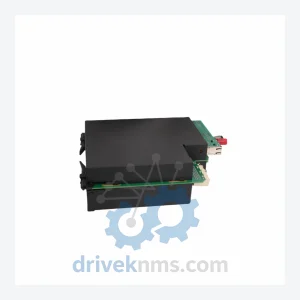
GE Multilin UR Series Modules: UR9GH UR 9GH CPU Module —
GE Multilin UR Series: Comprehensive Module Range and Technical Overview The GE Multilin Universal Relay (UR) Series represents one of…
Model: 750-P5-G5-S5-HI-A1-R-E
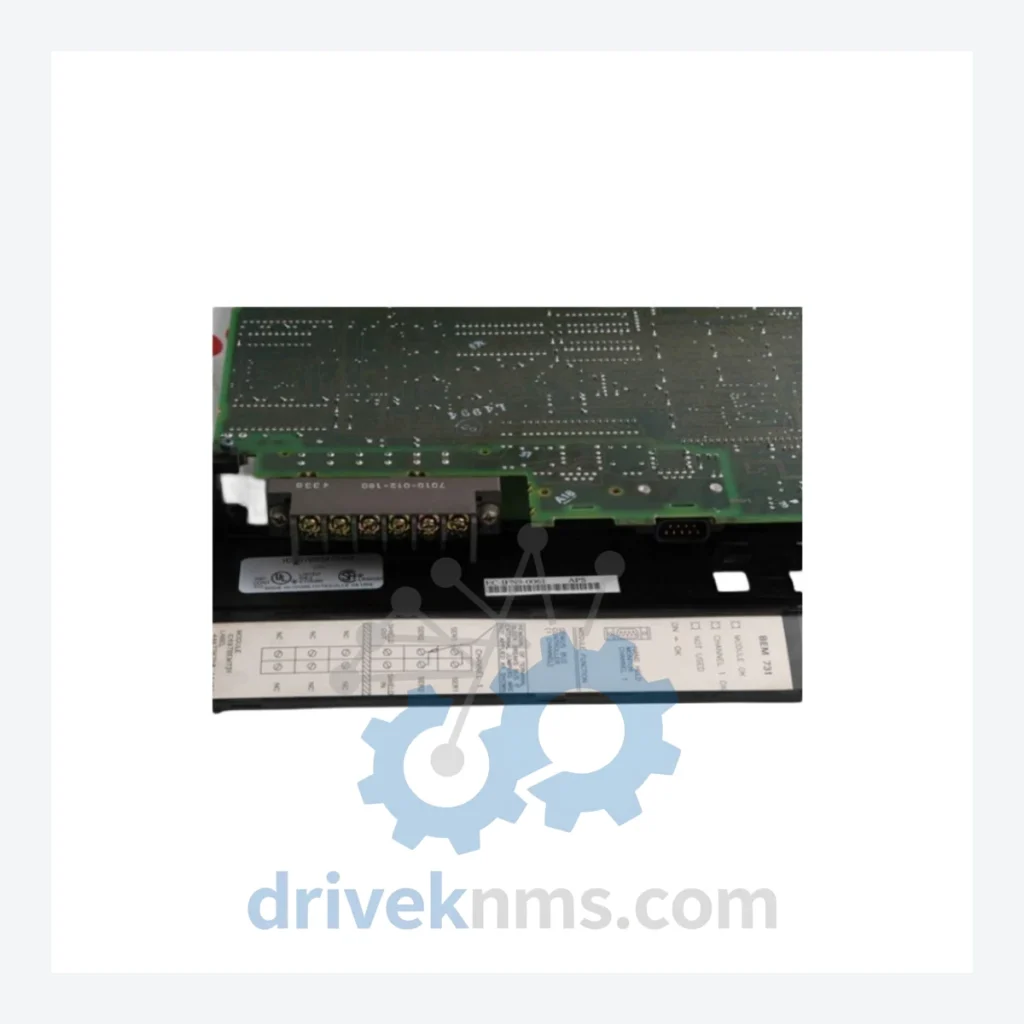
Product Overview
Commercial availability is handled through direct RFQ, model verification and export-oriented follow-up rather than public cart checkout.
Datasheet Preview
Use attached product manuals when available. If the manual is not public yet, request the full file directly through RFQ.
Commercial Path
Product pages on DRIVEKNMS are designed to verify model, brand and series first, then move the buyer into one clean quotation path.
Technical Dossier
When a GE Multilin 750 Series relay fails in an aging substation or industrial distribution system, the consequences extend far beyond the cost of the unit itself. A forced migration to a modern protection platform — including new IEDs, updated SCADA integration, revised protection coordination studies, and field commissioning — routinely runs into six or seven figures. For facilities operating on tight capital budgets, that is not a scheduled upgrade; it is an unplanned crisis. DriveKNMS maintains verified stock of the GE 750-P5-G5-S5-HI-A1-R-E, a feeder protection relay from GE Multilin's 750 Series that has been discontinued from active production. Securing a replacement unit now is the lowest-cost path to keeping your existing protection scheme intact.
| Manufacturer | GE Multilin (GE Grid Solutions) |
|---|---|
| Model / Part Number | 750-P5-G5-S5-HI-A1-R-E |
| Series | Multilin 750 Feeder Protection System |
| Product Type | Feeder Protection Relay / IED |
| Production Status | Discontinued – No longer manufactured. Replacement units sourced from verified secondary market inventory. |
| Order Code Breakdown | P5: 5A CT input | G5: Ground CT 5A | S5: Sensitive Ground 5A | HI: High-speed I/O | A1: AC power supply | R: RS-485 communications | E: Enhanced feature set |
| Country of Origin | Canada |
| Compatible Systems | GE Multilin 750 Series protection schemes; medium-voltage feeder bays; industrial distribution switchgear |
The GE Multilin 750 Series was deployed extensively across utility substations, petrochemical plants, mining operations, and heavy industrial facilities throughout the 1990s and 2000s. Its protection logic — overcurrent, ground fault, reclosing, and demand metering — was engineered into site-specific protection coordination studies that took months to develop and validate. Those studies are tied to the relay's specific firmware behavior and I/O architecture.
Replacing the 750 with a modern IED is not a plug-and-swap operation. It requires a full protection review, new setting files, updated single-line diagrams, panel wiring modifications, and in many jurisdictions, a formal re-commissioning sign-off by a licensed protection engineer. For a single feeder bay, that process typically takes 4–8 weeks and carries engineering costs that dwarf the price of a spare relay.
For plant managers and reliability engineers operating facilities where the 750 Series remains embedded in the protection architecture, the practical strategy is straightforward: maintain a minimum of one cold-standby spare per critical feeder application. The 750-P5-G5-S5-HI-A1-R-E is a specific order code — not all 750 variants are interchangeable. Sourcing the exact configuration now, while secondary market stock exists, eliminates the risk of a prolonged outage caused by an unavailable part.
Facilities that have deferred capital replacement programs face a common dilemma: the installed base of legacy protection relays is functional, but the supply chain for spare parts is shrinking each year. The following approach has been used by asset managers in power utilities, oil and gas, and heavy manufacturing to extend the operational life of legacy protection systems without triggering full-scale modernization projects.
1. Conduct a relay census. Identify every 750 Series unit on site, its order code, firmware version, and current protection function. This inventory becomes the basis for a spare parts strategy.
2. Prioritize by criticality. Feeders supplying continuous process loads — compressors, furnaces, critical pumping stations — carry the highest consequence of failure. These applications warrant dedicated cold-standby spares.
3. Standardize firmware versions. Mixed firmware environments create commissioning risk when a spare is installed. Verify that replacement units match the firmware revision of the installed fleet before storage.
4. Establish a periodic inspection cycle. Even stored relays require attention. Electrolytic capacitors in power supply boards degrade over time regardless of operating hours. A biennial bench test of stored spares — including power-up verification and output relay functional checks — prevents the scenario where a spare fails on installation.
5. Negotiate long-term supply agreements. Secondary market availability of specific 750 order codes is finite. Locking in pricing and reserving units with a trusted supplier now is materially cheaper than emergency procurement during an outage.
This approach consistently delivers 5–10 additional years of reliable operation from legacy protection infrastructure at a fraction of the capital cost of platform migration.
Obsolete relay units sourced from the secondary market carry inherent risk if not properly evaluated. DriveKNMS applies a 5-step inspection protocol to every 750 Series unit before it is offered for sale.
Step 1 – Visual and mechanical inspection. Full external examination for physical damage, terminal corrosion, case integrity, and label legibility. Units with evidence of field damage or unauthorized modification are rejected.
Step 2 – Electrolytic capacitor assessment. The power supply board of the 750 Series uses electrolytic capacitors that are subject to age-related degradation. Each unit undergoes ESR measurement and capacitance verification. Units showing out-of-tolerance readings are flagged and not offered as operational spares.
Step 3 – Firmware version verification. The firmware revision is read and documented. This information is provided to the buyer to confirm compatibility with the installed fleet prior to shipment.
Step 4 – Pin and connector inspection. All rear-panel terminal blocks and communication ports are inspected for corrosion, bent pins, and contact integrity. Affected contacts are cleaned or the unit is downgraded.
Step 5 – Functional power-up test. The unit is powered and basic self-diagnostic output is verified. Communication port response is confirmed where test equipment permits.
Condition grade and any observed findings are disclosed in writing prior to order confirmation. No unit is represented as new unless it is factory-sealed with verifiable provenance.
The 750-P5-G5-S5-HI-A1-R-E is a direct drop-in replacement for any installed 750 unit sharing the same order code. The relay mounts in the original panel cutout, connects to existing wiring via the original terminal block layout, and accepts the existing setting file without modification — provided firmware versions are compatible. There is no requirement for panel rewiring, new engineering drawings, or protection re-coordination. Downtime is limited to the physical swap and a functional verification test, which a qualified protection technician can complete in a single shift. This is the defining advantage of maintaining exact-match spares over pursuing a forced platform migration.
What warranty applies to a discontinued relay?
DriveKNMS provides a 90-day warranty covering unit functionality under normal operating conditions. The warranty covers failure attributable to the unit itself, not installation errors or system faults external to the relay.
How do I confirm the unit is genuine and not counterfeit?
GE Multilin 750 Series units carry traceable serial numbers. DriveKNMS provides the serial number prior to shipment so buyers can cross-reference with GE's service records where accessible. Physical inspection reports and condition photographs are available on request.
Should I buy more than one unit?
For any feeder application classified as critical — where an unplanned outage carries production loss or safety implications — a minimum of one cold-standby spare is the standard recommendation. Facilities with multiple 750 Series installations of the same order code should consider a shared pool of two to three units. Secondary market availability of specific order codes is not guaranteed to persist; procurement decisions made under outage pressure are consistently more expensive than planned purchases.
Can you source other 750 Series order codes?
Yes. Contact DriveKNMS with your specific order code and quantity requirement. Availability varies by configuration.
Related Paths
GE Multilin UR Series: Comprehensive Module Range and Technical Overview The GE Multilin Universal Relay (UR) Series represents one of…
GE Multilin UR Series: Comprehensive Module Range and Technical Overview The GE Multilin Universal Relay (UR) platform is a modular,…
GE Multilin UR Series: Comprehensive Module Range and Technical Overview The GE Multilin UR (Universal Relay) platform is one of…