
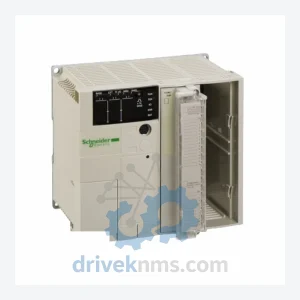
Schneider TSX3721001 Modular Base Controller – Momentum Series
Schneider TSX3721001 Modular Base Controller: Procurement Strategy & Asset Value in a Constrained Supply Chain The Schneider Electric TSX3721001 is…
Model: SPM10KL
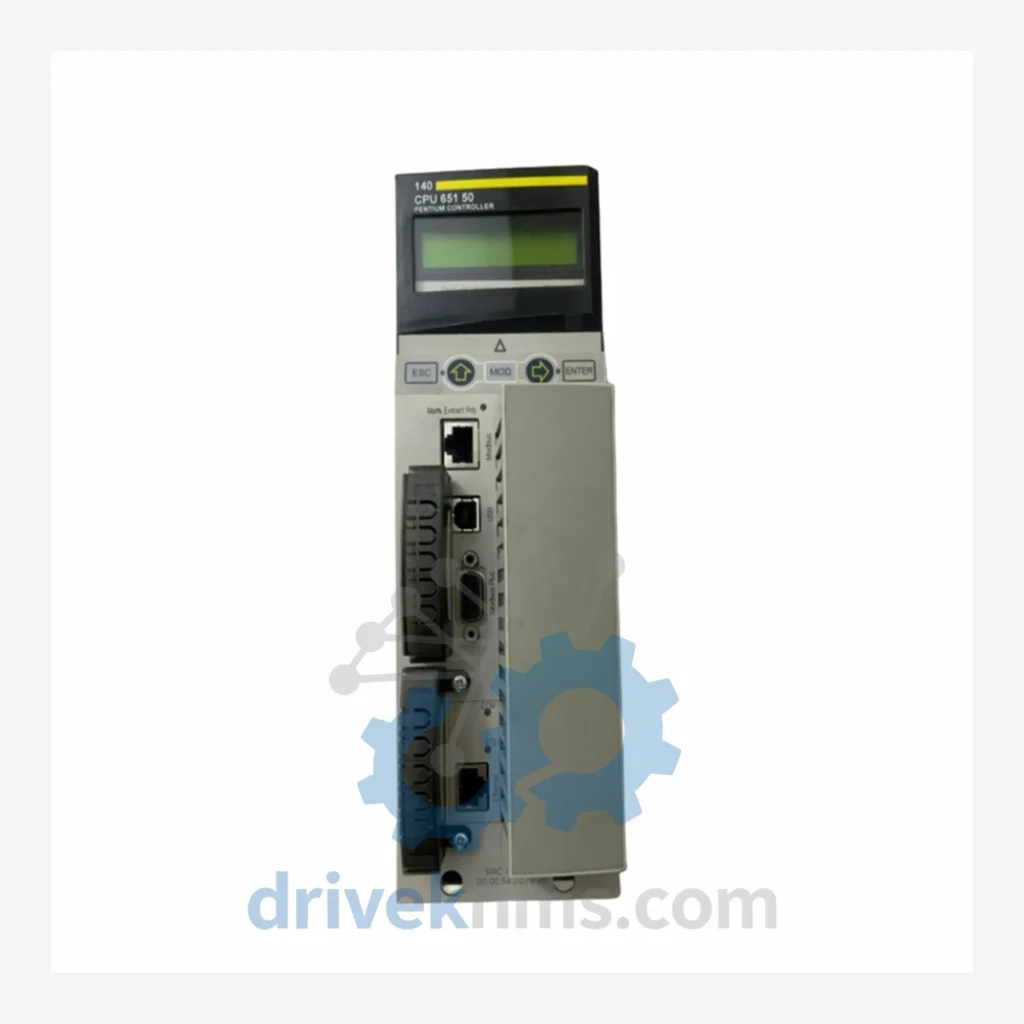
Product Overview
Commercial availability is handled through direct RFQ, model verification and export-oriented follow-up rather than public cart checkout.
Datasheet Preview
Use attached product manuals when available. If the manual is not public yet, request the full file directly through RFQ.
Commercial Path
Product pages on DRIVEKNMS are designed to verify model, brand and series first, then move the buyer into one clean quotation path.
Technical Dossier
When a UPS power supply module fails inside a legacy Schneider Electric (formerly MGE UPS Systems) installation, the consequences extend far beyond a single component. For facilities running continuous industrial processes — data centers, manufacturing lines, water treatment plants, or critical infrastructure — an unplanned UPS failure can trigger a cascade: uncontrolled shutdowns, corrupted PLCs, damaged downstream equipment, and in the worst cases, a forced migration to an entirely new power protection architecture. A full system replacement, including engineering, installation, commissioning, and process revalidation, routinely runs into the hundreds of thousands of dollars. The SPM10KL power supply module is one of the components that stands between your existing investment and that cost.
DriveKNMS holds verified physical stock of the SPM10KL. This is not a catalog listing. Availability is limited and not guaranteed beyond current confirmed inventory.
| Parameter | Detail |
|---|---|
| Part Number | SPM10KL |
| Manufacturer | Schneider Electric (MGE UPS Systems) |
| Component Type | Internal UPS Power Supply Module |
| Product Line | MGE Galaxy / Comet / Pulsar series (verify compatibility with your specific chassis before ordering) |
| Country of Origin | France |
| Discontinuation Status | Obsolete – no longer manufactured or supplied through standard Schneider Electric distribution channels |
| Replacement Availability | No direct OEM replacement exists; cross-reference required for alternative sourcing |
Note: Electrical parameters (input/output voltage, current ratings, wattage) are not published here to prevent specification errors. Contact us with your chassis model and serial number for confirmed compatibility verification before purchase.
The MGE UPS Systems product line was absorbed into Schneider Electric's portfolio following the 2007 acquisition. Over the subsequent years, legacy MGE internal components — including power supply modules such as the SPM10KL — were progressively discontinued as Schneider consolidated its product catalog around newer Galaxy and Easy UPS platforms.
The problem this creates for end users is structural. A facility that installed an MGE Galaxy 3000 or Comet EX system in the early 2000s built its electrical protection architecture around that hardware. The control logic, bypass switching, battery management firmware, and physical form factor are all specific to that generation. Replacing the UPS system entirely means re-engineering the electrical room, requalifying the load protection scheme, and in regulated industries, re-submitting documentation to compliance bodies. None of that is fast, and none of it is cheap.
The SPM10KL power supply module is an internal component that, when it fails, renders the UPS non-functional. Because it is no longer available through Schneider Electric's service network, facilities without a spare on hand face two options: source it from the secondary market, or begin the system replacement process. For operations where the UPS protects critical loads — server rooms, surgical suites, process control systems — the second option is rarely acceptable on short notice.
Maintaining a verified spare of the SPM10KL is not a speculative purchase. It is a defined risk mitigation measure with a calculable return: the cost of the spare versus the cost of unplanned downtime or forced capital expenditure.
For operations managers and facility engineers facing pressure to defer capital expenditure, the following approach has been used successfully to extend the operational life of legacy MGE and early Schneider Electric UPS systems well beyond their nominal end-of-life dates:
1. Component-level failure mode mapping. Identify the specific internal modules — power supply boards, control cards, display modules, fan assemblies — that represent single points of failure in your UPS chassis. For each, determine whether a secondary market spare exists and at what cost. This converts an abstract risk into a quantified exposure.
2. Proactive battery replacement on a fixed schedule. Battery degradation is the most common cause of UPS failure in legacy systems. Replacing battery strings on a 3–5 year cycle, regardless of apparent condition, eliminates the most frequent failure mode and extends the useful life of the surrounding electronics.
3. Electrolytic capacitor monitoring. In power supply modules of this generation, electrolytic capacitors are the component most likely to degrade over time. Capacitor bulging, leakage, or elevated ESR (equivalent series resistance) are detectable during scheduled maintenance and are a reliable leading indicator of imminent power supply failure. Replacing capacitors before failure is significantly less disruptive than replacing the module after failure.
4. Firmware version control. Legacy UPS systems often have firmware dependencies between internal modules. Before replacing any control or power supply component, verify that the firmware version on the replacement matches the version expected by the host system. A mismatch can cause communication errors or prevent the UPS from operating correctly.
5. Environmental controls. Legacy power electronics are sensitive to operating temperature and humidity. Maintaining the electrical room within the manufacturer's specified environmental range — typically 20–25°C, below 95% relative humidity non-condensing — measurably extends component life. This is a zero-cost intervention for facilities that already have HVAC in place.
Applied consistently, these measures allow a well-maintained legacy UPS system to remain in reliable service for 5–10 years beyond the point at which OEM support was withdrawn. The total cost of this approach is a fraction of a system replacement project.
All obsolete and legacy components supplied by DriveKNMS go through a structured 5-step inspection process before dispatch:
Step 1 – Visual and mechanical inspection. Physical examination for case damage, connector deformation, corrosion on pins and solder joints, and evidence of prior repair or rework.
Step 2 – Electrolytic capacitor assessment. Capacitors are inspected for bulging, electrolyte leakage, and discoloration. Where test equipment permits, ESR is measured against reference values for the component age and type.
Step 3 – Firmware and label verification. Part number markings, date codes, and where applicable, firmware version labels are cross-referenced against known production records to confirm authenticity and revision level.
Step 4 – Pin and contact integrity check. All connector pins are inspected for oxidation, bending, and contact resistance. Corroded contacts are a common failure mode in stored legacy components and are a disqualifying condition.
Step 5 – Functional test (where applicable). Where test fixtures are available for the specific module type, a powered functional test is performed. Results are documented and available on request.
Components that do not pass all applicable steps are not offered for sale. Condition grade (New, Refurbished-Grade-A, or Tested-Used) is disclosed at the time of quotation.
Drop-in replacement. The SPM10KL is a direct form-fit-function replacement for the original module in compatible MGE chassis. No modification to the host system is required.
No reprogramming required. Unlike control cards or communication modules, a power supply replacement in this product line does not require firmware reconfiguration or system re-commissioning in standard replacement scenarios. Verify with your service documentation before installation.
Avoids engineering redesign costs. Sourcing a like-for-like spare eliminates the need to engage a systems integrator for a UPS replacement project. The cost differential between a spare module and a full system replacement project is typically one to two orders of magnitude.
Supports deferred capital expenditure. For facilities operating under capital budget constraints, maintaining legacy systems with verified spare components is a defensible and documented asset management strategy.
What warranty applies to obsolete parts?
DriveKNMS provides a 90-day warranty against defects in material and workmanship on all components supplied. Warranty terms for refurbished units are stated explicitly in the quotation. Extended warranty arrangements are available on request for volume purchases.
How do I know the part is genuine and not counterfeit?
All components are sourced from traceable channels — decommissioned equipment, authorized surplus dealers, and verified industrial estates. Part markings, date codes, and physical construction are inspected against known-good references. We do not source from unverified brokers. Documentation of sourcing chain is available for regulated industries upon request.
Should I buy more than one unit?
For any legacy system where the SPM10KL is a single point of failure, holding at least one verified spare on-site is the minimum prudent position. For facilities with multiple identical UPS units, or where the UPS protects a critical load with no redundancy, holding two units is a reasonable risk management decision. The secondary market for this component will not improve over time.
© 2026 DriveKNMS. (Status: DRAFT)
Related Paths
Schneider TSX3721001 Modular Base Controller: Procurement Strategy & Asset Value in a Constrained Supply Chain The Schneider Electric TSX3721001 is…
Schneider Electric VW3A Series: Comprehensive Module Range and Technical Overview The Schneider Electric (Telemecanique) VW3A series represents the definitive accessory…
Schneider Electric TSX DSY Series: Comprehensive Module Range and Technical Overview The Schneider Electric TSX DSY series represents the discrete…