
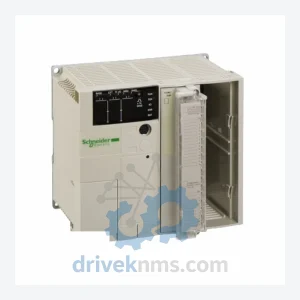
Schneider TSX3721001 Modular Base Controller – Momentum Series
Schneider TSX3721001 Modular Base Controller: Procurement Strategy & Asset Value in a Constrained Supply Chain The Schneider Electric TSX3721001 is…
Model: TSXDSY32T2K
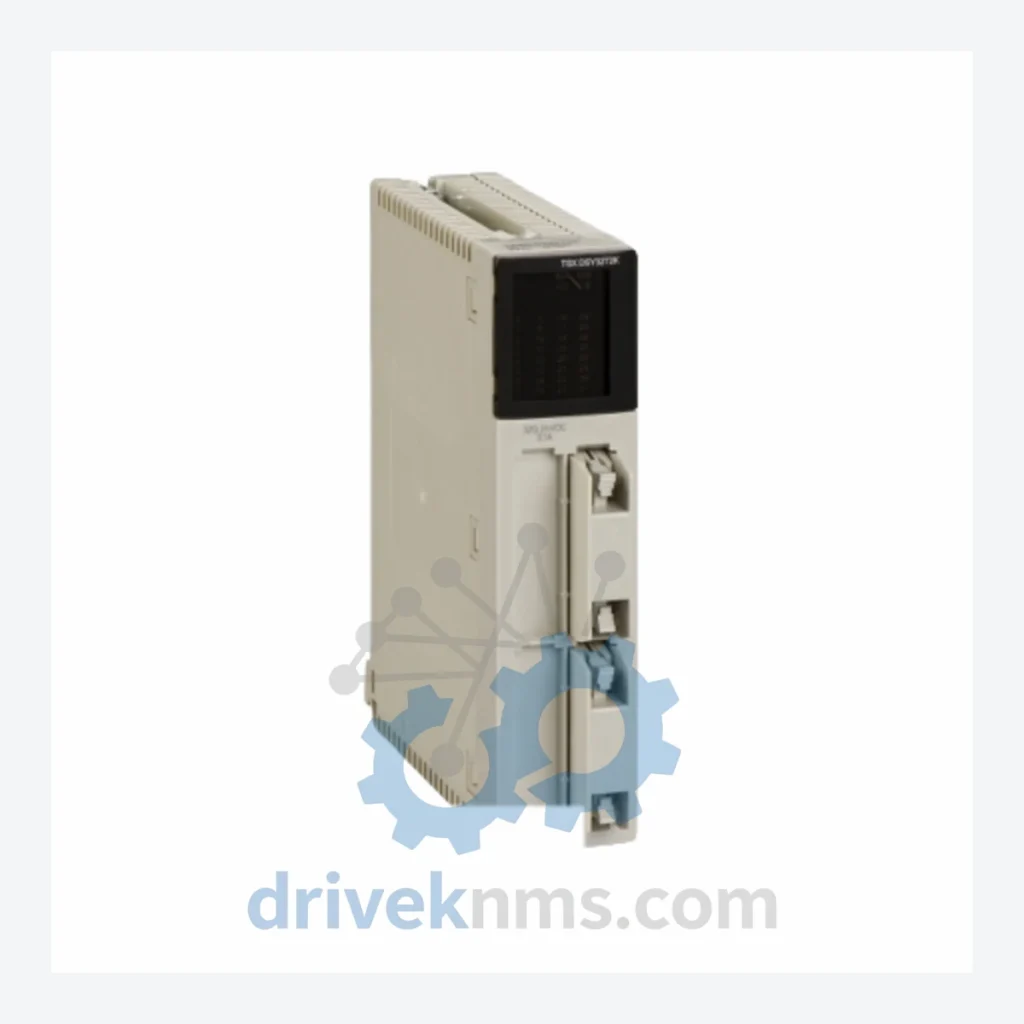
Product Overview
Commercial availability is handled through direct RFQ, model verification and export-oriented follow-up rather than public cart checkout.
Datasheet Preview
Use attached product manuals when available. If the manual is not public yet, request the full file directly through RFQ.
Commercial Path
Product pages on DRIVEKNMS are designed to verify model, brand and series first, then move the buyer into one clean quotation path.
Technical Dossier
The Schneider Electric TSX DSY series represents the discrete output module family within the TSX Micro and TSX Premium programmable automation controller (PAC) platforms. These modules have been deployed extensively across global heavy industry sectors including petrochemical refineries, nuclear power auxiliary systems, water treatment facilities, and continuous-process manufacturing plants. The TSX DSY range interfaces directly with the TSX rack backplane, delivering transistor or relay-based digital outputs to field actuators, solenoid valves, motor starters, and signal lamps. Their compact DIN-rail-compatible form factor and deterministic scan-cycle integration made them a standard specification item for European and Asian industrial automation projects throughout the 1990s and 2000s. As of 2026, the TSX Micro and TSX Premium platforms have entered the end-of-commercialization phase, making reliable spare parts sourcing a critical operational requirement for facilities running long-lifecycle assets.
The TSX DSY module line was introduced as part of Schneider Electric's (formerly Telemecanique) TSX 17, TSX 37, and TSX 57 controller families. Early iterations used relay output technology with mechanical contact isolation, suited to mixed-voltage field wiring environments. Subsequent generations introduced solid-state transistor outputs (NPN and PNP sink/source configurations) with integrated short-circuit and overload protection, reducing field wiring faults and eliminating contact wear. The TSX Premium platform (TSX 57 CPU family) introduced higher-density output modules with 32-point and 64-point configurations on a single slot, reducing rack space requirements. Communication between the CPU and DSY modules is handled via the TSX backplane bus (X-bus), which operates at a fixed scan rate synchronized to the PLC task cycle. Compatibility constraints exist between TSX Micro racks (TSX RKY4, RKY6, RKY8) and TSX Premium racks (TSX RKY12EX), and DSY modules are not cross-compatible between these two rack families. Engineers maintaining mixed-generation installations must verify rack type, power supply rating, and firmware revision before substituting modules.
The following SKUs represent verified, commonly stocked models within the Schneider Electric TSX DSY discrete output module family. Each entry reflects a distinct electrical specification or channel density variant.
TSXDSY08T2: 8-channel transistor output, 24 VDC, 0.5 A per channel, source type, TSX Micro rack.
TSXDSY08T22: 8-channel transistor output, 24 VDC, 2 A per channel, source type, protected outputs.
TSXDSY08R4: 8-channel relay output, 24–240 VAC/VDC, 2 A per channel, NO contacts.
TSXDSY08R5: 8-channel relay output, 24–240 VAC/VDC, 5 A per channel, NO contacts, high-current variant.
TSXDSY16T2: 16-channel transistor output, 24 VDC, 0.5 A per channel, source type, TSX Micro.
TSXDSY16T22: 16-channel transistor output, 24 VDC, 2 A per channel, source type, protected.
TSXDSY16R4: 16-channel relay output, 24–240 VAC/VDC, 2 A per channel, NO contacts.
TSXDSY16R5: 16-channel relay output, 24–240 VAC/VDC, 5 A per channel, high-current relay.
TSXDSY32T2: 32-channel transistor output, 24 VDC, 0.5 A per channel, source type, TSX Premium.
TSXDSY32T2K: 32-channel transistor output, 24 VDC, 0.5 A per channel, source type, connector kit included, TSX Premium rack.
TSXDSY32T22: 32-channel transistor output, 24 VDC, 2 A per channel, source type, high-drive variant.
TSXDSY32R4: 32-channel relay output, 24–240 VAC/VDC, 2 A per channel, NO contacts, TSX Premium.
TSXDSY64T2: 64-channel transistor output, 24 VDC, 0.1 A per channel, high-density, TSX Premium rack only.
TSXDSY64T22K: 64-channel transistor output, 24 VDC, 0.5 A per channel, connector kit included, high-density.
TSXDSY08S5: 8-channel solid-state relay output, 24–240 VAC, 2 A per channel, zero-crossing switching.
TSXDSY16S5: 16-channel solid-state relay output, 24–240 VAC, 2 A per channel, zero-crossing switching.
Schneider Electric formally announced the end-of-sale for the TSX Micro and TSX Premium product lines, with end-of-repair support timelines extending through the late 2020s depending on region and service contract. For facilities that cannot justify a full migration to the Modicon M340 or M580 platform, maintaining a verified spare parts inventory of TSX DSY modules is the primary risk mitigation strategy. DriveKNMS maintains stock of new-surplus, refurbished, and tested-used TSX DSY modules sourced from decommissioned plant inventories, OEM overstock, and authorized secondary market channels. All units are catalogued by part number, hardware revision, and firmware compatibility level. For obsolete variants such as the TSXDSY08T2 and TSXDSY08R5, DriveKNMS provides cross-reference verification against current Schneider Electric replacement recommendations (e.g., migration to BMX DDO series on M340 racks) and can supply both the legacy module and the migration adapter hardware where applicable.
TSX DSY modules present specific test challenges due to their backplane-dependent operation: output channels cannot be functionally verified without a live TSX rack, CPU, and configured application program. DriveKNMS operates dedicated TSX Micro and TSX Premium test benches with licensed Unity Pro / PL7 Pro software environments. Each module undergoes the following verification protocol before shipment: (1) visual inspection of connector pins, PCB, and output terminal blocks for mechanical damage or corrosion; (2) backplane insertion test confirming module recognition by the CPU and absence of I/O fault flags; (3) channel-by-channel output activation test using a configured forcing routine, with load verification on each output point; (4) thermal soak at rated load for relay output variants to confirm contact integrity; (5) final documentation of test results, hardware revision, and firmware version issued with each unit. Modules that fail any stage are quarantined and not returned to stock.
Related Paths
Schneider TSX3721001 Modular Base Controller: Procurement Strategy & Asset Value in a Constrained Supply Chain The Schneider Electric TSX3721001 is…
Schneider Electric VW3A Series: Comprehensive Module Range and Technical Overview The Schneider Electric (Telemecanique) VW3A series represents the definitive accessory…
Schneider Electric LC1D Series: Comprehensive Module Range and Technical Overview The Schneider Electric LC1D Series (TeSys D) is one of…