
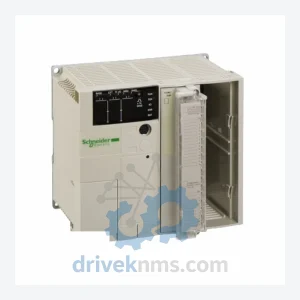
Schneider TSX3721001 Modular Base Controller – Momentum Series
Schneider TSX3721001 Modular Base Controller: Procurement Strategy & Asset Value in a Constrained Supply Chain The Schneider Electric TSX3721001 is…
Model: 140CRA31200
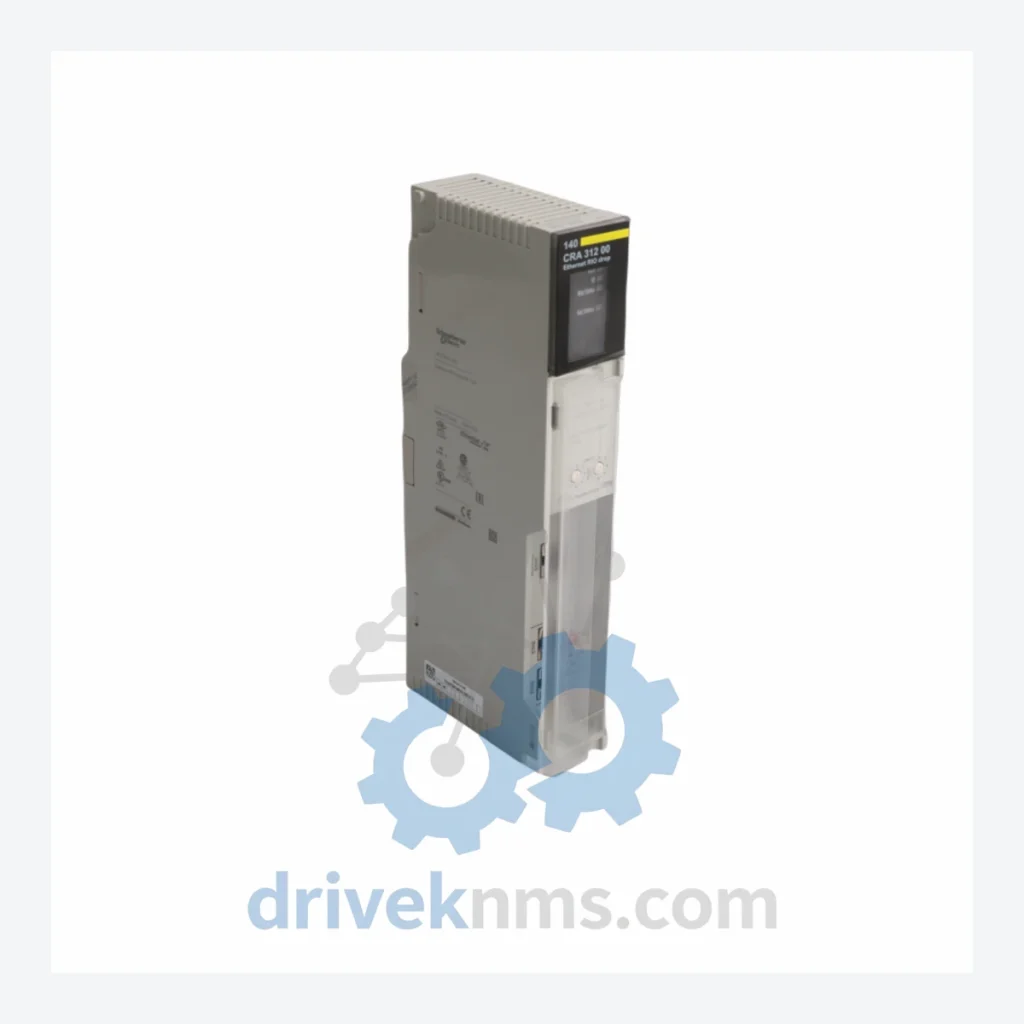
Product Overview
Commercial availability is handled through direct RFQ, model verification and export-oriented follow-up rather than public cart checkout.
Datasheet Preview
Use attached product manuals when available. If the manual is not public yet, request the full file directly through RFQ.
Commercial Path
Product pages on DRIVEKNMS are designed to verify model, brand and series first, then move the buyer into one clean quotation path.
Technical Dossier
The Schneider Electric Modicon Quantum 140 series is a high-availability programmable automation controller (PAC) platform deployed across the most demanding segments of global heavy industry. Installations span continuous-process environments including petrochemical refineries, offshore oil and gas platforms, nuclear power generation facilities, water treatment infrastructure, and large-scale chemical manufacturing plants. The platform's modular backplane architecture, deterministic Modbus Plus and Ethernet I/O scanning, and IEC 61131-3 compliant Unity Pro programming environment have made it the reference standard for safety-critical and high-uptime automation since its commercial introduction in the early 1990s. The 140-series designation covers the full range of rack-mounted modules — CPUs, discrete I/O, analog I/O, communication adapters, power supplies, and specialty function modules — all sharing a common backplane bus and a unified addressing scheme. Global installed base estimates place Quantum 140 deployments in excess of 500,000 racks across more than 100 countries, making long-term spare parts availability a primary operational concern for plant asset managers.
The Quantum 140 platform traces its lineage to the Modicon 984 series, which established the foundational backplane and I/O addressing conventions later formalized in the 140-series product numbering. The first-generation Quantum CPUs (140CPU11302, 140CPU11303) introduced in the mid-1990s operated on a proprietary Modbus Plus network at 1 Mbit/s, with local rack I/O scanning handled by a dedicated coprocessor. Memory was limited to 64 KB of user logic, and the programming interface required Concept software running on Windows 3.x or NT 4.0.
The second architectural generation, introduced circa 2000–2004, brought the 140CPU43412A and 140CPU53414A processors with expanded user memory (up to 7 MB), integrated Ethernet ports, and compatibility with the Unity Pro development environment. This generation also introduced the Hot Standby redundancy modules (140CHS11000, 140CHS21000), enabling dual-CPU configurations with sub-100ms failover for critical process loops.
The third and current generation — represented by the 140CPU65150 and 140CPU65160 — added dual Ethernet ports with Device Net and Profibus-DP master capability, expanded to 3.5 MB of user application memory, and introduced cybersecurity hardening features including role-based access control and encrypted firmware updates. Unity Pro XL v13 and later versions provide the primary programming and diagnostic interface for this generation.
Compatibility across generations is constrained by backplane slot width (all 140-series modules use the same physical connector), but CPU firmware versions must be matched to I/O module firmware revisions to avoid bus communication faults. Remote I/O drops using the 140CRA31200 adapter are compatible with all CPU generations provided the RIO scanner module (140CRP93100 or 140CRP93200) firmware is at revision 2.0 or higher.
CPU Modules
Remote I/O Communication Modules
Discrete Input (DI) Modules
Discrete Output (DO) Modules
Analog Input (AI) Modules
Analog Output (AO) Modules
Power Supply Modules
Hot Standby / Redundancy Modules
Schneider Electric formally placed the majority of first- and second-generation Quantum 140 CPU and communication modules into End of Life (EOL) or End of Commercialization (EOC) status between 2015 and 2022. Modules including the 140CPU11302, 140CPU43412A, 140CRP93100, and 140CHS11000 are no longer manufactured, and OEM replacement stock is exhausted through standard distribution channels. However, the operational lifespan of a Quantum 140 installation routinely extends 20–30 years, meaning that plant operators face a multi-decade requirement for spare parts that the OEM can no longer fulfill.
DriveKNMS maintains a dedicated inventory of tested, pull-out, and refurbished Quantum 140 modules sourced from decommissioned plant equipment, controlled factory overstock, and verified third-party suppliers. Each unit is catalogued by part number, firmware revision, and physical condition grade. For obsolete CPUs and RIO adapters — including the 140CRA31200 — DriveKNMS provides firmware version verification, backplane connector inspection, and functional loop testing prior to shipment. Emergency same-day dispatch is available for critical process shutdowns. Contact the procurement team with your full BOM or individual part numbers for availability confirmation and lead time.
Quantum 140 modules present specific quality control challenges due to the complexity of their backplane bus communication protocol and the age-related failure modes common in long-fielded industrial electronics. DriveKNMS applies a structured test protocol to every 140-series module processed through its facility.
For CPU modules, the test sequence includes: power-on self-test (POST) verification, user memory read/write cycle testing across the full address space, Ethernet port link negotiation and packet integrity testing, and Unity Pro connectivity validation using a reference PLC rack. For RIO adapter modules such as the 140CRA31200, the protocol adds Modbus Plus token-passing verification, I/O drop enumeration with a minimum of four downstream I/O modules, and scan cycle timing measurement against the published specification of 5 ms per drop. Analog I/O modules undergo calibration verification against NIST-traceable reference standards, with channel-by-channel linearity and offset error measurement recorded in the test report. All modules are subjected to a 48-hour burn-in at 50°C ambient prior to final inspection and packaging.
Related Paths
Schneider TSX3721001 Modular Base Controller: Procurement Strategy & Asset Value in a Constrained Supply Chain The Schneider Electric TSX3721001 is…
Schneider Electric VW3A Series: Comprehensive Module Range and Technical Overview The Schneider Electric (Telemecanique) VW3A series represents the definitive accessory…
Schneider Electric TSX DSY Series: Comprehensive Module Range and Technical Overview The Schneider Electric TSX DSY series represents the discrete…