
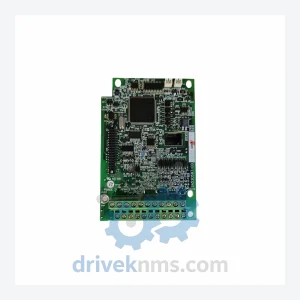
FUJI SA531121-03 E11-C4PCB Drive Board
FUJI SA531121-03 Series: Comprehensive Drive Board Range and Technical Overview The FUJI SA531121-03 series drive boards are core printed circuit…
Model: FTU123B
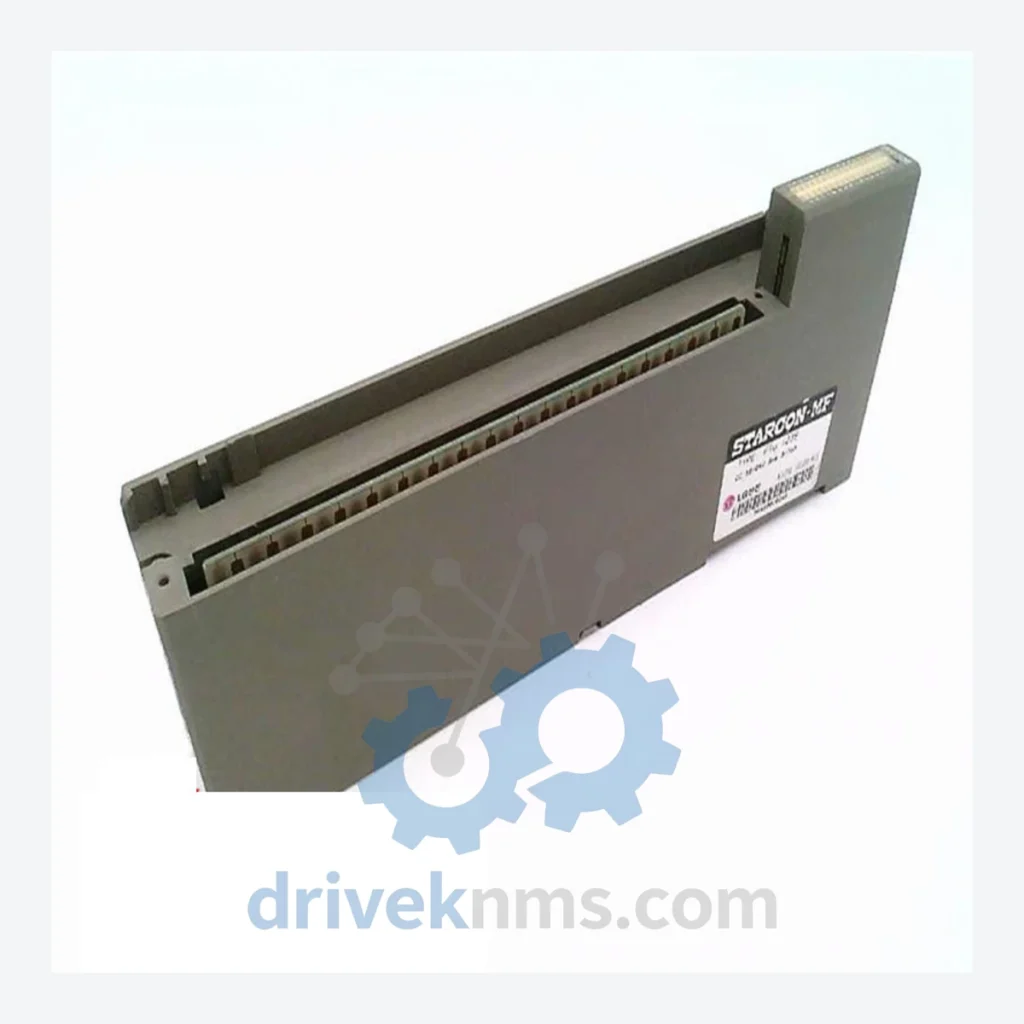
Product Overview
Commercial availability is handled through direct RFQ, model verification and export-oriented follow-up rather than public cart checkout.
Datasheet Preview
Use attached product manuals when available. If the manual is not public yet, request the full file directly through RFQ.
Commercial Path
Product pages on DRIVEKNMS are designed to verify model, brand and series first, then move the buyer into one clean quotation path.
Technical Dossier
When a digital input module fails on a legacy Fuji MICREX-F PLC line, the consequences are not limited to a single machine going dark. The entire production cell dependent on that controller stops. For facilities running MICREX-F-based automation — systems that have been in continuous service for 15 to 25 years — sourcing a replacement FTU123B is not a procurement task. It is a crisis management exercise.
A forced migration away from a MICREX-F platform, triggered by a single unavailable I/O module, routinely costs manufacturers between USD 300,000 and USD 2,000,000 when engineering hours, system integration, revalidation, and production downtime are fully accounted for. DriveKNMS maintains verified stock of the FTU123B specifically to eliminate that scenario. One module. One decision. Years of continued operation.
| Parameter | Detail |
|---|---|
| Part Number | FTU123B |
| Manufacturer | Fuji Electric |
| Series | MICREX-F |
| Module Type | Digital Input (DI) |
| Country of Origin | Japan |
| Product Status | Discontinued / Obsolete |
| Compatible Systems | Fuji MICREX-F Series PLC |
| Condition Available | New Old Stock (NOS) / Tested Refurbished |
Note: Electrical parameters (input voltage range, channel count, response time) are not published here to prevent specification errors. Confirmed datasheet details are provided upon inquiry.
The Fuji MICREX-F series was a workhorse platform deployed extensively across Asian and European manufacturing facilities from the 1990s through the early 2000s. Its I/O architecture, including modules such as the FTU123B, was engineered for deterministic performance in demanding industrial environments — characteristics that made it difficult to replace with modern equivalents without significant re-engineering.
Fuji Electric has long since discontinued the MICREX-F product line and its associated spare parts. Authorized distribution channels no longer carry FTU123B inventory. For plant managers operating equipment built around this platform, the practical options narrow quickly: source the original module from specialist suppliers, or commit to a full system overhaul that the capital budget may not support.
The economic case for sourcing original spare parts is straightforward. A verified FTU123B module, properly tested and installed, restores full system function without touching the control logic, the HMI configuration, or the field wiring. No revalidation. No retraining. No production gap beyond the physical swap. For facilities where the MICREX-F system controls a process that runs 24/7, that distinction is the difference between a maintenance event and a capital project.
Plant managers facing pressure to retire legacy control systems often underestimate the leverage that a disciplined spare parts strategy provides. The following approach has been applied successfully across facilities running obsolete PLC platforms including Fuji MICREX-F, Siemens S5, and Yokogawa CENTUM systems:
1. Criticality mapping before procurement. Identify every module in the control architecture that has no modern equivalent and no cross-compatible substitute. The FTU123B is a prime example — its slot form factor and firmware handshake are specific to the MICREX-F backplane. Map these modules first. They represent the highest-risk single points of failure.
2. Minimum viable inventory (MVI) calculation. For each critical module, calculate the mean time between failures based on operating hours and environmental conditions. Maintain a minimum of two units on-site for high-cycle modules. For lower-frequency failures, one verified spare with a second unit held at a trusted supplier is an acceptable risk posture.
3. Condition-based rotation. Do not allow spare modules to sit in storage indefinitely without periodic bench testing. Electrolytic capacitors in modules manufactured before 2005 have a finite shelf life regardless of whether the module has been powered. A rotation schedule — pulling spares into service and testing stored units — prevents the scenario where a spare fails at the moment it is needed most.
4. Supplier qualification. The obsolete parts market contains a significant volume of counterfeit and misrepresented inventory. Qualify suppliers based on their ability to provide traceability documentation, test reports, and a defined warranty period. DriveKNMS applies a five-step inspection protocol to every FTU123B unit before it is offered for sale.
5. Documented end-of-life planning. A spare parts strategy buys time, not permanence. Use that time to plan a controlled migration on your schedule, not in response to an emergency. A 5-to-10-year extension of a legacy system's operational life, achieved through proactive spare parts management, allows capital budgets to be allocated rationally rather than reactively.
Every FTU123B unit offered by DriveKNMS passes a five-stage quality process before shipment:
Step 1 – Visual and mechanical inspection. Physical examination of the PCB, connector pins, and housing for corrosion, mechanical damage, and pin deformation. Units with compromised connectors are rejected at this stage.
Step 2 – Electrolytic capacitor assessment. Capacitors in modules of this age are the primary failure point. Each unit is assessed for capacitor bulging, leakage, and ESR deviation. Units with degraded capacitors are either recapped with equivalent-specification components or rejected.
Step 3 – Firmware version verification. Where applicable, firmware revision is confirmed against known compatible versions for the MICREX-F platform. Mismatched firmware versions can cause silent communication errors that are difficult to diagnose in the field.
Step 4 – Functional bench test. The module is powered and its I/O channels are exercised under controlled conditions to verify correct signal response.
Step 5 – Anti-static packaging and documentation. Units are packaged in ESD-safe materials with a test record included. Traceability documentation is available upon request.
The FTU123B is a direct, drop-in replacement for the original module position in any MICREX-F rack. Installation requires no firmware changes, no PLC program modifications, and no field wiring alterations. The module communicates with the MICREX-F CPU using the original backplane protocol — the controller recognizes it as the original hardware.
This matters operationally. Maintenance personnel familiar with the existing system can complete the replacement without specialist PLC engineering support. There is no commissioning cost beyond the physical installation. The alternative — sourcing a modern I/O module and adapting it to the MICREX-F architecture — requires engineering hours, potential program changes, and a validation cycle that can extend downtime from hours to weeks.
What warranty applies to an obsolete module like the FTU123B?
DriveKNMS provides a 90-day functional warranty on all tested and refurbished units. New Old Stock units carry a 30-day warranty covering DOA (dead on arrival) scenarios. Warranty terms are confirmed in writing prior to shipment.
How do I know the unit is genuine and not counterfeit?
All units are sourced through documented channels. Physical markings, PCB revision codes, and component configurations are cross-referenced against known-good reference units. Test reports are available for review before purchase.
Should I buy more than one unit?
For a module that is no longer manufactured, the answer is almost always yes. The cost of a second unit is a fraction of the cost of an unplanned production stoppage. If your facility runs multiple MICREX-F systems, a minimum of two FTU123B units on-site is a defensible maintenance position.
Can you source additional units if I need more than you have in stock?
DriveKNMS maintains active sourcing relationships for obsolete Fuji Electric components. Contact us with your quantity requirement and timeline, and we will provide a sourcing assessment within 48 hours.
© 2026 DriveKNMS. Status: DRAFT
Related Paths
FUJI SA531121-03 Series: Comprehensive Drive Board Range and Technical Overview The FUJI SA531121-03 series drive boards are core printed circuit…
FUJI TEC-1VM Series: Comprehensive Module Range and Technical Overview The FUJI TEC-1VM series represents a core hardware platform deployed across…
FUJI NRC-2 SA516169-00 Circuit Board: Global Sourcing Strategy & Asset Return Value The FUJI NRC-2 SA516169-00 is a control circuit…