
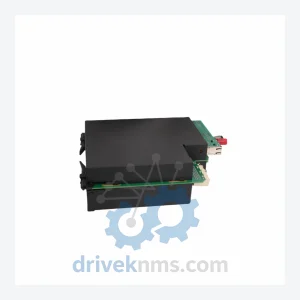
GE Multilin UR Series Modules: UR9GH UR 9GH CPU Module —
GE Multilin UR Series: Comprehensive Module Range and Technical Overview The GE Multilin Universal Relay (UR) Series represents one of…
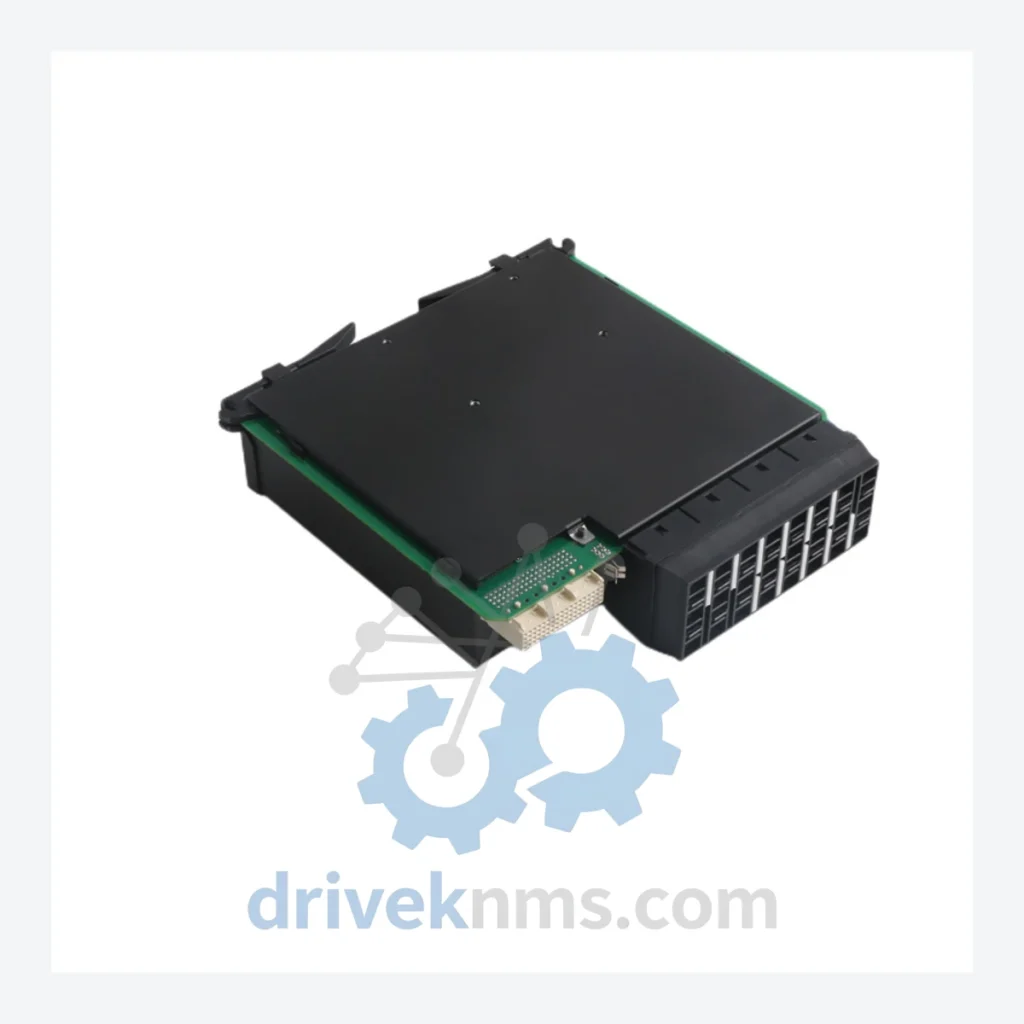
Model: UR 8LH
Product Overview
Commercial availability is handled through direct RFQ, model verification and export-oriented follow-up rather than public cart checkout.
Datasheet Preview
Use attached product manuals when available. If the manual is not public yet, request the full file directly through RFQ.
Commercial Path
Product pages on DRIVEKNMS are designed to verify model, brand and series first, then move the buyer into one clean quotation path.
Technical Dossier
The GE Multilin Universal Relay (UR) platform is a modular, rack-mounted protection and control system deployed across critical infrastructure worldwide, including petrochemical complexes, nuclear generating stations, offshore platforms, and high-voltage transmission substations. The UR architecture supports a standardized 19-inch rack form factor with a common backplane bus, enabling mixed-function relay configurations within a single chassis. Its installed base spans North America, Europe, the Middle East, and Asia-Pacific, making it one of the most widely maintained legacy protection platforms in heavy industry.
The UR 8LH is a Voltage Transformer (VT) input module within the UR Series, providing analog voltage sensing inputs for protection functions including overvoltage, undervoltage, directional power, and synchrocheck elements. It is compatible with the standard UR 8-slot and 14-slot chassis configurations.
The GE Multilin UR platform was introduced in the late 1990s as a successor to the SR Series, consolidating discrete electromechanical and early digital relays into a unified, IED-based architecture. The platform evolved through three distinct generations:
Generation 1 (UR-1, circa 1998–2004): Initial release supporting MODBUS RTU and DNP3 communications. Limited to 8-slot chassis. Firmware updates required physical EPROM replacement on early units.
Generation 2 (UR-2, circa 2004–2012): Introduced IEC 61850 GOOSE messaging support, expanded I/O module catalog, and Ethernet-based communications via the 8E modules. Chassis expanded to 14-slot configurations. This generation represents the largest installed base globally.
Generation 3 / UR-3 (circa 2012–present): Added cybersecurity hardening per NERC CIP standards, enhanced oscillography, and IEC 61850 Edition 2 compliance. Backward-compatible with Gen 2 I/O modules in most configurations, though firmware version alignment is required.
Compatibility note: Gen 1 CPU modules (8C series) are not firmware-compatible with Gen 3 chassis backplanes. When replacing modules in mixed-generation installations, backplane revision and firmware version must be verified prior to commissioning.
The following SKUs represent verified, commonly stocked modules within the GE Multilin UR platform. Modules are classified by functional category.
CPU / Main Processing Modules
8C: Gen 1/2 CPU module; hosts relay logic, settings, and communications firmware.
8D: Gen 3 CPU module; NERC CIP-compliant, dual Ethernet ports, enhanced processing.
8F: Front panel display and keypad interface module for local HMI access.
Analog Input Modules — Current Transformer (CT)
8A: Standard CT input module; 4 × 1A/5A selectable current inputs for phase and ground protection.
8B: High-burden CT input module; suited for high-impedance differential applications.
8G: Combined CT/VT input module; 4 CT + 4 VT inputs in a single slot for compact installations.
Analog Input Modules — Voltage Transformer (VT)
UR 8LH: VT input module; provides analog voltage sensing for overvoltage, undervoltage, synchrocheck, and directional power elements. Compatible with 8-slot and 14-slot UR chassis.
8L: Standard VT input module; 4 × voltage inputs, 100–240 VAC nominal range.
8M: High-accuracy VT module; used in revenue metering and power quality applications.
Digital Input / Output Modules
8H: Digital output module; 16 × Form-A (NO) contact outputs, rated 10A continuous.
8I: Digital input module; 16 × optically isolated DC inputs, 24–250 VDC range.
8J: Combined I/O module; 8 digital inputs + 8 digital outputs in a single slot.
8K: High-speed digital output module; <1 ms operate time for tripping applications.
Communications Modules
8E: Ethernet communications module; 10/100 Base-T, supports DNP3, MODBUS TCP, IEC 61850.
8P: Inter-relay communications module; direct fiber-optic channel for differential protection schemes.
8R: RS-485 serial communications module; MODBUS RTU and DNP3 serial protocol support.
8S: IEEE C37.94 fiber-optic interface module for teleprotection channel applications.
Power Supply Modules
8U: DC power supply module; 24–250 VDC input, redundant supply capable.
8V: AC/DC power supply module; 100–240 VAC or 125–250 VDC input range.
GE Multilin has transitioned several Gen 1 and early Gen 2 UR modules to end-of-life (EOL) status, with factory repair and replacement support discontinued for select part numbers. DriveKNMS maintains a dedicated inventory of tested, pull-out, and refurbished UR Series modules to support lifecycle extension programs for utilities and industrial operators who cannot justify full relay replacement projects.
DriveKNMS sources UR modules through decommissioned substation equipment, authorized surplus channels, and direct OEM overstock. All units are cataloged by part number, firmware revision, and physical condition grade prior to listing. For obsolete modules including early 8C CPU variants and discontinued communications cards, lead times and availability are confirmed at time of inquiry.
Operators managing aging UR installations are advised to maintain a minimum buffer stock of CPU, CT input, and power supply modules, as these represent the highest failure-rate components in long-cycle deployments.
UR Series modules present specific test challenges due to their integrated backplane communication bus and analog signal conditioning circuitry. DriveKNMS applies the following verification procedures to all UR modules prior to dispatch:
Backplane bus integrity test: Each module is seated in a live UR chassis and polled via the internal communications bus to confirm register-level responsiveness. Modules that fail to enumerate on the bus are rejected regardless of physical condition.
Analog channel calibration verification: CT and VT input modules are tested against calibrated reference signals at 50 Hz and 60 Hz. Output accuracy is verified against factory tolerance specifications (typically ±0.1% for metering-class modules).
Digital I/O functional test: All output contacts are cycled under rated load. Input optocouplers are verified across the full rated voltage range.
Firmware version documentation: CPU modules are powered and firmware version strings are recorded. Customers are advised of firmware revision prior to shipment to ensure compatibility with existing chassis and settings files.
Thermal burn-in: Repaired or refurbished modules undergo a minimum 24-hour powered burn-in at ambient temperature to screen for early-life failures.
Related Paths
GE Multilin UR Series: Comprehensive Module Range and Technical Overview The GE Multilin Universal Relay (UR) Series represents one of…
GE Multilin UR Series: Comprehensive Module Range and Technical Overview The GE Multilin UR (Universal Relay) platform is one of…
GE Multilin UR8AH UR Module – Obsolete Universal Relay Spare Part When a GE Multilin UR8AH module fails inside an…