
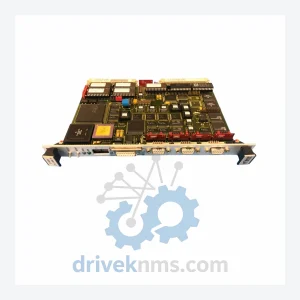
FORCE SYS68K/CPU-30BE16 REV 3 VME CPU Board – Obsolete SYS68K Spare Part
FORCE SYS68K/CPU-30BE16 REV 3 VME CPU Board – Obsolete SYS68K Spare Part When a VME-based CPU board fails on a…
Model: CPU-30ZBE
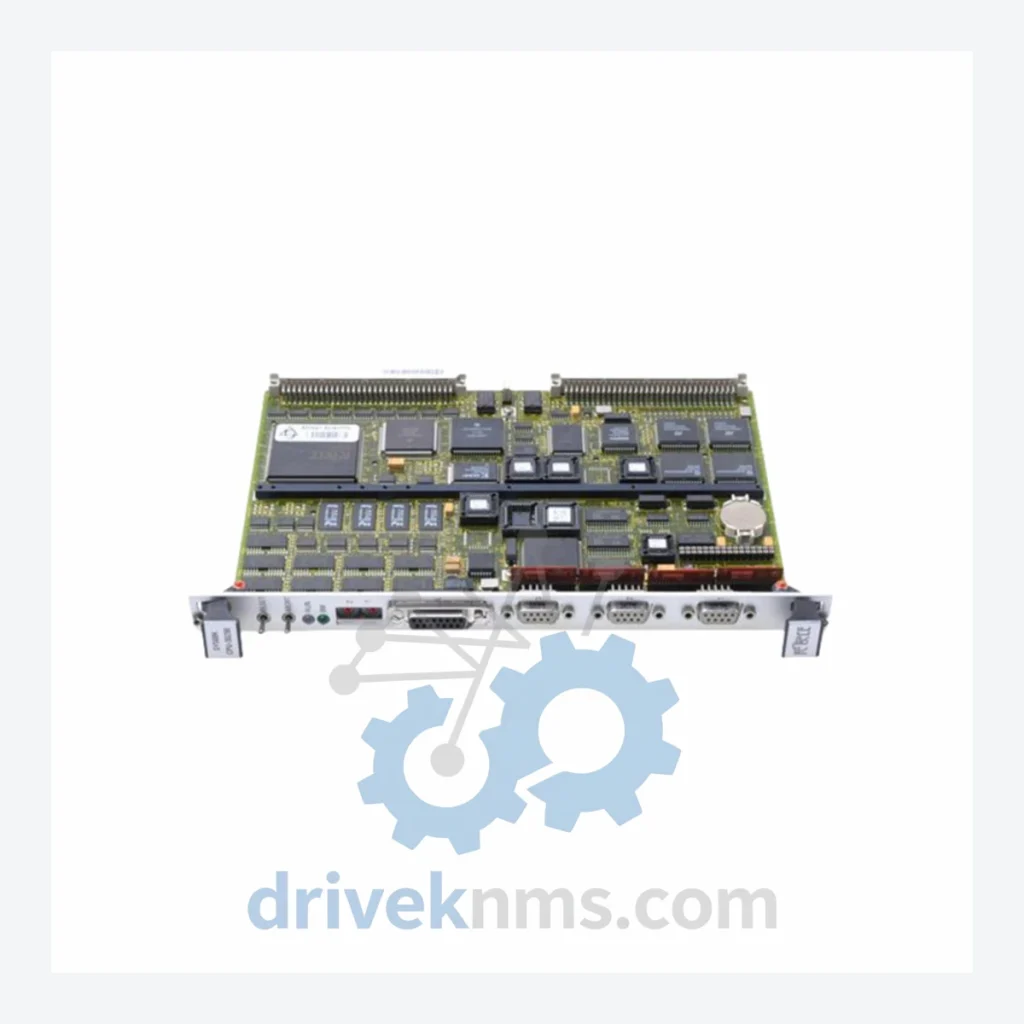
Product Overview
Commercial availability is handled through direct RFQ, model verification and export-oriented follow-up rather than public cart checkout.
Datasheet Preview
Use attached product manuals when available. If the manual is not public yet, request the full file directly through RFQ.
Commercial Path
Product pages on DRIVEKNMS are designed to verify model, brand and series first, then move the buyer into one clean quotation path.
Technical Dossier
When a FORCE CPU-30ZBE fails in a production environment, the immediate question is not where to find a replacement board — it is whether the entire control architecture must be retired. For plants running VMEbus-based automation infrastructure, a single failed CPU module can trigger a forced migration project costing anywhere from $500,000 to several million dollars, depending on system complexity, engineering hours, and production downtime. DriveKNMS maintains verified stock of the CPU-30ZBE specifically to eliminate that scenario. This is not a generic spare parts listing. It is a targeted asset-protection resource for facilities that have made a deliberate decision to extend the operational life of their existing FORCE-based control systems.
| Manufacturer | FORCE Computers (Germany) |
| Model / SKU | CPU-30ZBE |
| Series | CPU-30 VMEbus Single Board Computer Series |
| Form Factor | VMEbus (IEEE 1014) 6U |
| Processor Architecture | Motorola 68030 CISC (32-bit) |
| Bus Standard | VMEbus (VME32) |
| Country of Origin | Germany |
| Product Status | Discontinued / Obsolete – No longer manufactured |
| Typical Application | Real-time industrial control, SCADA front-end processing, embedded automation |
| Compatible Systems | FORCE VMEbus chassis, third-party VME64 backplanes (with adapter verification) |
Note: Electrical parameters such as clock speed variants and RAM configurations differ across CPU-30ZBE sub-revisions. DriveKNMS will confirm the exact hardware revision of available stock upon inquiry. No parameters are published here that cannot be verified against physical hardware.
The FORCE CPU-30ZBE belongs to the CPU-30 product family, a line of VMEbus single board computers that was widely deployed throughout the 1990s in process control, defense electronics, and industrial automation. FORCE Computers, originally headquartered in Munich, Germany, was acquired and its product lines were eventually consolidated and discontinued. The CPU-30ZBE specifically — a variant within the CPU-30 range featuring the Motorola 68030 processor — has been out of production for well over two decades.
The installed base, however, remains active. VMEbus systems were engineered for 20–30 year operational lifespans, and many facilities in the chemical processing, power generation, and discrete manufacturing sectors continue to operate FORCE-based control nodes as part of larger distributed control architectures. These systems were not designed to be modular in the modern sense — replacing the CPU board often requires re-validation of the entire control loop, re-certification of safety interlocks, and in regulated industries, formal change management documentation.
The practical consequence: when a CPU-30ZBE fails, the path of least disruption is a like-for-like hardware replacement, not a platform migration. DriveKNMS sources and holds inventory of the CPU-30ZBE to serve exactly this operational requirement. Facilities that have already budgeted for system replacement in 3–5 years still need to maintain uptime today. A single verified spare board, held on-site or sourced on short notice, is the lowest-cost insurance policy available against unplanned downtime on a system that cannot be quickly re-engineered.
Extending Asset Life by 5–10 Years: A Practical Framework
All CPU-30ZBE units processed by DriveKNMS undergo a structured 5-step quality verification protocol before being offered for sale. This process is designed specifically for legacy VMEbus hardware, where standard functional testing is insufficient to assess long-term reliability.
Q: What warranty applies to an obsolete CPU-30ZBE unit?
A: DriveKNMS provides a 90-day functional warranty on all tested and verified units. The warranty covers failure under normal operating conditions and excludes damage resulting from incorrect installation or incompatible system configuration.
Q: Are units new or refurbished?
A: Stock condition varies and is disclosed per unit. Available conditions include new-old-stock (NOS, original packaging), tested-used (fully functional, cosmetic wear acceptable), and professionally refurbished (recapped and re-tested where applicable). Condition is confirmed before order confirmation.
Q: How do I verify compatibility with my specific system revision?
A: Provide your chassis model, backplane revision, and current firmware version. DriveKNMS will cross-reference against available stock to confirm compatibility before shipment.
Q: Should I purchase more than one unit?
A: For any production-critical system with no current spare, a minimum of one cold spare is recommended. For systems with a planned operational life of 5 years or more, two units is the standard recommendation given the declining availability of CPU-30ZBE inventory globally.
Q: Can DriveKNMS source CPU-30ZBE units not currently in stock?
A: Yes. DriveKNMS operates an active procurement network for obsolete industrial hardware. Submit your requirement and we will provide availability and lead time within 48 hours.
Related Paths
FORCE SYS68K/CPU-30BE16 REV 3 VME CPU Board – Obsolete SYS68K Spare Part When a VME-based CPU board fails on a…
FORCE SYS68K CPU-30BE/16 VMEbus CPU Board: Securing Supply for Legacy Industrial Systems The FORCE SYS68K CPU-30BE/16 is a 68030-based VMEbus…
FORCE COMPUTERS SYS68K/CPU-6 REV. 4.1 Processor Board – Obsolete SYS68K Spare Part When a SYS68K/CPU-6 REV. 4.1 processor board fails,…